This abha travel guide is for anyone trying to escape Saudi Arabia’s summer furnace: Abha sits at roughly 2,270 m in the Asir mountains, where summer days rarely climb past 30 C while Riyadh and Jeddah bake beyond 45 C. Come for green terraced slopes, cool misty evenings, a cable car over a wooded valley, stone heritage villages and the country’s first national park. Below you will find when to go, how to fly or drive in, the sights worth your time and the honest trade-offs. Think of this abha travel guide as the plan I wish I had booked with before my first trip south.
Quick answer: This Abha travel guide covers Saudi Arabia’s cool mountain escape — when to go, how to get there and what to see. Use this Abha travel guide to plan a green, temperate break from the desert, because everything in this Abha travel guide is built around the mild summers of the Asir highlands.
Quick answer: fly into Abha International (AHB) from Riyadh (~1h40) or Jeddah (~1h15), visit June to August for the coolest, greenest weather, and give yourself at least three days for the city, the villages and Asir National Park.
Why Abha belongs on your Saudi trip
Most first-time visitors to the Kingdom map out Riyadh, Jeddah and AlUla and never look south. That is the gap this abha travel guide exists to fill. Abha and the wider Asir province are a different Saudi Arabia altogether: high, green and cool, with a culture and architecture you will not see up north.
The elevation is the whole point. At about 2,270 m, Abha catches monsoon-edge moisture that rolls up the escarpment as fog, keeps the juniper slopes green and drops evening temperatures into sweater territory. If your only experience of the country is desert heat, an abha travel guide reads almost like it is describing a different nation.
It is also compact. You can base yourself in one hotel and reach the cable car, the dam lake, Rijal Almaa and the national park on easy day trips. That combination of cool weather and short drives is why I keep steering friends toward an abha travel guide instead of another AlUla loop when the summer heat hits.
The honest caveat: Abha is not polished for international tourism the way AlUla is. English signage is patchy, some attractions keep loose hours, and weekends in peak season get crowded with domestic visitors. Go for the landscape and the authenticity, not for slick infrastructure.
When to visit: this Abha travel guide’s seasonal breakdown
The headline of any honest abha travel guide is counter-intuitive: the best time to come is high summer. June to August is when the lowlands are unbearable and Abha is at its finest, with mild days, cool nights and the greenest slopes of the year.
That said, summer is also peak domestic-tourism season. Saudi families flood south for exactly the same reason, so flights and hotels fill and popular spots get busy on Thursday and Friday. Book six weeks ahead and you will be fine. This is the single most important timing tip in this abha travel guide.
- Summer (Jun–Aug): mild (rarely over 30 C), green, misty, busiest. The classic window.
- Spring (Mar–May): pleasant, quieter, wildflowers; some cloud and rain.
- Autumn (Sep–Nov): stable and clear, thinning crowds — an underrated choice.
- Winter (Dec–Feb): genuinely cold, foggy, occasional near-freezing nights. Pack a real jacket.
If you are pairing Abha with the north, note that the ideal seasons differ. Our companion piece on the best time to visit AlUla points to winter, the opposite of Abha’s summer sweet spot, so plan the two as separate trips rather than one continuous route.
How to get to Abha
Flying is the sensible option, and it is where most people start with an abha travel guide. Abha International Airport (AHB) sits just outside the city and takes direct flights from both major hubs.
From Riyadh the hop is about 1 hour 40 minutes; from Jeddah it is roughly 1 hour 15. Three carriers work the routes — flynas, flyadeal and Saudia — with well over a hundred flights a week on each, so you rarely wait long for a seat. Fares swing widely; I have seen one-way tickets from around SAR 200, but book early because peak-summer weekends climb fast.
| Route | Direct flight time | Airlines | Fares from (one-way) |
|---|---|---|---|
| Riyadh (RUH) → Abha (AHB) | ~1h 40m | flyadeal, flynas, Saudia | ~SAR 200* |
| Jeddah (JED) → Abha (AHB) | ~1h 15m | flyadeal, flynas, Saudia | ~SAR 200* |
| Jeddah → Abha by road | ~7–8h (≈630 km) | Self-drive / bus | Fuel only |
Driving from Jeddah is about 630 km and takes seven to eight hours, climbing through genuinely scenic mountain switchbacks near the top. It is a great road trip if you have the time and a comfortable car, but it is not a shortcut. For a first visit, most readers of this abha travel guide should just fly and rent a car locally, since you will want wheels for the day trips regardless.
Things to do in Abha
The city itself earns a full day. Here are the sights I would prioritise in any abha travel guide, roughly in the order they make sense to string together.
Abha Cable Car and Green Mountain
The cable car glides over a wooded valley to the top of Green Mountain, with restaurants and viewpoints at the summit. Return tickets run in the region of SAR 50–80 per adult, with children usually half price. Hours vary seasonally and there is generally no online booking, so buy at the station and check it is running that day.
Abha Dam Lake and Art Street
Abha Dam Lake is the easy, free evening stroll — a reservoir ringed by green hills that locals treat as the city’s living room. Nearby, Al-Muftaha Village and its Art Street come alive under jacaranda trees in bloom, with galleries and cafes. No abha travel guide is complete without an hour here at dusk.
Jebel Shamsan and Al-Qatt Al-Asiri
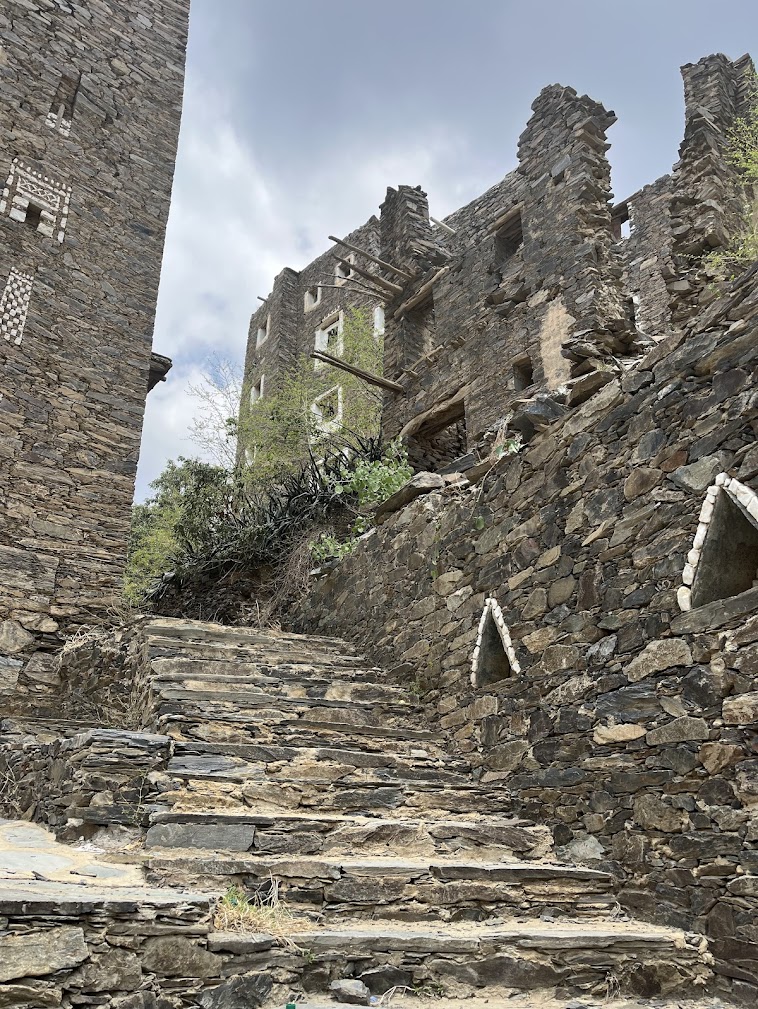
For the best city panorama, head up Jebel Shamsan to the Ottoman-era Shamsan fort. And look for Al-Qatt Al-Asiri, the region’s vivid geometric wall painting, which UNESCO added to its Intangible Cultural Heritage list in 2017. You will see it inside restored houses and museums across Asir — a highlight I flag in this abha travel guide because it is unique to the south.
Day trips: Rijal Almaa, Habala and Asir National Park
The day trips are where an abha travel guide really pays off, because the best of Asir is spread across the escarpment rather than inside the city.
Rijal Almaa is the standout. About 45 km west of Abha, this restored heritage village stacks multi-storey stone-and-slate towers up the mountainside, some decorated inside with Al-Qatt Al-Asiri. It is on Saudi Arabia’s UNESCO tentative list and, in my view, the single most photogenic place in the region.
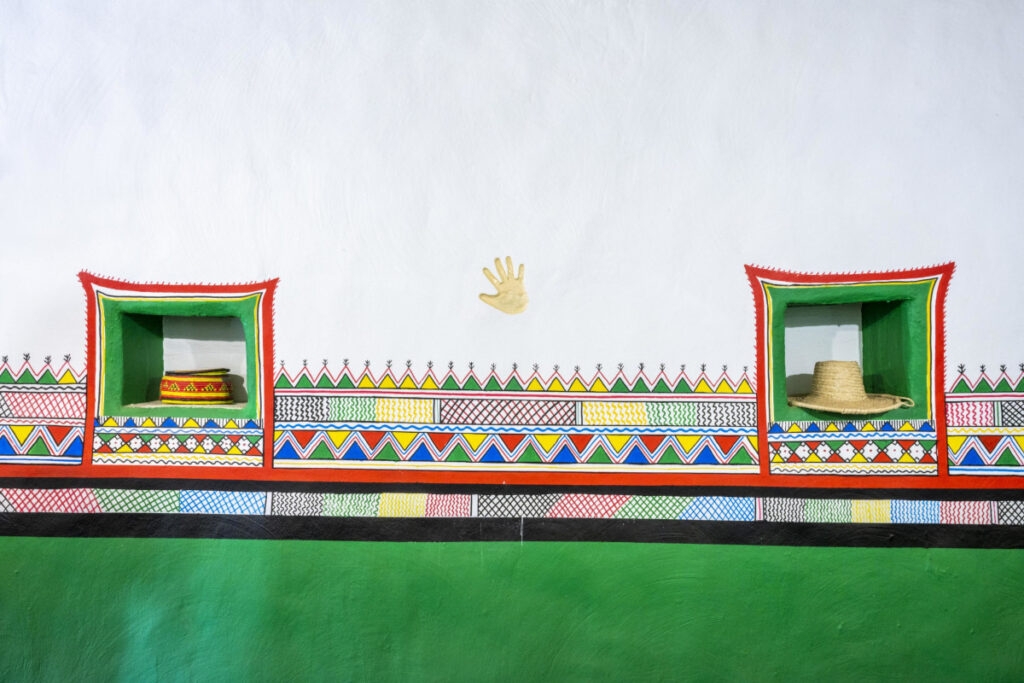
Habala is the old “hanging village,” historically reachable only by rope down a cliff and now served by a cable car. It is a dramatic stop, though check current operating status locally before committing the drive, as access can change.
Asir National Park was Saudi Arabia’s first national park, established in 1981. It protects juniper forests, over 300 bird species and the high meadows around Jebel Sawda, the country’s highest peak. Expect scenic drives, marked trails and designated camping areas; the official Visit Saudi Asir pages are the best place to check current trail and site access.
- Rijal Almaa: ~45 km / ~1 hour each way. Half a day.
- Habala: ~60 km south. Combine with the escarpment viewpoints.
- Asir National Park / Jebel Sawda: full day; go early for clear views before afternoon cloud.
Where to stay and practical tips
Base yourself in Abha city for the shortest drives, or near the dam lake for the views. Options range from international-branded towers to simple local hotels and furnished apartments, which suit families. Whatever you choose, this abha travel guide’s firmest advice is to book early in summer — the good rooms go weeks ahead.
- Rent a car. Public transport is thin and the sights are spread out; a car turns this abha travel guide’s day trips into easy half-days.
- Pack layers. Evenings are cool year-round and cold in winter — very different from the rest of the country. Our packing notes for the highlands mostly apply here too, just warmer.
- Mind the fog. Mountain roads can white out fast; drive slowly and keep extra time.
- Respect prayer-time closures. Shops and some sights pause briefly through the day.
- Carry some cash. Smaller villages and cable-car kiosks are not always card-friendly.
Planning a broader loop? Slot Abha in as the summer leg of a bigger route using our first-time Saudi Arabia itinerary, and if you are still weighing the big cities, the Riyadh vs Jeddah vs AlUla comparison will help you decide which hub to fly in from.
Taif: a lighter highland alternative
If Abha feels too far for a short trip, Taif is the easier highland escape. Perched at about 1,800 m and only two hours from Jeddah, the “City of Roses” gives you cooler air, rose farms and its own cable car without the long haul south.
It is not a like-for-like swap. Taif is lower, drier and less dramatically green than Asir, and it lacks Rijal Almaa’s heritage architecture. But as a weekend cool-down from Jeddah it is hard to beat, and I include it in this abha travel guide as the honest “Abha-lite” option for travellers who are short on days.
Costs and distances at a glance
To keep this abha travel guide practical, here are the ballpark numbers I would budget around. Treat them as planning figures, not fixed quotes, and confirm anything time-sensitive before you go.
| Item | Ballpark figure | Notes |
|---|---|---|
| Flight to AHB (one-way) | from ~SAR 200 | Rises sharply on peak-summer weekends |
| Abha Cable Car (adult return) | ~SAR 50–80 | Children roughly half; buy at station |
| Abha → Rijal Almaa | ~45 km / ~1h | Half-day trip |
| Jeddah → Abha by road | ~630 km / ~7–8h | Scenic but long mountain drive |
| Taif → Jeddah | ~2h drive | The lighter highland alternative |
| Suggested stay | 3–5 days | City + villages + national park |
To recap this abha travel guide in a sentence: fly into AHB, come in summer, rent a car, give the city one day and the villages and Asir National Park two more, and pack warmer clothes than the rest of Saudi Arabia would suggest. Do that and Abha delivers the coolest, greenest trip in the Kingdom.
Frequently asked questions
Is Abha worth visiting?
Yes, especially in summer. Abha sits at about 2,270 m in the Asir mountains, so while the rest of Saudi Arabia bakes past 45 C, Abha rarely tops 30 C. You get green terraced slopes, mist, a cable car, heritage villages and the country’s first national park — a genuine change of scenery, not just a cooler desert.
What is the best time to visit Abha?
June to August is the sweet spot, which is exactly when the lowlands are scorching. Days are mild, evenings are cool and the mountains are greenest, though this is also peak domestic-tourism season, so book early. Spring is quieter and still pleasant, while winter can be genuinely cold with fog and near-freezing nights.
How do you get to Abha from Riyadh or Jeddah?
The easiest way is to fly into Abha International Airport (AHB). Direct flights from Riyadh take about 1 hour 40 minutes and from Jeddah about 1 hour 15 minutes, operated by flyadeal, flynas and Saudia with well over 100 flights a week on each route. Driving from Jeddah is roughly 630 km and takes seven to eight hours.
How many days do you need in Abha?
Three full days is a comfortable minimum: one for Abha city (cable car, dam lake, Art Street), one for Rijal Almaa and the western escarpment, and one for Asir National Park and Jebel Sawda. Four or five days lets you add Habala and handle the mountain driving without rushing.
Is Abha suitable for a summer family trip?
Very much so. The mild climate, cable car, parks and short drives make it one of the more family-friendly domestic escapes in Saudi Arabia. The main trade-offs are busy weekends in peak season and winding mountain roads, so build in extra driving time and book accommodation well ahead.
Related guides
Abha travel guide: final tips
To wrap this Abha travel guide up, Abha rewards travellers who want cool air and green mountains. Keep this Abha travel guide handy for the cable cars, the old stone villages and the summer festival season.
Where to stay in Abha and the Asir highlands
Most visitors base themselves in Abha city itself, which has the widest spread of hotels, from simple family-run places to a handful of international-standard properties near the corniche and Al Muftaha area. Rates are noticeably lower than AlUla or the Red Sea resorts, and even in the busy summer festival season you can find a comfortable room without the desert-lodge price tag.
If you want cooler air and mountain views, look at stays up around Al Soudah, the highest point in the country, where boutique lodges and cabins have opened as part of the Soudah Peaks development. For a slower pace, the villages around Rijal Almaa have a few heritage guesthouses. Wherever you land, this Abha travel guide would steer you toward a car, because the best of Asir is spread across ridgelines rather than one walkable centre.
Best day trips from Abha
Abha works best as a hub. The single most rewarding day trip is Rijal Almaa, a restored stone-and-mud village about an hour southwest through switchback mountain roads, its tower-houses stacked up the hillside and decorated inside with the bright geometric Al-Qatt Asiri wall art that UNESCO recognised. Go in the morning before the cloud rolls in.
- Habala: a former cliff-hanging village reached by cable car, with dramatic valley views.
- Al Soudah & the cable cars: forested slopes, hanging mist, and Saudi Arabia’s coolest summer temperatures.
- Tanomah and the northern Asir road: juniper forests and roadside viewpoints toward the Tihama plain.
- Jabal Sawda viewpoints: sunset over layered ridgelines that feel more Himalayan foothill than Arabian desert.
Because the roads are winding and the weather shifts fast, give each day trip more time than the distance suggests. A tank of fuel and an early start are the two pieces of advice this Abha travel guide keeps coming back to.
Getting around the Asir highlands
Abha has its own airport (AHB) with regular domestic flights from Riyadh and Jeddah, so most travellers fly in and rent a car on arrival. Ride-hailing works inside Abha city but thins out fast once you head into the mountains, which is why a rental is the backbone of any Asir trip. Roads are paved and scenic but steep, with sudden fog, so drive conservatively and keep headlights on.