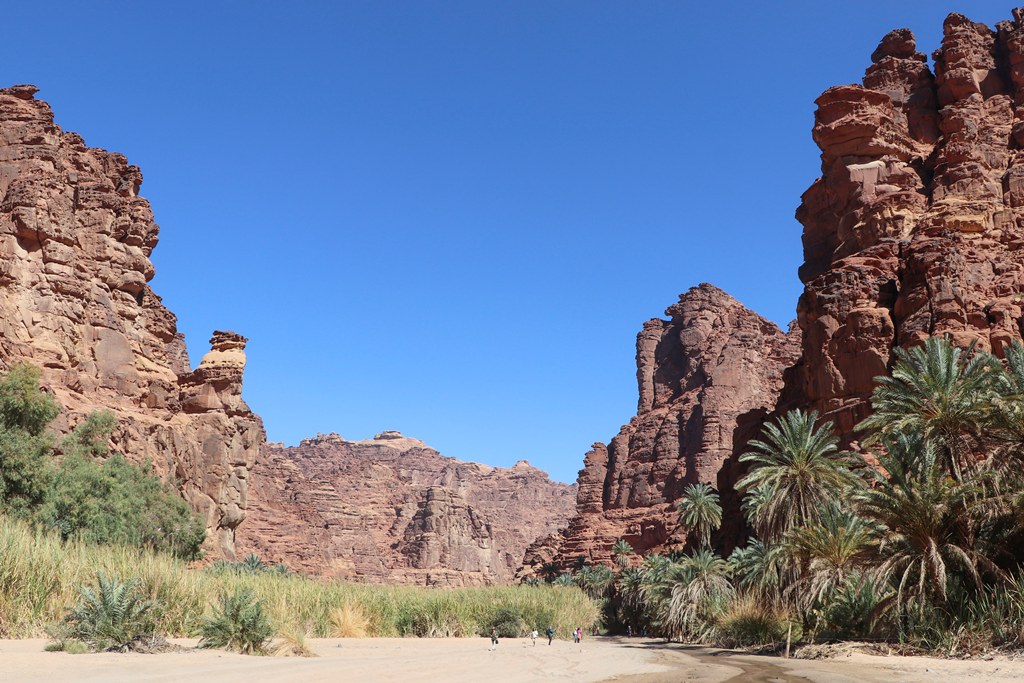
Wadi Al Disah is a long, palm-filled canyon in Tabuk Province, with red sandstone cliffs, year-round springs and Nabataean carvings. It is the kind of place people see in one photograph and then want to visit. It is also remote: the paved road ends at Al Disah village, the canyon floor needs a 4×4, and there are almost no facilities. This guide covers where Wadi Al Disah is, how to get there from Tabuk or AlUla, whether you need a guide, when to go and what to bring. If you are planning it as an add-on to an AlUla trip, start with our AlUla destination guide.
In this guide
- Quick answer
- Where is Wadi Al Disah?
- Getting there from Tabuk and AlUla
- Do you need a 4×4?
- Guided tour or self-drive?
- What to see in the wadi
- Best time to visit
- What to bring and safety
- Frequently asked questions
Quick answer
Wadi Al Disah lies in the Prince Mohammed bin Salman (Royal) Nature Reserve in Tabuk Province, roughly 200–260 km south of Tabuk depending on the route and where you measure to. You can drive a normal car to Al Disah village, but you need a 4×4 inside the canyon. Day tours run from Tabuk, and camping needs a free permit from the reserve. Go between October and March, and avoid the wadi floor when rain is forecast.
Where is Wadi Al Disah?
Wadi Al Disah is a valley about 125 km long in northwest Saudi Arabia. It rises in the Harrat ar-Rahah lava field and drains towards the Red Sea south of Duba, and Al Disah village sits at its western entrance, at about 400 m above sea level. The valley is part of the Prince Mohammed bin Salman Royal Reserve.
The most visited section is the canyon also known as Wadi Qaraqir, about 15 km long. Since 2023 the area has been on UNESCO’s Tentative List as part of the “Bioclimatic Refuges of Western Arabia”.
Getting there from Tabuk and AlUla
| From | Distance | Notes |
|---|---|---|
| Tabuk | About 200–260 km | The usual base. Visit Saudi gives about 260 km; other sources give 200–250 km. |
| Duba (Red Sea coast) | Varies by route | The last town on the coastal route; stock up on fuel, food and water here. |
| AlUla | Not confirmed | Possible as a very long day; we could not confirm a reliable distance from an official source. |
Most travellers reach Tabuk by air and drive from there. From AlUla, Wadi Al Disah is a long excursion rather than a half-day trip, so it works best with a night in Tabuk or at a camp near the wadi entrance. For car hire and road rules, see driving in Saudi Arabia as a tourist.
Do you need a 4×4?
To reach Al Disah village, a normal car is generally enough. Inside the canyon, you need a 4×4 with reasonable clearance. The track is sand and gravel with shallow seasonal stream crossings. It is not technically extreme, but drivers lower their tyre pressure for the soft sand. Some sources describe unpaved sections before the village too, so expect the last stretch to be rough.
If you arrive in an ordinary car, local drivers in the village offer 4×4 transport into the canyon. One regional hiking guide puts this at around SAR 300; agree the price before you set off.
Guided tour or self-drive?
- Guided day tour: the simplest option. Tours run from Tabuk and handle the 4×4 driving and navigation. Prices vary by operator, so compare before you book.
- Self-drive: possible with a 4×4, off-road experience and recovery gear. There are no visitor centres or signposts inside the wadi, so download offline maps before you go.
- Camping: camping in the reserve needs a free permit, which you can request by emailing [email protected]. There are also private camps near the wadi entrance.
What to see in the wadi
- Sandstone pillars and cliffs: red sandstone columns and cliffs rising to around 500 m.
- Springs and greenery: year-round springs, including Ain al-Zarqa, feed palms, reeds, oleander and small farms.
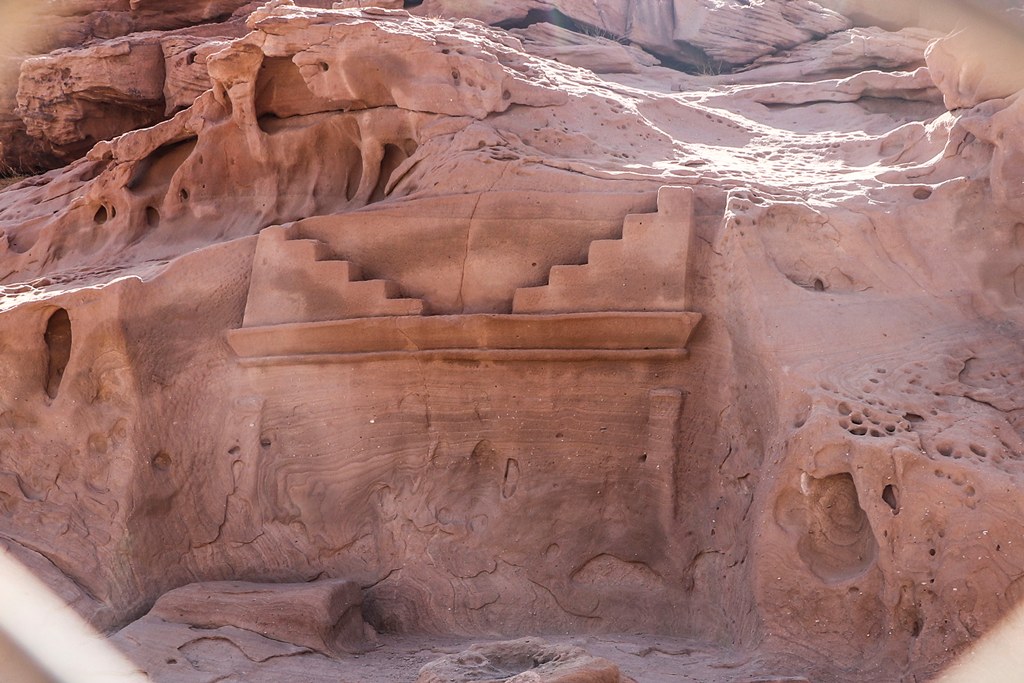
- Nabataean carvings: tomb facades and inscriptions from the same civilisation that built Hegra near AlUla.
- Wading trails: parts of the canyon involve walking through shallow water and scrambling over rocks.
Best time to visit
October to March is the season for off-road trips in the region, and the Saudi Tourism Authority has promoted Wadi Al Disah as a winter destination. Temperatures in the area range from around 12°C in winter to around 31°C in summer. Winter days are pleasant, but nights in the desert can be cold, so pack layers. For AlUla’s own month-by-month weather, see the best time to visit AlUla.
What to bring and safety
- Plenty of water, food and a full fuel tank (Duba or Tabuk are the last reliable stops).
- Shoes you can wade in, sun protection and a hat.
- For self-drivers: spare tyre, tyre compressor, shovel, tow rope and recovery kit.
- Offline maps; phone signal is unreliable inside the canyon.
Flash floods: valleys in Tabuk Province can flood quickly after rain. In January 2019, floods in Tabuk killed 10 people. Check the National Center for Meteorology forecast, and do not drive or camp on the wadi floor when rain is expected.
Frequently asked questions
Where is Wadi Al Disah?
In Tabuk Province, northwest Saudi Arabia, inside the Prince Mohammed bin Salman Royal Reserve. Al Disah village is at the valley’s western entrance, roughly 200–260 km south of Tabuk.
Can I visit Wadi Al Disah without a 4×4?
You can reach Al Disah village in a normal car, but the canyon itself needs a 4×4. Local drivers in the village offer 4×4 rides into the wadi.
Do I need a permit for Wadi Al Disah?
Camping in the reserve needs a free permit, requested by email to [email protected]. Check the reserve’s current rules before you go.
Can I visit Wadi Al Disah from AlUla?
Yes, but it is a long excursion. Most visitors base themselves in Tabuk or at a camp near the wadi, or join a guided tour.
When is the best time to visit Wadi Al Disah?
October to March, when daytime temperatures are mild. Avoid days with rain in the forecast because of the flash flood risk.