
Driving in Saudi Arabia as a tourist is not only allowed, it is genuinely one of the best ways to see the country. Visitors from roughly 67 countries can drive on their home licence for up to 90 days, and the highways to AlUla, the Red Sea coast and the edge of the Empty Quarter are wide, modern and gloriously empty. The short version: bring your original licence, carry an International Driving Permit (IDP), stay completely off alcohol, and buckle everyone in. This guide covers the licence rules, rental requirements, road laws and real 2026 costs of driving in Saudi Arabia, based on the paperwork rental desks actually ask for at the counter.
In this guide
- Quick answer: can tourists legally drive?
- Do you need an IDP for driving in Saudi Arabia?
- Documents you must carry (and the digital-copy trap)
- Renting a car: age, deposit and 2026 prices
- The road rules that matter when driving in Saudi Arabia
- Fuel, tolls and the real cost of driving in Saudi Arabia
- Self-drive routes: Riyadh and Jeddah to AlUla
- Safety, checkpoints and the honest downsides
- Frequently asked questions
Quick answer: can tourists legally drive?
Yes. If you hold a tourist eVisa and a valid licence from one of the recognised countries, driving in Saudi Arabia is completely legal for up to 90 days per visit. You do not need to convert your licence or sit any local test as a visitor, which is the single most common worry I hear from people planning a first trip.
The recognised list is broad. It includes the United States, United Kingdom, Canada, Australia, most of the EU and Schengen area, and the GCC states. If your country issued the licence and you are here on a short-stay visa, you are almost certainly covered. What trips people up is not the eligibility, it is the paperwork format, which is why the IDP question below matters so much for driving in Saudi Arabia without friction.
One caveat worth stating early: the 90-day allowance is tied to your tourist status, not to a calendar. Overstay your visa and your right to be driving in Saudi Arabia lapses with it, so keep the two aligned. If you plan to move here long-term, you eventually convert to a Saudi licence, but that is a separate residency process and not something a visitor needs to touch.
Do you need an IDP for driving in Saudi Arabia?
Technically, if your home licence is already printed in English or Arabic, the law does not force you to carry an International Driving Permit. In practice, an IDP is the difference between a smooth pickup and an argument at the rental desk. Almost every major rental company I have dealt with treats it as effectively mandatory, so for real-world driving in Saudi Arabia I would call it non-negotiable.
The reason is simple. An IDP is a certified multilingual translation of your existing licence, backed by the 1968 Vienna Convention on Road Traffic, which Saudi Arabia recognises. It does not replace your licence; you carry both together. For a checkpoint officer or a rental agent who cannot read your native alphabet, it removes all ambiguity in ten seconds.
When the IDP is genuinely required
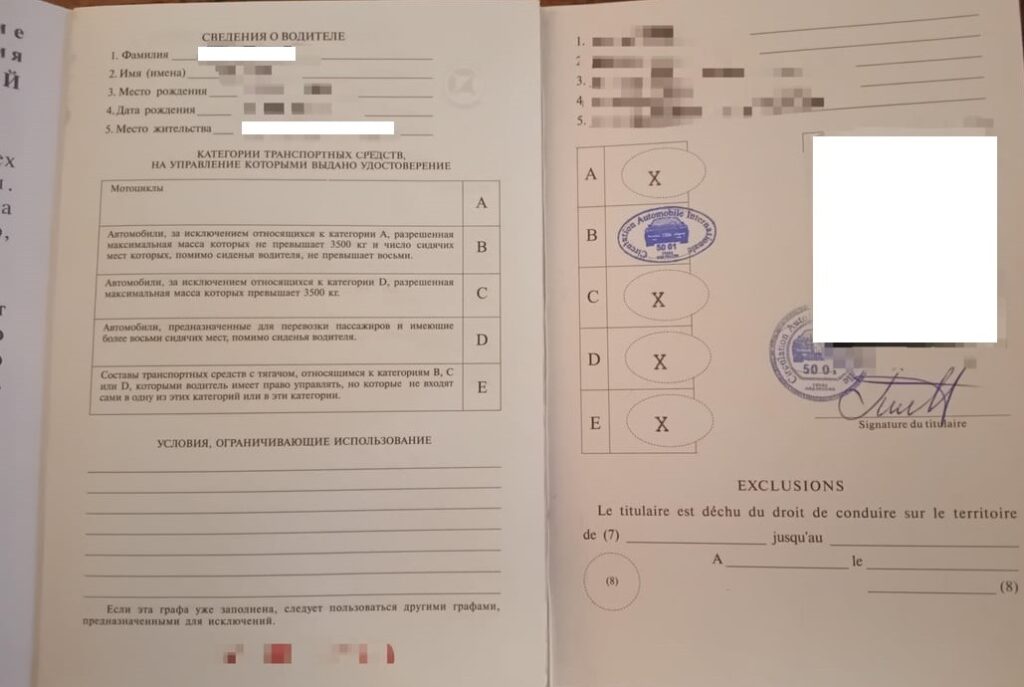
If your licence is issued in a non-Latin script — China, Japan, South Korea, Russia and similar — you must carry either an IDP or a notarised Arabic translation. There is no grey area here. Without one of those, driving in Saudi Arabia on that licence alone is not accepted, and no rental firm will hand you keys.
Get the IDP in your home country before you fly. It has to be issued by the authorised body where your licence was granted (in the US, that is AAA; in the UK, the Post Office), and it cannot be bought after arrival. Many of the “instant online IDP” sites are not valid, so use your national motoring authority. Budget around USD 20 and a few days’ processing. It is the cheapest insurance you will buy for driving in Saudi Arabia.
Documents you must carry (and the digital-copy trap)
Here is the rule that catches out even experienced travellers: you must carry the original physical documents. A photo on your phone, a PDF in your email, a scan in the cloud — none of it is accepted at rental counters or at highway checkpoints. I have watched someone be turned away because they had left the physical IDP in a hotel safe. For driving in Saudi Arabia, paper beats pixels every time.
The core set you should keep on your person is short:
- Your original home driving licence (not expired)
- Your physical International Driving Permit
- Your passport, or at least a physical copy plus the eVisa printout
- The rental agreement and the car’s registration (the rental firm supplies this)
Keep them together in the glovebox or a document wallet. Checkpoints are routine, especially near the holy cities and on approaches to AlUla, and they are usually fast if your papers are in order. The whole experience of driving in Saudi Arabia becomes stress-free once you stop worrying about being asked to produce something you cannot physically hand over.
Renting a car: age, deposit and 2026 prices
Renting is the normal way tourists handle driving in Saudi Arabia, and the market is competitive. The big local names (Theeb, Budget, Key, Yelo) sit alongside the internationals (Sixt, Avis, Hertz), and rates are reasonable by global standards. The catch is the age and deposit rules, which vary more than the headline price.
The usual minimum age is 21 for a standard car. For SUVs, luxury and high-performance categories, most firms push that to 25, and some add a “young driver” surcharge for anyone under 25 even on a basic booking. If you are 23 and set on a big 4×4 for the desert, check the category rules before you pay, because this is where budgets quietly blow out.
Expect to leave a refundable deposit, usually held on a credit card in your own name. Debit cards are sometimes refused for the hold, so travel with a credit card. Below are realistic day rates I saw quoted in mid-2026 for driving in Saudi Arabia, before insurance upgrades.
| Vehicle class | Typical day rate (SAR) | Min. age | Good for |
|---|---|---|---|
| Economy (Kia Pegas, Hyundai Accent) | 90–140 | 21 | City driving, paved routes |
| Mid-size sedan (Toyota Camry) | 150–220 | 21 | Long highway drives |
| Compact SUV (Kia Sportage) | 200–300 | 21–25 | AlUla, mixed roads |
| Full-size 4×4 (Toyota Land Cruiser) | 350–600 | 25 | Desert tracks, Empty Quarter |
Add full collision and theft cover — it is worth the extra SAR 30–60 a day for the peace of mind. Book ahead in high season; AlUla and Jeddah both run short on cars over long weekends. If you would rather not deal with any of this, my guide to getting around AlUla covers shuttles and tours as an alternative to driving in Saudi Arabia yourself.
The road rules that matter when driving in Saudi Arabia
Traffic drives on the right. Seat belts are mandatory for every passenger, front and back, and handheld phone use behind the wheel is prohibited and actively fined. Those three basics cover most of what you need for lawful driving in Saudi Arabia, but a few local specifics are worth internalising.
Speed limits and Saher cameras
City limits are typically 50–80 km/h. Intercity highways run at 120 km/h, and a few premium expressways allow 140 km/h where explicitly signed. Enforcement is automated through the nationwide Saher camera network, and it is relentless — the fine lands on the rental company, which then charges your card, often after you have flown home. A small speed buffer exists before a fine triggers, but it is not guaranteed, so treat the posted number as the real limit while driving in Saudi Arabia.
Zero tolerance on alcohol
This is the one to take absolutely seriously. Saudi Arabia is a dry country and applies genuine zero tolerance to drink-driving. Penalties run from roughly SAR 20,000 to SAR 60,000, and can include imprisonment and a multi-year driving ban. There is no “one glass is fine” margin. If you are driving in Saudi Arabia, your blood alcohol should be zero, full stop.
Children and child seats
Children under 10 are not permitted in the front seat and must travel in an age-appropriate restraint or booster in the rear. Traffic police enforce this, including at highway checkpoints, and fines run from around SAR 300 to SAR 500. Rental firms can supply child seats if you request them at booking, though stock is limited, so reserve one rather than assuming it will be there. Factor this in early if family driving in Saudi Arabia is your plan.
Fuel, tolls and the real cost of driving in Saudi Arabia
Here is where driving in Saudi Arabia becomes a pleasure rather than a expense. Fuel is heavily subsidised. As of mid-2026, Petrol 91 sits at around SAR 2.18 per litre and Petrol 95 at around SAR 2.33 per litre — roughly USD 0.58–0.62, less than half the global average. Diesel is even cheaper at about SAR 1.79. Filling a mid-size sedan costs under SAR 130.
Stations are frequent along main highways but can thin out dramatically on remote desert stretches. My rule for long-distance driving in Saudi Arabia is simple: never let the tank drop below half on an intercity leg, and top up whenever you see a station before a long empty section. Attendants usually pump for you, and many stations take card, though carrying some cash is wise in rural areas.
Tolls are minimal compared with Europe. The headline cost of driving in Saudi Arabia is really the rental and the insurance, not the running costs. Here is a rough fuel-cost sketch for the classic tourist routes.
| Route | Distance | Drive time | Approx. fuel cost (mid-size car) |
|---|---|---|---|
| Riyadh → AlUla | ~1,100 km | 10–11 hrs | SAR 190–230 |
| Jeddah → AlUla | ~680 km | 6.5–7 hrs | SAR 120–150 |
| Jeddah → Riyadh | ~950 km | 9–10 hrs | SAR 165–200 |
| Riyadh → Edge of the World | ~90 km | 1.5 hrs (last stretch off-road) | SAR 20–30 |
Self-drive routes: Riyadh and Jeddah to AlUla
Most tourists who take up driving in Saudi Arabia do it for one reason: AlUla. The ancient Nabataean city of Hegra, Elephant Rock and the old town are the country’s showpiece, and reaching them by car turns the transit into part of the trip. There are two main road approaches.
From the west coast, the drive is very manageable. The Jeddah to AlUla route is around 680 km and 6.5–7 hours on good highway, easily done in a day with a couple of fuel-and-coffee stops. From the capital, the Riyadh to AlUla drive is a bigger commitment at roughly 1,100 km and 10–11 hours, which most people split over two days or replace with a domestic flight. If you would rather not spend that long behind the wheel, my breakdown of how to get to AlUla compares driving in Saudi Arabia against the one-hour flights.
Whichever route you take, plan around the heat. Set off early, carry more water than you think you need, and download offline maps before you lose signal. For the packing side of a self-drive trip — sun protection, a physical map backup, layers for cold desert nights — see my list of what to pack for AlUla. AlUla itself, and the incredible tombs at Hegra, are worth reading up on directly via the official Experience AlUla site and the UNESCO listing for Hegra, which is Saudi Arabia’s first World Heritage Site.
Safety, checkpoints and the honest downsides
Let me be balanced, because driving in Saudi Arabia is not flawless. Local driving can be assertive — expect sudden lane changes, tailgating and fast overtaking, especially in Riyadh and Jeddah traffic. Defensive driving is the right posture. Keep a bigger following gap than you would at home and do not assume indicators mean what you expect.
The flip side is genuinely reassuring. The Saher camera system has measurably cut road fatalities, the highways are new and well-surfaced, and the intercity network is far quieter than European motorways. Checkpoints are common but courteous, and roadside assistance from your rental firm is usually a phone call away. Petty crime against tourists is rare. On the whole, driving in Saudi Arabia feels safer than its reputation suggests, provided you respect the local pace.
The real downsides are practical: long empty stretches with no fuel, brutal summer heat that punishes any breakdown, and city parking that can be chaotic. None of these are dealbreakers, but they are the reason I would not attempt a remote desert route in a low-clearance economy car. Match the vehicle to the road, and driving in Saudi Arabia becomes one of the most rewarding ways to experience the country.
Quick recap
To sum up the essentials of driving in Saudi Arabia in 2026: carry your original licence plus a physical IDP, keep alcohol at zero, strap children into rear seats, respect the Saher-enforced limits, and match your car to your route. Do those five things and you are set.
Frequently asked questions
Can I drive in Saudi Arabia on a foreign licence as a tourist?
Yes. Tourists from roughly 67 recognised countries can drive on their valid home licence for up to 90 days, tied to their visa validity. You do not need a Saudi licence as a visitor, though carrying an International Driving Permit alongside your home licence is strongly advised and effectively required by rental companies.
Do women tourists need anything extra to drive?
No. Women have been legally driving in Saudi Arabia since 2018, and female tourists rent and drive on exactly the same terms as men — same licence rules, same IDP recommendation, same rental age limits. There is no guardian requirement or additional paperwork.
Is it safe to drive from Jeddah or Riyadh to AlUla?
Yes, both routes are on good modern highways. Jeddah to AlUla is about 680 km (6.5–7 hours) and Riyadh to AlUla about 1,100 km (10–11 hours). Start early, keep the tank above half on empty stretches, and carry plenty of water. Many travellers fly the Riyadh leg instead to save time.
How much does petrol cost in Saudi Arabia in 2026?
Fuel is heavily subsidised. As of mid-2026, Petrol 91 is around SAR 2.18 per litre and Petrol 95 around SAR 2.33 per litre (about USD 0.58–0.62). Aramco reviews prices monthly, so check before a long trip, but expect fuel to be one of the cheapest parts of your budget.
What happens if I get a speeding fine in a rental car?
Saher cameras record the violation against the vehicle, and the rental company charges the fine to your card, sometimes weeks after you leave. There is a small tolerance buffer before a fine triggers, but it is not guaranteed. The safest approach is simply to stay at or below the posted limit.