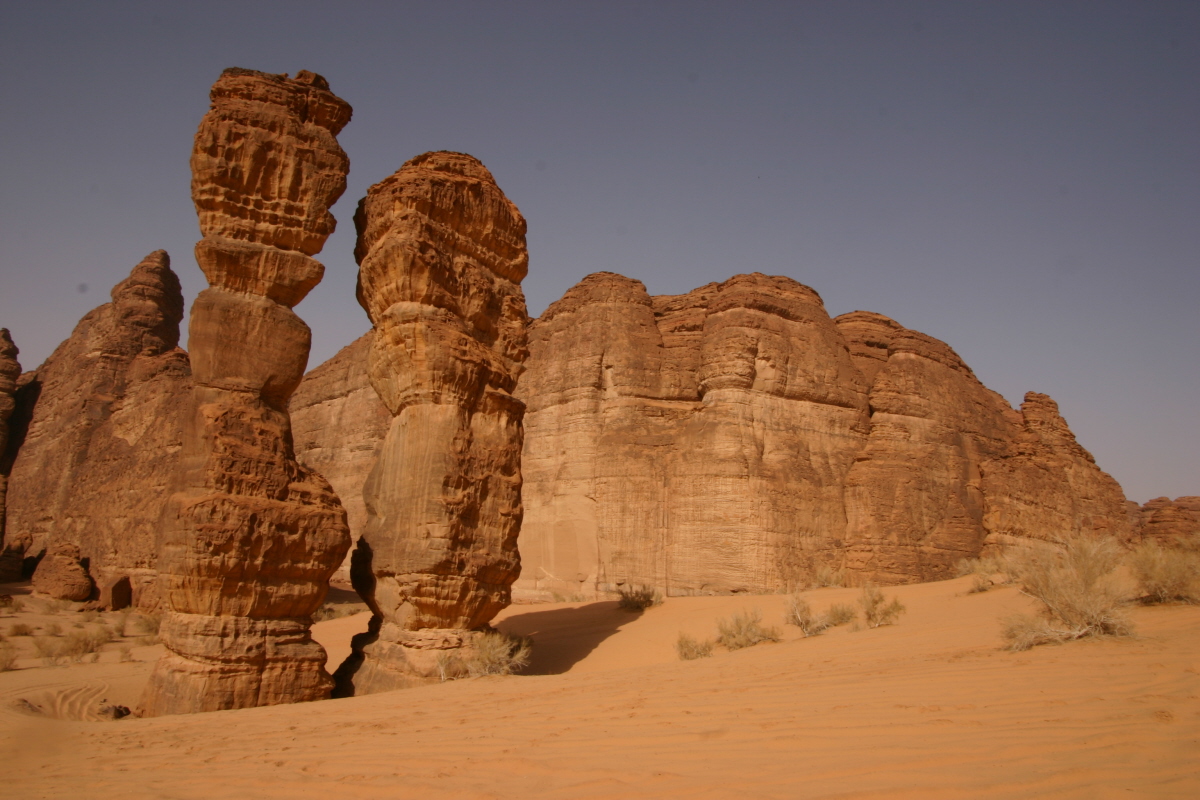
AlUla weather is warm and comfortable from October to March, and genuinely hot from May to September — so if you want to explore Hegra and the sandstone canyons on foot without wilting, aim for the cooler half of the year. That is the short version, and the rest of this guide breaks AlUla weather down month by month with real average temperatures in both Celsius and Fahrenheit. I’ve paired the long-run climate numbers with what the dry heat and the cool desert nights actually feel like on the ground. Below you’ll find a scannable temperature table, a plain answer on which months are best, and practical tips for packing for the big day-to-night swing that catches most first-time visitors out.
In this guide
- The quick answer: AlUla weather at a glance
- AlUla weather month by month (temperature table)
- What the heat feels like: dry air and big swings
- AlUla weather in winter (December to February)
- Spring and autumn: the shoulder seasons
- AlUla weather in summer: is it too hot to visit?
- Best months to visit based on AlUla weather
- Rain, sun and sandstorms
- What to pack for AlUla weather
- Frequently asked questions
The quick answer: AlUla weather at a glance
If you only remember one thing about AlUla weather, make it this: the town sits in an arid desert, so days are hot and dry and nights cool off fast, all year round. October through March gives you pleasant daytime highs in the low-to-mid 20s and 30s Celsius, which is the stretch you want for a full day among the tombs. May through September is the hot season, with average highs around 34–38°C and peak days that push past 40°C.
The single sweet spot, if you’re chasing perfect AlUla weather, is November to February — warm days, cold-ish nights, almost no rain. January is the coldest month with an average high near 21°C and nights that can dip to roughly 4–7°C. July and August are the hottest, averaging about 38°C by day. Everything else in this guide just fills in the detail behind those numbers.
AlUla weather month by month (temperature table)
Here is the full year of AlUla weather in one table. The figures are long-run averages of the daily high and the overnight low, drawn from WeatherSpark’s AlUla climate record and cross-checked against other stations. Treat them as typical, not guaranteed — an individual day can run several degrees either side of the average, and peak summer afternoons routinely beat the listed high.
| Month | Avg high (°C) | Avg high (°F) | Avg night low (°C) | Feel |
|---|---|---|---|---|
| January | 21 | 70 | 4 | Coolest — warm days, cold nights |
| February | 23 | 73 | 5 | Ideal |
| March | 26 | 79 | 8 | Ideal, warming up |
| April | 31 | 87 | 13 | Warm, start early |
| May | 34 | 93 | 17 | Hot season begins (~24 May) |
| June | 36 | 97 | 19 | Hot |
| July | 38 | 100 | 21 | Peak heat |
| August | 38 | 100 | 22 | Peak heat, warm nights |
| September | 36 | 96 | 19 | Still hot (eases ~27 Sep) |
| October | 32 | 89 | 16 | Comfortable again |
| November | 27 | 80 | 10 | Ideal |
| December | 22 | 72 | 6 | Cool and clear |
Read the table as two halves. The cool season runs roughly from 2 December to 27 February, and the hot season from about 24 May to 27 September. The months on either side of the hot stretch — April, October, and to some extent May and September — are the transition months where AlUla weather is warm but still workable if you plan around the midday sun.
What the heat feels like: dry air and big swings
Two things make AlUla weather behave differently from what the raw temperature suggests. The first is how dry it is. AlUla is true desert, humidity is low most of the year, and that changes everything about how heat lands on you. A dry 34°C in AlUla is more bearable than a humid 30°C on a coastal city like Jeddah — sweat evaporates, so shade plus water genuinely helps. It also means you dehydrate without feeling especially sweaty, which is the trap. Drink far more than you think you need.
The second is the day-to-night swing. Because there’s little cloud or moisture to hold heat, temperatures fall sharply after sunset in every season. In winter you can have a 21°C afternoon and a 4°C dawn — a 17-degree drop in the same 24 hours. Even in the hot months the nights slide into the low 20s Celsius, which feels cool once you’ve spent an afternoon at 38°C. This is why a light layer is a year-round item, and why sunrise hot-air balloon flights and evening desert dinners are pleasant even when midday is punishing.
AlUla weather in winter (December to February)
Winter is when AlUla weather is at its friendliest for sightseeing. Daytime highs sit around 21–23°C in December, January and February — comfortable enough for a full day walking Hegra, Dadan and the Old Town without heat stress. Skies are usually clear and the light is gorgeous for photography. This is peak visitor season, and it lines up with the big cultural programming, so book accommodation and Hegra tickets well ahead.
The catch is the nights. Once the sun drops, winter AlUla weather turns genuinely cold for a desert — averages near 4–6°C, and individual nights can feel colder in the open with any wind. If you’re doing a stargazing session, a balloon launch, or a dinner out in the rock formations, you’ll want a proper jacket, not just a hoodie. Days in shorts, evenings in a coat is the honest reality of a December visit. For a fuller comparison of the seasons, see our guide to the best time to visit AlUla.
Spring and autumn: the shoulder seasons
March, April and May
March is arguably the best all-round month: highs around 26°C, mild nights near 8°C, and the desert at its most photogenic. April warms to about 31°C, still very doable but you’ll want to start early and take a midday break. By mid-to-late May, AlUla weather tips into the hot season — highs of 34°C and climbing — and outdoor plans need to shift toward morning and evening.
October and November
The autumn shoulder is the mirror image and, for many, the smartest window. October cools to around 32°C — hot at noon but no longer brutal — and November lands near 27°C, which is close to perfect. Nights are mild rather than cold (16°C in October, 10°C in November), so the evening layer is lighter than in deep winter. If you want warm-but-not-cold AlUla weather with slightly thinner crowds than January, late October and November are the pick. Details on activities across the seasons are in our roundup of things to do in AlUla.
AlUla weather in summer: is it too hot to visit?
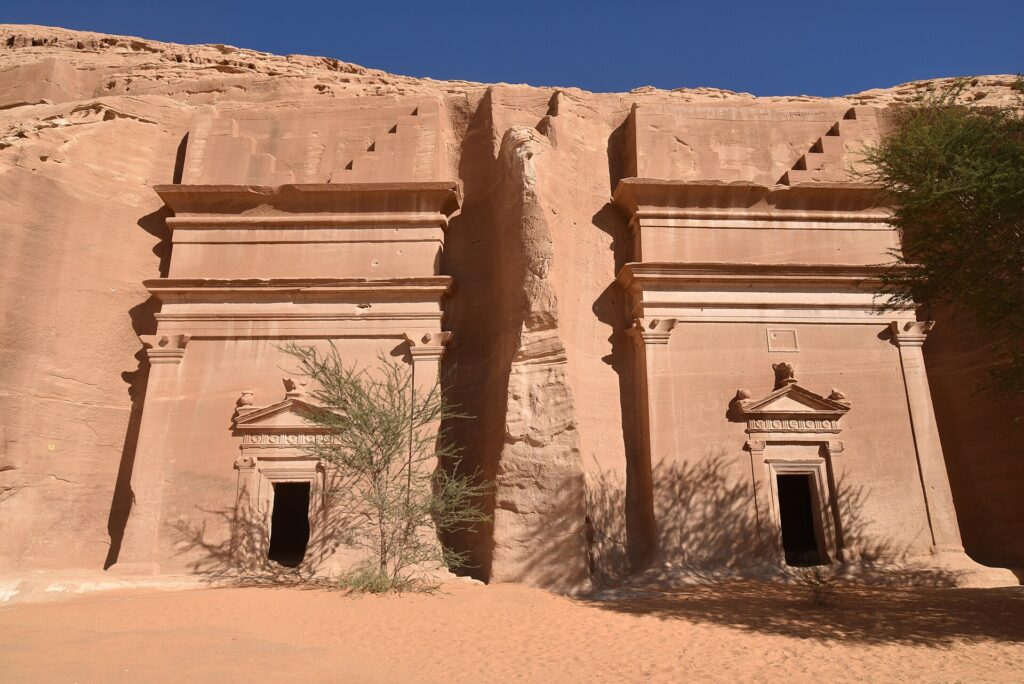
The blunt answer people search for — is it too hot in AlUla in July or August? — is: it’s hot, but not off-limits. Summer AlUla weather averages about 38°C by day in July and August, and the hottest afternoons can hit 41–42°C. That’s serious heat, and the middle of the day (roughly 11am to 4pm) is not the time to be wandering exposed sandstone with no shade.
What makes a summer trip work is timing your day around the sun. Do Hegra and the outdoor sites at opening in the early morning, retreat indoors or to the pool through the peak, and come back out for the golden hour and cooler evenings — nights only fall to about 21–22°C, so dinners outside are lovely. The upside of visiting in summer is real: fewer people, better hotel rates, and full availability at the marquee sites. Bring more water than feels reasonable, sun cover, and a genuine plan for the midday hours. We go deeper on this in our guide to visiting AlUla in summer.
- Start at sunrise. The gap between a 7am and an 11am start in July is the difference between pleasant and dangerous.
- Hydrate relentlessly. The dry air hides how much you’re losing.
- Use the midday break. Most experienced summer visitors treat noon-to-4pm as indoor time.
- Book shaded or air-conditioned experiences for the hottest hours.
Best months to visit based on AlUla weather
Pulling the AlUla weather data together into a simple recommendation: for stress-free, all-day sightseeing, October through March is the comfortable window, and November, December, February and March are the standout months — warm days, no rain, manageable nights. January is comfortable by day but the coldest for evenings. April and October are the warm-but-workable edges. May through September is the hot season best suited to travellers who will genuinely plan around the midday heat.
| Priority | Best months | Why |
|---|---|---|
| All-day sightseeing, no heat stress | Nov, Dec, Feb, Mar | Highs 21–27°C, dry, clear |
| Warm days, don’t mind cold nights | January | Pleasant days, chilly evenings |
| Warm shoulder, thinner crowds | Late Oct, early Apr | ~31–32°C, start early |
| Lowest prices, will plan around heat | Jun–Sep | Cheap, quiet, but 36–38°C+ |
If you’re weighing dates against events and prices as well as AlUla weather, our overview of the AlUla season lays out how the tourism calendar maps onto the climate.
Rain, sun and sandstorms
Rain barely features in AlUla weather. The town averages only around 30 mm of rainfall a year — the wettest month, January, might see a few millimetres, and June is effectively bone dry. You can plan an outdoor-heavy trip in almost any month without seriously worrying about washout. Skies are clear and sunny for most of the year, which is fantastic for the sandstone-and-blue-sky photography AlUla is famous for.
The desert caveat is wind and occasional dust. Spring can bring the odd windy, hazy day when blowing sand flattens the light and gets into everything. It’s not common enough to reshape a whole trip, but it’s worth having sunglasses and a scarf or buff handy. The relentless sun is the bigger daily factor — UV is strong even on a mild winter day, so sunscreen is a year-round item, not just a summer one. AlUla’s tourism is managed by the Royal Commission, and the official Experience AlUla site is the place to confirm current opening hours and any seasonal event dates before you lock in.
What to pack for AlUla weather
Because of the day-to-night swing, packing for AlUla weather is really about layers plus serious sun protection, whatever month you visit. In winter, think light clothing for the day and a warm jacket for the evening. In summer, think loose, breathable, fully covering clothing to keep the sun off your skin, plus everything you need to manage heat.
- Sun protection — high-SPF sunscreen, sunglasses, and a wide-brim hat. Non-negotiable year-round.
- A warm layer — a proper jacket for winter nights, a light one even in summer for cool evenings.
- Comfortable closed shoes — you’ll walk on sand and uneven rock at Hegra and Dadan.
- A refillable water bottle — the dry air dehydrates you faster than you’d expect.
- A scarf or buff — handy for occasional spring dust and for sun on the back of the neck.
For a full checklist tailored to each season, see our dedicated guide on what to pack for AlUla. The short version: match your clothing to the daytime AlUla weather in the table above, then always add one layer for the night.
Frequently asked questions
What is the best month for good AlUla weather?
November through March offers the most comfortable AlUla weather, with daytime highs of roughly 21–27°C, dry clear skies, and little chance of rain. March and November are arguably the best all-round months because the nights are milder than in deep winter, so you get warm days without a bitterly cold evening.
Is it too hot to visit AlUla in July and August?
It’s hot but not impossible. July and August average about 38°C by day and can top 41–42°C on peak afternoons. A summer trip works if you sightsee at sunrise, take the midday hours off indoors, and return for cooler evenings around 21–22°C. The trade-off you gain is lower prices and thinner crowds.
How cold does AlUla get at night in winter?
Winter nights are surprisingly cold for a desert. January, the coldest month, averages overnight lows of around 4–7°C, and it can feel colder in the open with wind. Pack a warm jacket for evening activities like stargazing, dinners in the rock formations, and early-morning balloon launches.
Does it rain much in AlUla?
Barely. AlUla is arid desert and receives only about 30 mm of rain per year, mostly in small amounts between January and April. Most days of the year are clear and sunny, so you can plan outdoor sightseeing in almost any month without worrying about rain disrupting your trip.
What should I pack for AlUla weather?
Whatever the month, pack for layers and sun: high-SPF sunscreen, sunglasses, a wide-brim hat, comfortable closed walking shoes, and plenty of water. Add a warm jacket for winter nights or a light layer for cooler summer evenings, since AlUla weather always drops significantly after dark.