Wadi AlFann is AlUla’s ambitious 65-square-kilometre “Valley of the Arts”, a permanent land-art destination in the Saudi desert that is not yet open to general visitors. If you are planning a trip around it, the honest answer up front is that Wadi AlFann is still being built, with a public unveiling reported from 2028 onwards. I have visited AlUla twice while the site was in progress, and this guide covers exactly what it is, which artists are creating work there, when it is likely to open, and how to see world-class land art in AlUla right now while you wait.
Quick answer: is Wadi AlFann open yet?
No. As of mid-2026, Wadi AlFann is not open to the general public. It is a large-scale construction and commissioning project, and the most-cited opening window is “from 2028 onwards”, though earlier reporting floated 2026 and some sources now stretch to 2030. Treat any single date with caution. The good news: you do not need the valley to be finished to experience monumental land art in AlUla. The annual Desert X AlUla exhibition already delivers that, and I cover it in detail below.
In this guide
- What is Wadi AlFann?
- When does Wadi AlFann open?
- The artists behind Wadi AlFann
- See land art in AlUla right now: Desert X
- Planning a visit to Wadi AlFann and AlUla
- Wadi AlFann vs other AlUla attractions
- Is Wadi AlFann worth waiting for? My honest take
- Frequently asked questions
What is Wadi AlFann?
Wadi AlFann translates from Arabic as “Valley of the Arts”. It is a roughly 65-square-kilometre stretch of desert canyon, cliff and open sand set aside for permanent, large-scale, site-specific land art. That last phrase matters: the works are not sculptures trucked in and dropped on plinths. They are being carved into, cut through and grown out of the landscape itself, designed to sit there permanently and change with the light and the seasons.
Land art as a movement goes back to the American West of the late 1960s and 1970s, where artists left the gallery to work directly with earth, rock and sky. This is Saudi Arabia’s attempt to build the definitive 21st-century version of that idea, at a scale no single land-art site has attempted before. The organisers have been clear it is “not a sculpture park” but a landscape you move through over hours, not minutes.
The site sits within the wider AlUla cultural district in Saudi Arabia’s northwest, the same region that holds the UNESCO World Heritage tombs of Hegra, the mirrored Maraya concert hall, and the dramatic Elephant Rock. It is being positioned as the crown jewel of that district: a permanent, year-round reason to travel to AlUla specifically for contemporary art. If you already plan your itinerary around the best things to do in AlUla, Wadi AlFann is the headline addition still to come.
When does Wadi AlFann open?
This is the question everyone actually wants answered, and it is genuinely messy. The official language from the Royal Commission for AlUla has settled on Wadi AlFann “unveiling from 2028 onwards”. Earlier announcements around 2022 talked about completing the first artworks by 2024, which clearly slipped. Some more recent trade and press coverage now references dates as late as 2030 for the full site.
My reading, having watched the project’s messaging shift, is this: 2028 is the target for a first-phase opening, and it may well arrive in stages rather than as one grand launch day. A monumental land-art commission by artists like James Turrell is not a project you rush, and weather, engineering and the sheer scale of moving earth in a protected desert all push timelines out. So if you are booking flights, do not book them for a confirmed opening date yet. There isn’t one you can rely on.
Has there been any preview access?
Sort of. Wadi AlFann has hosted occasional one-off events on its land during the AlUla Arts Festival season, and in January 2025 there was a dedicated presentation around James Turrell’s commission. During the 2026 festival, the site hosted a one-time contemporary performance (“Vertigo”, featuring French highliner Nathan Paulin) rather than open gallery-style access to the finished artworks. So there have been glimpses, but no walk-in-and-explore visitor experience of the permanent works yet. To confirm the current status before you travel, check the official Experience AlUla events pages.
The artists behind Wadi AlFann
The reason Wadi AlFann is being taken seriously in the art world, rather than dismissed as another vanity megaproject, is the calibre of the first five commissioned artists. Three are titans of the original land-art generation; two are among Saudi Arabia’s most respected contemporary artists. Here is who is making what.
James Turrell
Turrell is the headline name. Famous worldwide for his “Skyspaces” and his decades-long Roden Crater project in Arizona, at Wadi AlFann he is creating a series of chambers and spaces cut into the canyon floor, reached by tunnels and stairs. The work is about light, sky and perception: you descend into the terrain and the desert sky becomes the ceiling. If Wadi AlFann produces one globally famous image, it will probably come from Turrell’s piece.
Agnes Denes
A pioneer of environmental and conceptual art, Denes is carving a series of pyramids into the rock, a meditation on civilisation, progress and human achievement. Her involvement at an advanced age gives the commission real historical weight; she is one of the last living founders of the movement the valley is built to honour.
Michael Heizer
Heizer, the creator of Nevada’s vast “City”, is making lineal engravings directly into the Quweira sandstone, working with the geology rather than on top of it. His contribution ties Wadi AlFann to the raw, monumental American land-art tradition of cutting into the earth itself.
Ahmed Mater and Manal AlDowayan
The two Saudi artists ground Wadi AlFann in local narrative. Ahmed Mater, one of the country’s best-known contemporary artists, is creating a large subterranean work titled “Ashab Al-Lal” that uses underground spaces and mirrors to play with myth and mirage. Manal AlDowayan, who represented Saudi Arabia at the Venice Biennale, is building a piece that surfaces historic and contemporary narratives of the land and its people. Together they ensure the valley is not just imported Western land art dropped into the Gulf, but a genuinely Saudi cultural statement.
See land art in AlUla right now: Desert X
Here is the practical workaround if you cannot wait for Wadi AlFann. Every year during the AlUla Arts Festival, AlUla hosts Desert X AlUla, a temporary open-air exhibition of large-scale, site-specific installations spread across the desert. It is the closest thing you can currently experience to the Wadi AlFann concept, and it is explicitly described as a pre-opening programme for the permanent valley.
Desert X AlUla 2026 ran from 16 January to 28 February 2026 under the theme “Space Without Measure”, bringing together 11 artists across the landscape. The AlUla Arts Festival itself ran 16 January to 14 February 2026. These are winter dates for a reason: the desert is genuinely pleasant in January and February and brutal in summer, which is why the arts season and the best travel window line up. For a full breakdown of the seasons, see our guide to the best time to visit AlUla.
I did the Desert X trail on my last trip and it genuinely scratches the same itch. You drive between installations scattered across canyons and open sand, walking out to each one. It is not permanent and it is not Wadi AlFann, but it is monumental land art in exactly this landscape, and for now it is the real answer to “what can I actually see?” You can check exact editions and details on the Desert X official site.
Desert X AlUla prices and practicalities
Unlike some AlUla heritage sites, Desert X is affordable. General admission was SAR 50 for the 2026 edition, with children under 12 free. Guided options cost more. These are the figures I would budget around, though always confirm current prices when you book.
One practical tip from experience: go early in the morning or late afternoon. The installations are spread across open desert with little shade, so midday in even a “mild” January can be tiring, and the low winter light makes the sandstone glow for photographs. Wear proper closed shoes, because you are walking on soft sand and rock, not paved paths, and carry more water than you think you need even though bottled water is provided at the entrance.
| Ticket / option (Desert X AlUla 2026) | Price (SAR) | Notes |
|---|---|---|
| General admission | 50 | Self-guided; parking, shuttle and water included |
| Children under 12 | Free | With a paying adult |
| Public guided walking tour (75 min) | 100 | Small group with a guide |
| Open-top car tour (75 min) | 200 per seat | Good if you want to cover ground fast |
| Private guided walking tour (75 min) | 1,000 | Private group booking |
Planning a visit to Wadi AlFann and AlUla
Because Wadi AlFann is not open, your trip will really be an AlUla trip with the valley pencilled in for a future return. Still, it is worth understanding the geography so you know what you are dealing with when it does open.
AlUla sits in northwest Saudi Arabia. The quickest way in is a domestic flight to AlUla International Airport (ULH), roughly a 20-minute drive from the old town, with connections mainly through Riyadh and Jeddah on Saudia and flynas. From the airport it is a short hop to the main AlUla cultural sites; Wadi AlFann lies within the same district, a manageable drive from the town centre. You will want a rental car or a booked driver either way, because AlUla’s attractions are spread out and there is no meaningful public transport between them.
| Getting to AlUla | Detail |
|---|---|
| Airport | AlUla International (ULH) |
| Airport to old town | About 20 minutes by car |
| Main hubs | Riyadh (approx. 1h 45m flight), Jeddah (approx. 1h 30m) |
| Best months | October to March (winter); arts season Jan-Feb |
| Getting around | Rental car or private driver; no city transit |
Give yourself at least two full days in AlUla even without the valley open; three is better once you want unhurried time inside works like Turrell’s. If you are tight on time, our AlUla in 2 days itinerary shows how to combine Hegra, the old town and the desert without rushing. When Wadi AlFann finally opens, I would add a dedicated half-day, because land art at this scale rewards slow, quiet walking rather than a quick photo stop.
Wadi AlFann vs other AlUla attractions
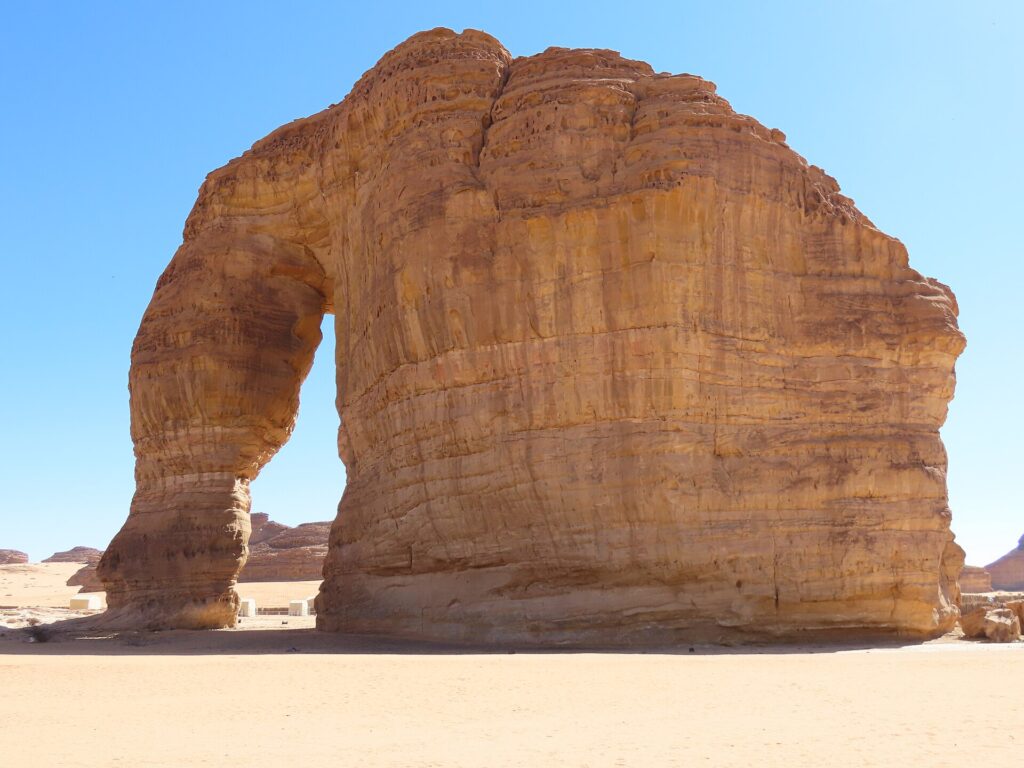
It helps to place Wadi AlFann against what is already open, so you understand what it will and will not replace. Hegra is ancient Nabataean archaeology and Saudi Arabia’s first UNESCO World Heritage Site. Maraya is a mirrored concert hall and event venue. Elephant Rock is a natural formation. This is contemporary human-made art at landscape scale, which is a genuinely different experience from all three.
- Hegra: 2,000-year-old rock-cut tombs; guided, ticketed, open now. The historical heavyweight.
- Maraya: the world’s largest mirrored building and a concert venue; visit tied to events and tours. See our Maraya AlUla guide.
- Elephant Rock (Jabal AlFil): free natural landmark, great at sunset, open now.
- Wadi AlFann: permanent contemporary land art; not open yet, targeting 2028 onwards.
In short, none of them competes with it; they complement it. When it opens, Wadi AlFann will give AlUla a fourth completely distinct pillar alongside ancient heritage, natural wonders and architectural spectacle. For UNESCO context on the wider heritage of the area, the UNESCO listing for Hegra (Al-Hijr) is the authoritative source.
Is Wadi AlFann worth waiting for? My honest take
Yes, but do not build a 2026 or 2027 trip around it. That is the honest version. The artist line-up is world-class and the landscape is extraordinary, so the finished Wadi AlFann has a real shot at becoming a genuine art pilgrimage site, the kind of place serious land-art fans plan a trip specifically to reach. That is a rare thing to be able to say about a project that does not exist yet.
But there are real trade-offs to be honest about. The timeline has already slipped once and could slip again. There is a live ethical conversation about large cultural commissions funded by the Saudi state, which some travellers will want to weigh for themselves. And until it opens, there is simply nothing of the permanent works to walk into, so anyone flying in expecting a finished valley today will be disappointed.
My advice: go to AlUla now for Hegra, Maraya, Elephant Rock and the winter Desert X exhibition, treat that as a complete and worthwhile trip in its own right, and keep Wadi AlFann on your list for a return visit around or after 2028. If you time a future trip to the arts festival season, you will get both the permanent valley and the temporary Desert X works in one visit, which will be the ultimate AlUla land-art itinerary once Wadi AlFann is finally open.
Frequently asked questions
What does Wadi AlFann mean?
Wadi AlFann is Arabic for “Valley of the Arts”. It refers to a roughly 65-square-kilometre area of AlUla’s desert set aside for permanent, large-scale land art by internationally renowned artists.
Is Wadi AlFann open to visitors in 2026?
No. As of mid-2026, it is not open to the general public. The commonly reported opening window is from 2028 onwards, and even that should be treated as a target rather than a confirmed date.
Which artists are creating work at Wadi AlFann?
The first five commissioned artists are James Turrell, Agnes Denes, Michael Heizer, Ahmed Mater and Manal AlDowayan, a mix of pioneering international land artists and leading Saudi contemporary artists.
How can I see land art in AlUla before Wadi AlFann opens?
Visit during the AlUla Arts Festival season (January to February), when the Desert X AlUla exhibition displays temporary large-scale installations across the desert. General admission was around SAR 50 for the 2026 edition, with under-12s free.
How far is Wadi AlFann from AlUla town?
Wadi AlFann lies within the AlUla cultural district, a manageable drive from the old town and roughly 20 minutes or so from AlUla International Airport. You will need a rental car or private driver, as there is no public transport between AlUla’s sites.