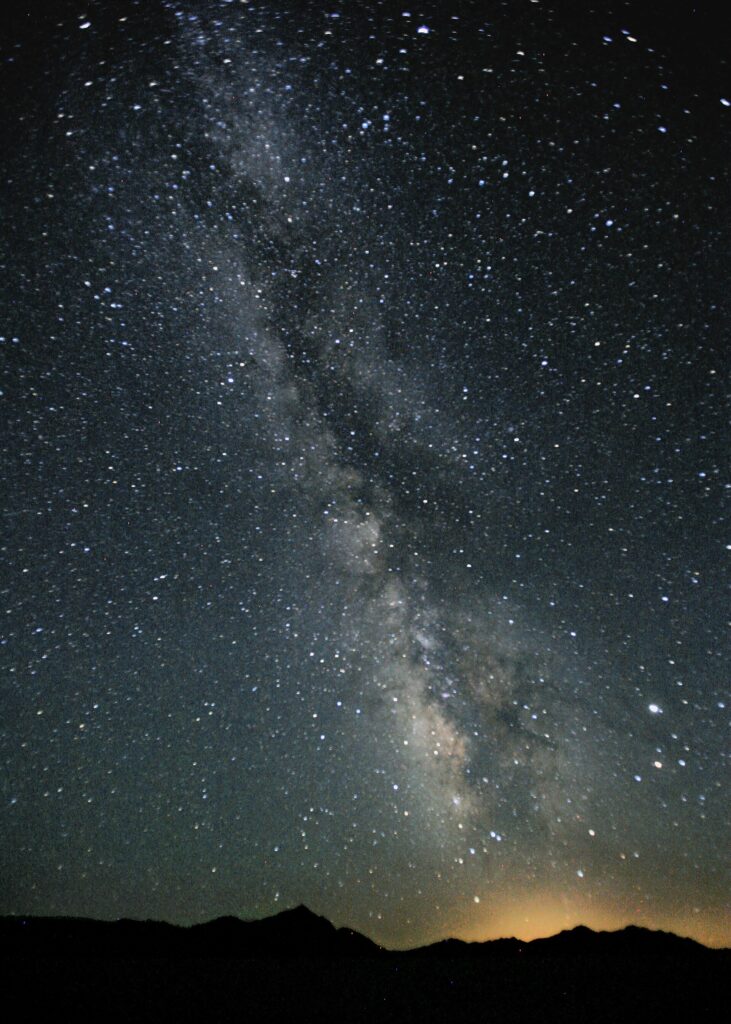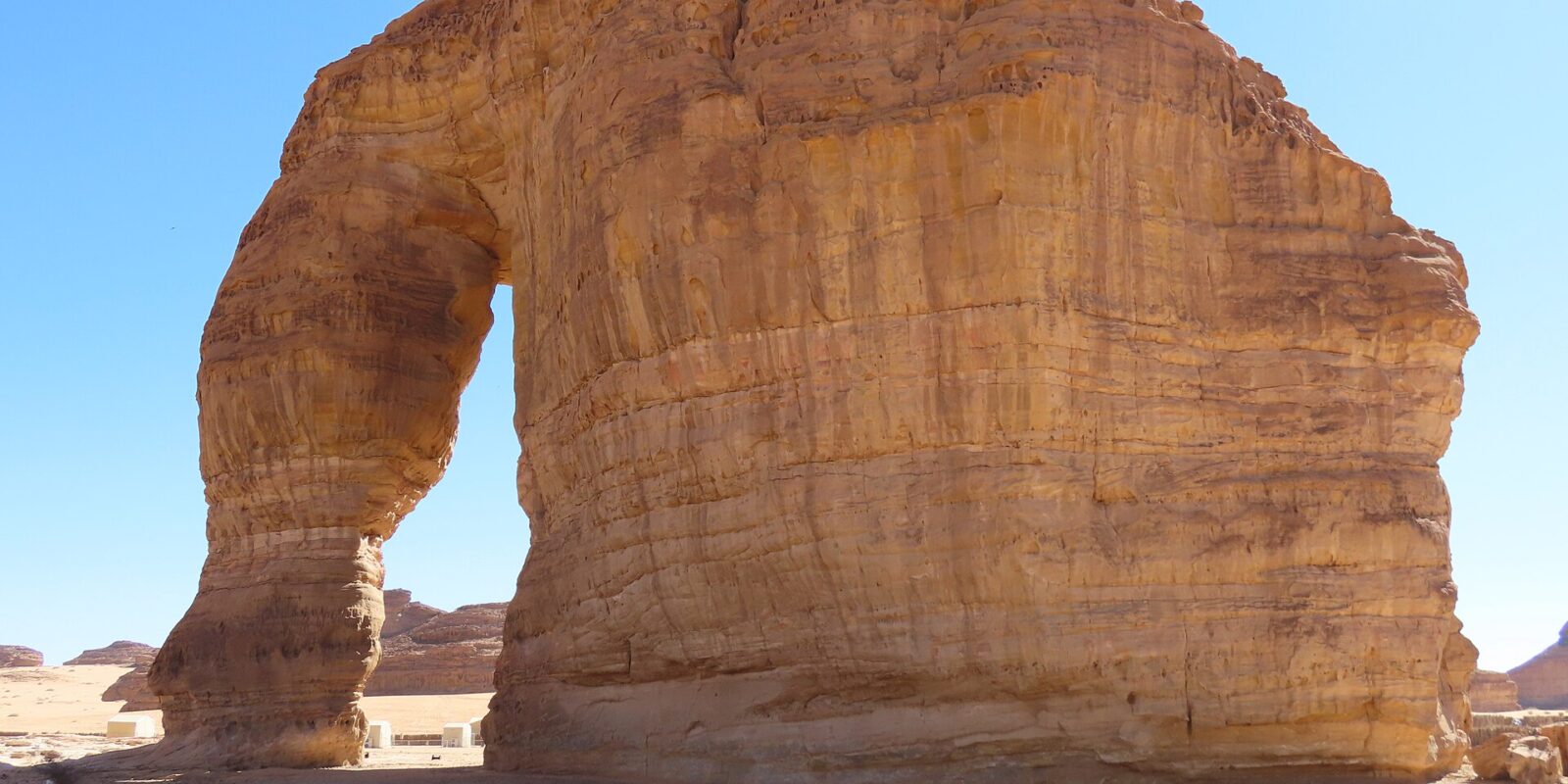
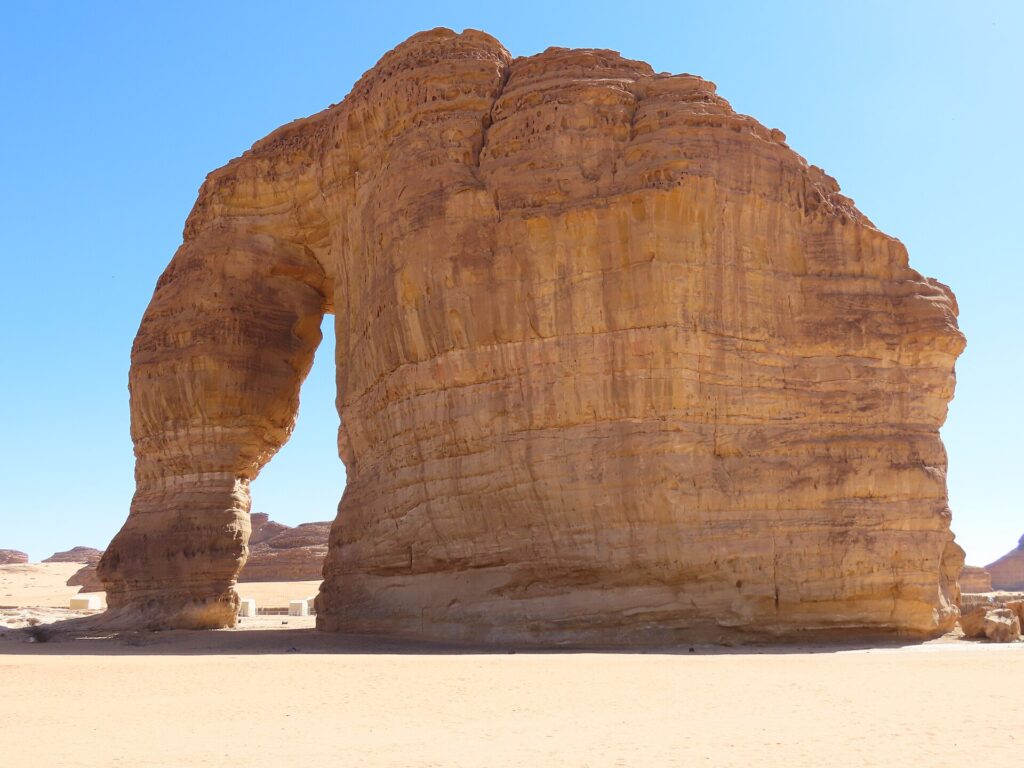
Stargazing in AlUla is the rare kind of travel experience that actually lives up to its own hype. I came to Saudi Arabia’s northwest for the sandstone tombs and the Elephant Rock, but the night sky is the thing I keep telling friends about. AlUla sits inside one of the darkest certified skies in the region, and on a moonless night the Milky Way is not a faint smudge overhead. It is bright enough to throw a soft shadow. This guide covers the best spots, current 2026 prices, when to go, and the mistakes to avoid. If you only book one nighttime activity here, make it stargazing in AlUla.
Quick answer: The best stargazing in AlUla is a guided tour to the Gharameel pinnacles (from around SAR 397 per person, roughly 3 to 4 hours) or the shorter Sharaan tour (from about SAR 350). Go between October and April, aim for a night close to the new moon, and book a few days ahead in peak season. That is the short version of stargazing in AlUla, and the rest of this guide fills in the detail.
In this guide
- Why stargazing in AlUla is worth the trip
- Where to look up: the best stargazing spots in AlUla
- What you will actually see in the sky
- Booking a guided stargazing in AlUla tour: prices and what is included
- Best time of year for stargazing in AlUla
- AlUla Manara: the future of stargazing in AlUla
- How to get to AlUla
- Practical tips for stargazing in AlUla
- Is it worth it? My honest take
- Frequently asked questions
Why stargazing in AlUla is worth the trip
AlUla is not just marketing itself as dark. It has the certification to back it up. The AlUla Manara and AlGharameel Nature Reserves were named by DarkSky International as Saudi Arabia’s and the wider Gulf’s first-ever Dark Sky Park, and the protected zone has since expanded to take in Sharaan National Park and the Wadi Nakhlah Nature Reserve. It is a genuine credential, not a slogan, and it is the foundation of what makes stargazing in AlUla so good.
That expansion pushed the total protected night-sky area to roughly 6,146 square kilometres, which makes it one of the largest connected Dark Sky Parks on the planet. Independent readings place these skies in the top few percent globally for natural darkness. In plain terms, stargazing in AlUla is about as good as it gets without flying to the Atacama or the Australian outback.
What makes stargazing in AlUla special is not only the darkness, though. It is the foreground. You are looking up from between wind-carved sandstone pillars and open desert, not a flat car park. The rocks give the sky a sense of scale that a lot of dark-sky destinations simply do not have.
Where to look up: the best stargazing spots in AlUla
There are three realistic ways to do stargazing in AlUla: a guided tour to Gharameel, a guided tour to Sharaan, or simply stepping outside your desert hotel. Each suits a different kind of traveller, and I would happily do all three on a longer trip. Below is how I would choose between them for stargazing in AlUla.
Gharameel, the iconic pinnacles
Gharameel is the postcard spot. Picture dark, thin fingers of stone standing up out of the sand, with the Milky Way arcing straight over them. It sits well outside the town centre, so budget around an hour of driving with the last stretch off-road. You need a 4×4 and, honestly, a guide who knows the tracks in the dark.
This is the location most guided tours use, and for good reason. On darker nights the guides focus on constellations and the galactic core; near a full moon the emphasis shifts to the moonlit landscape and a short walk among the rocks. If you want the classic image of stargazing in AlUla, Gharameel is where you get it.
Sharaan, closer and a little shorter
Sharaan National Park is the other certified reserve running organised sessions. The tour here is shorter, at a bit over two hours, and departs from the Pangaea Adventure Club. It is a good pick if you are short on time, travelling with slightly older kids, or want an earlier finish so you are not driving back late.
Your hotel terrace or the open desert
Because the whole area is so dark, you do not strictly need a tour. If you are staying at one of the Ashar Valley resorts, you can often get a genuinely excellent view of the stars from your own terrace once the outdoor lights are dimmed. Many properties will also lay on a private astronomer or a telescope on request. It is the laziest form of stargazing in AlUla, and on a clear new-moon night it is still remarkable.
What you will actually see in the sky
Manage your expectations in the right direction here. On a clear, moonless night the band of the Milky Way is visible to the naked eye, running right across the sky, and that alone is what most people remember about stargazing in AlUla. You do not need a telescope for the headline sight.
Bright planets are easy wins too. Depending on the month, Venus, Jupiter and Saturn are all visible without any kit, and a guide’s telescope will pull in Saturn’s rings and the craters along the moon’s terminator. If your visit lands near a meteor shower, such as the Perseids in August or the Geminids in December, you will also catch shooting stars streaking overhead, which turns a good night of stargazing in AlUla into a great one.
Booking a guided stargazing in AlUla tour: prices and what is included
You can book both flagship experiences directly through the official Experience AlUla website, or through your hotel concierge. Here are the current numbers for stargazing in AlUla at the time of writing, in 2026.
| Experience | From (SAR) | Duration | Min age | Meeting point |
|---|---|---|---|---|
| Gharameel stargazing | 397 adult / 340 child | 3 to 4 hours | 8 | Husaak AlUla Adventure Camp |
| Sharaan stargazing | 350 | 2 hr 20 min | 10 | Pangaea Adventure Club |
The Gharameel session usually includes a professional English- and Arabic-speaking guide, transport to and from the meeting camp, free parking, and a dinner of traditional Saudi dishes cooked at the camp. That dinner genuinely matters. Sitting by the fire with food before the sky fully darkens is half the experience of stargazing in AlUla.
The Sharaan tour is lighter on inclusions, with a guide, snacks and water, and transport from the Pangaea club rather than a full meal, which is part of why it costs less and runs shorter. Neither price is cheap by regional standards, but for a certified dark-sky reserve with a trained guide, I found it fair. Arrive at least 15 minutes before your slot; tours leave on time.
One practical note: availability is seasonal, and popular experiences sometimes pause and return. If the exact tour you want shows as coming back soon, check the alternative reserve or ask your hotel, rather than assuming stargazing in AlUla is unavailable altogether.
Best time of year for stargazing in AlUla
The sweet spot for stargazing in AlUla is October to April. During those months the desert nights are mild, the air is dry, and clear skies are the norm rather than the exception. This is also when AlUla’s wider events calendar is busiest, so you are combining comfortable weather with the best of everything else on offer.
The single biggest factor for stargazing in AlUla, though, is the moon, not the season. A bright moon washes out the fainter stars and the Milky Way entirely. Check a lunar calendar and try to book within roughly three or four nights of the new moon. That one decision will do more for your view than anything else.
If you are chasing the bright galactic core specifically, the classic Milky Way core season runs from around late winter through to autumn, when it climbs high enough to photograph well. Combine a core-season month with a new moon and you get the best possible stargazing in AlUla. Summer is technically great for the core, but the daytime heat is brutal, so read our take on AlUla in summer before you commit to a June or July visit.
Winter travellers should also line their trip up with the region’s festival season. Our guide to Winter at Tantora in AlUla covers the concerts and events that pair perfectly with a cold, crisp night of stargazing in AlUla.
AlUla Manara: the future of stargazing in AlUla
The most exciting development is still to come. AlUla Manara is a purpose-built astrotourism centre, designed by Heatherwick Studio, whose spiralling form takes its cue from galaxies and planetary rings. It is set to house a main telescope four metres in diameter, plus two further two-metre telescopes, which would put it among the largest observatories in the world.
The wider masterplan includes on-site accommodation and a dedicated stargazing lodge, turning a guided night out into something you can build a whole stay around. No firm opening date had been announced at the time of writing, so treat it as a reason to come back rather than a box to tick now. When it opens, it will likely become the headline act for stargazing in AlUla.
How to get to AlUla
Most visitors fly into Prince Abdul Majeed bin Abdulaziz Airport (airport code ULH), a short drive from the town. There are direct hops from Riyadh and Jeddah on Saudia and flynas; Riyadh is roughly a two-hour flight, Jeddah a little shorter. Frequencies shift with the season, so check current schedules before you lock in dates.
| Route | Airlines | Approx. flights / week | Flight time |
|---|---|---|---|
| Riyadh (RUH) to AlUla (ULH) | Saudia + flynas | ~7 combined | ~2 hours |
| Jeddah (JED) to AlUla (ULH) | Saudia | ~3 | ~1.5 hours |
You can also drive, as AlUla is a long but scenic road trip from the bigger cities, but for a short stargazing-focused break, flying and renting a car locally is far easier. You will want your own vehicle in daylight anyway, to reach sights like the towering Elephant Rock in AlUla and the historic Old Town before your night session.
Getting around at night is the part people underestimate. The reserves sit well outside town, roads are unlit, and camels sometimes wander onto them after dark, so I would not self-drive to Gharameel on a first visit. This is exactly why a guided tour makes sense for stargazing in AlUla: you are collected, driven over the rough tracks by someone who knows them, and dropped back without navigating the desert yourself at midnight.
Practical tips for stargazing in AlUla
A few things I wish I had known before my first night of stargazing in AlUla, learned partly by getting them wrong.
- Dress warmer than you expect. Desert nights get genuinely cold from November to February, so bring a fleece and long trousers even when the afternoon was hot.
- Protect your night vision. Avoid your phone screen for 20 to 30 minutes before serious viewing; your eyes need that long to fully adapt to the dark.
- Bring a red-light torch rather than a white one, so you can see the ground without ruining everyone’s adapted eyes.
- Do not over-rely on a full moon night. It is beautiful, but if the Milky Way is your goal, the moon is the enemy.
- Manage camera expectations. Guides can point out constellations, but astrophotography needs a tripod and long exposures, so bring your own kit if that is your aim.
- Book ahead in peak season. Winter weekends fill up; a few days’ notice is usually enough, but do not leave it to the same afternoon.
If you are pairing your trip with other marquee activities, note that a dawn hot air balloon over AlUla is the natural bookend to a night of stars: sunset among the rocks, stars overnight, sunrise from a balloon basket.
Is it worth it? My honest take
Let me be honest about the trade-offs. The guided tours are not cheap, the drive to Gharameel is long and bumpy, and if you happen to hit a cloudy night or a bright moon, you can pay full price for an underwhelming sky. Cloud is rare here but not impossible, and there are no refunds for the moon.
Even with those caveats, stargazing in AlUla was one of the highlights of my entire trip to Saudi Arabia. The combination of a certified dark sky, a dramatic desert foreground, and a proper meal by the fire is hard to beat anywhere in the Middle East.
Recap: pick a new-moon night between October and April, book the Gharameel tour for the full experience or Sharaan for a shorter evening, dress warm, and keep your phone in your pocket. Do that and stargazing in AlUla will comfortably justify the airfare.
Frequently asked questions
How much does stargazing in AlUla cost?
At the time of writing in 2026, the guided Gharameel experience starts from around SAR 397 per adult and SAR 340 per child, while the shorter Sharaan tour starts from about SAR 350 per person. Prices and availability change seasonally, so confirm on the official Experience AlUla site when you book.
What is the best time of year to go?
October to April gives you mild nights and reliably clear skies for stargazing in AlUla. Whatever month you choose, aim for a date within a few nights of the new moon, because moonlight is the single biggest thing that can spoil the view of the Milky Way.
Do I need a tour, or can I stargaze on my own?
You can absolutely enjoy the sky from your hotel terrace or a quiet patch of desert, since the whole region is certified dark. But a guide is worth it for Gharameel specifically, because the off-road drive is genuinely tricky in the dark and the guides know exactly where to point.
Is AlUla really a certified dark sky destination?
Yes. The AlUla Manara and AlGharameel Nature Reserves are certified by DarkSky International as the first Dark Sky Park in Saudi Arabia and the Gulf, and the protected area has since grown to roughly 6,146 square kilometres, among the largest connected dark-sky zones anywhere.
Is stargazing in AlUla suitable for children?
Mostly. The Gharameel tour has a minimum age of 8 and the Sharaan tour a minimum of 10, largely because of the late finish and the off-road driving. For younger kids, viewing the stars from a hotel terrace is the easier and more flexible option.
Related guides