The best time to visit Jeddah is between November and March, when daytime highs settle at a comfortable 20–31°C and the brutal Red Sea humidity finally eases off. I’ve been through Jeddah in both February and August, and the difference is night and day — literally, because in summer you only go outside after dark.
If you want the one-line answer: February and October give you the best balance of pleasant weather, thinner crowds and hotel rates that peak-season demand hasn’t inflated yet. This guide walks through the best time to visit Jeddah month by month, with real temperatures, the Hajj dates you’ll want to plan around, and how far ahead to book so you’re not overpaying.
In this guide
- The best time to visit Jeddah at a glance
- Jeddah weather month by month (with table)
- Winter (November–March): the sweet spot
- Summer (April–October): survivable, not enjoyable
- Avoiding Hajj: the one window to plan around
- Best time to visit Jeddah for lower prices and fewer crowds
- Red Sea swimming and diving season
- Quick recap: choosing your month
- Frequently asked questions
The best time to visit Jeddah at a glance
Here’s the short version. The best time to visit Jeddah is the cool, dry stretch from November through March. Within that window, February and October sit at the top of my list because they pair genuinely pleasant weather with fewer tourists than the December–January peak.
Jeddah has a subtropical desert climate — hot most of the year, with humidity that the Red Sea makes worse. So the calendar splits neatly into two seasons: a comfortable winter you’ll actually enjoy, and a punishing summer you have to work around. There is no real spring or autumn shoulder in the European sense; the shift from bearable to brutal happens fast, usually across April.
The other thing that shapes the best time to visit Jeddah is Hajj. As the gateway city to Mecca, Jeddah absorbs millions of pilgrims during the pilgrimage, and that single week or two can upend hotel prices and airport queues no matter how good the weather is. More on the exact dates below.
Jeddah weather month by month
Numbers make the seasons obvious. The table below shows typical average highs and lows, the Red Sea water temperature, and a quick verdict for each month. Treat these as long-run averages — any given day can run a few degrees either side.
| Month | Avg high | Avg low | Sea temp | Verdict |
|---|---|---|---|---|
| January | 28°C | 20°C | ~26°C | Excellent, but peak prices |
| February | 29°C | 20°C | ~25°C | Best overall |
| March | 31°C | 21°C | ~26°C | Very good, warming up |
| April | 34°C | 24°C | ~27°C | Heat arrives |
| May | 37°C | 26°C | ~28°C | Hot & Hajj window |
| June | 38°C | 27°C | ~30°C | Very hot |
| July | 39°C | 28°C | ~31°C | Peak heat |
| August | 39°C | 28°C | ~32°C | Peak heat & humidity |
| September | 38°C | 27°C | ~31°C | Still brutal, 67% humidity |
| October | 36°C | 25°C | ~30°C | Cooling; great value late |
| November | 33°C | 23°C | ~28°C | Comfortable again |
| December | 29°C | 21°C | ~27°C | Excellent, peak crowds |
Read that table top to bottom and the pattern jumps out: five kind months bookending seven hot ones. That’s why every honest month-by-month answer to the best time to visit Jeddah lands on the same block — late autumn into early spring.
Winter (November–March): the sweet spot
This is the season the whole city opens up for. Daytime highs run 20–31°C, nights cool to around 19–22°C, and rain is almost non-existent — Jeddah gets only a handful of wet days all year, mostly a brief November shower. If you’re picturing long evenings on the waterfront, this is the best time to visit Jeddah for exactly that.
December and January: the busy peak
These two months have the most reliably cool weather, which is precisely why everyone else wants them too. Expect the biggest crowds of the year at the Corniche, at Al-Balad’s historic lanes, and at the airport. Hotel demand peaks here: mid-range 3–4 star rooms that sit around SAR 300–600 in quieter months creep toward the top of that range, and five-star properties start from roughly SAR 800 a night. If your dates are locked to the winter holidays, book six to eight weeks ahead to avoid the worst rates.
February and March: the smarter pick
February is my personal answer to the best time to visit Jeddah. You keep the cool, dry weather of December but lose a chunk of the crowds and the holiday price surge. March is nearly as good, with highs nudging up toward 31°C — warm enough that midday sun starts to bite, but still very pleasant by the water in the late afternoon. For a first-timer weighing comfort against cost, February and March are hard to beat, and they pair perfectly with a packed list of things to do in Jeddah.
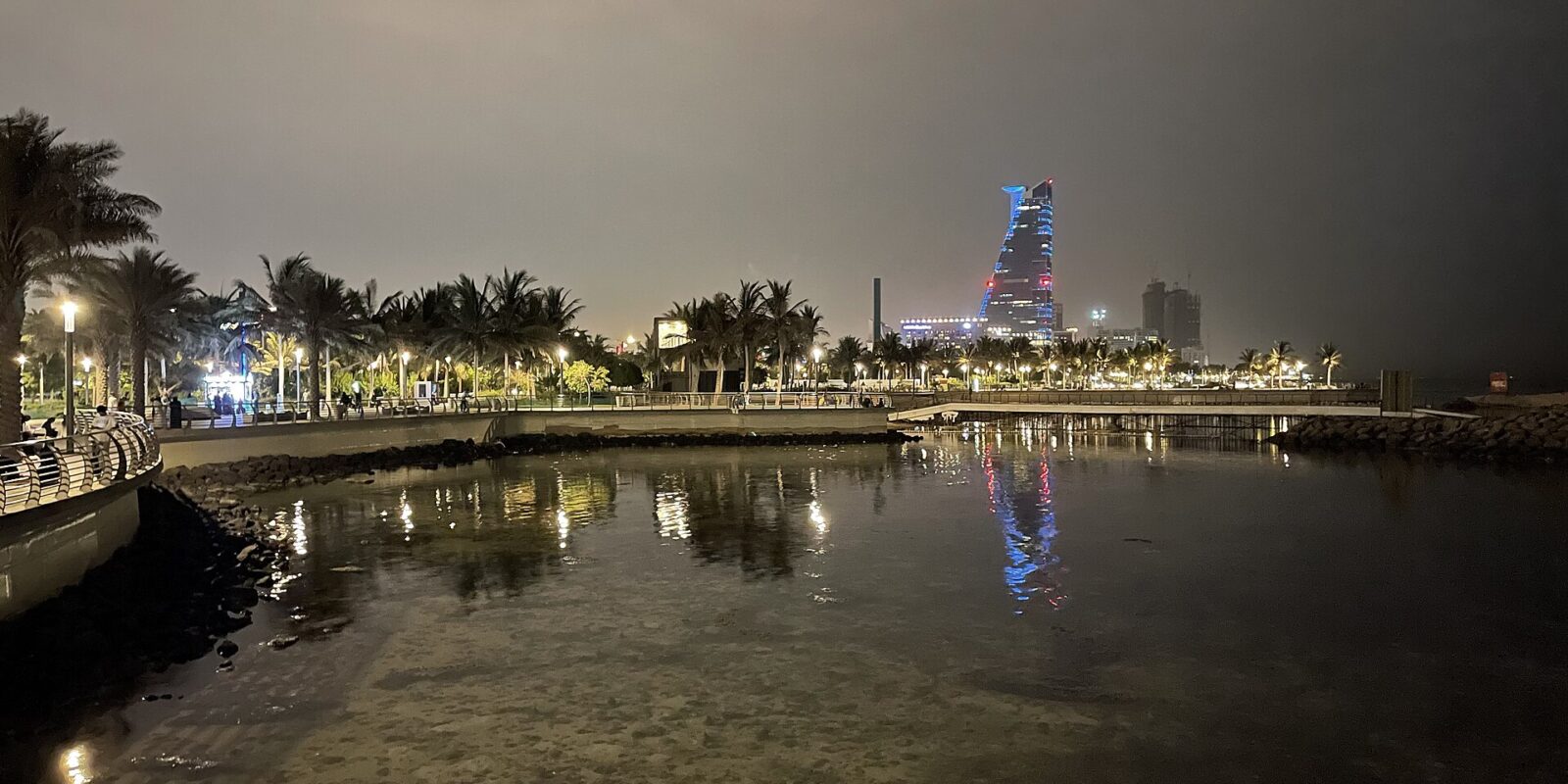
Winter is also when the city’s outdoor social life peaks. Cafés spill onto pavements, the Corniche fills after sunset, and open-air events run through the cooler months. If you only have a weekend, a well-planned 2-day Jeddah itinerary is far more enjoyable in February than it would be in July.
Summer (April–October): survivable, not enjoyable
I won’t sugar-coat it: summer in Jeddah is hard. From April the heat ramps quickly, and by June through September daytime highs hold at 37–40°C with coastal humidity that makes it feel worse. The UV index tops out around 12, which will burn exposed skin in roughly 15 minutes. September is the sting in the tail — still 38°C but with humidity peaking near 67%.
Life doesn’t stop; it just shifts after dark. Locals run errands, eat and stroll the Corniche from late evening into the small hours, while daytime happens in air-conditioned malls. So summer isn’t the best time to visit Jeddah for sightseeing, but it isn’t impossible either — you simply invert your clock. Plan indoor attractions and the beach for morning, retreat through the fierce midday, and come alive again at night.
The upside is money. Summer is low season for leisure travel, so flights and hotels are at their cheapest, and popular sites are quiet. If you tolerate heat well and your priority is value, the shoulder edges — April and, especially, October — are the best time to visit Jeddah on a tight budget without committing to full-blown summer misery.
Avoiding Hajj: the one window to plan around
Weather aside, the single biggest scheduling factor is Hajj. Jeddah’s King Abdulaziz International Airport is the main arrival point for pilgrims heading to Mecca, and during the pilgrimage the city handles two to three million extra people. Hotel rates spike, the airport is heaving, and roads toward Mecca see heavy control. For a leisure trip, this is the worst window on the calendar.
Because the Islamic calendar is lunar, Hajj moves about 11 days earlier each year against the Gregorian calendar. In 2026 it falls in late May — the core days run roughly 24–29 May, with Eid al-Adha around 27 May. In 2027 it shifts to mid-May, with the Day of Arafah expected around 15 May. You can cross-check the exact timing on the Day of Arafah reference page before you commit to dates.
The good news for 2026 and 2027: Hajj lands in May, well outside the cool high season, so it doesn’t collide with the best time to visit Jeddah. Just give the pilgrimage window a wide berth — I’d avoid arriving in the two weeks bracketing those dates — and keep an eye on it in future years as it drifts earlier into the pleasant months. Umrah, by contrast, runs year-round and is a much gentler background presence.
Best time to visit Jeddah for lower prices and fewer crowds
If your idea of the best time to visit Jeddah balances good weather against a fair price, aim for the edges of the cool season rather than its middle. February, early March, late October and November all deliver comfortable temperatures while sidestepping the December–January price peak.
- Cheapest overall: June–September, but you’re paying in sweat, not riyals.
- Best value with good weather: late October and February — cool enough to enjoy, cheap enough to justify a longer stay.
- Most expensive: December–January holidays, plus the Hajj window whenever it lands.
- Book ahead: six to eight weeks for winter dates; a couple of weeks is fine in summer.
One practical note: Jeddah is also the classic launch pad for exploring the wider country. Many travellers pair the coast with the desert north, and the best time to visit AlUla lines up almost exactly with Jeddah’s cool season, so a combined winter trip works beautifully. Getting between them is easy too — see the options for the Jeddah to AlUla route if you’re building a two-city itinerary.
Red Sea swimming and diving season
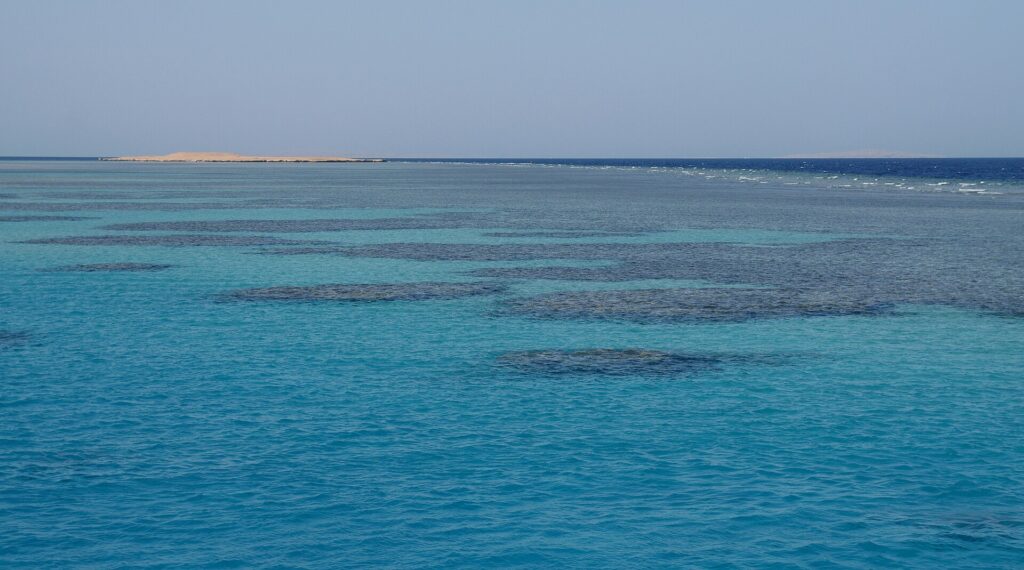
Here’s a happy surprise: the water is never the limiting factor. The Red Sea off Jeddah stays warm and swimmable all twelve months, ranging from about 25–26°C in the coolest part of winter to roughly 32°C at the height of August. Even in February, the sea rarely dips low enough to feel cold.
That means the best time to visit Jeddah for beach and reef time is really about air comfort, not water temperature. Winter gives you warm seas without the oppressive heat on land — ideal for snorkelling and diving the coral reefs without cooking on the boat between dives. Summer water is bath-warm, but you’ll want early-morning or evening sessions to escape the sun.
For divers specifically, visibility is good year-round, and the winter months make the surface intervals far more pleasant. If reefs are your main reason for coming, that only strengthens the case for the cool season as the best time to visit Jeddah. Saudi Arabia’s official tourism portal, Visit Saudi, is a useful place to check current beach-resort and dive-operator listings before you go.
Quick recap: choosing your month
To pull it together: the best time to visit Jeddah is November to March, and if you want a single month, make it February — cool, dry, quieter than the December peak, and cheaper than the holidays. October is the value pick as the heat breaks, and late November is a strong compromise between weather and cost.
Avoid the deep summer of June to September unless you’re comfortable living nocturnally and chasing low prices, and steer around the Hajj window — May in 2026 and 2027 — whenever you travel. Get those two rules right and almost any date in the cool season becomes the best time to visit Jeddah for you.
Book six to eight weeks out for winter, pack light breathable layers plus strong sun protection whatever the month, and plan your outdoor hours around the sun rather than the clock. Do that, and you’ll experience the version of the city that makes people fall for it.
Frequently asked questions
What is the best time to visit Jeddah overall?
The best time to visit Jeddah is between November and March, when highs sit at a comfortable 20–31°C, nights are mild, and rain is almost non-existent. February and October give the best balance of good weather, fewer crowds and lower prices.
Is it ever too hot to visit Jeddah?
From June to September, daytime highs hold at 37–40°C with high coastal humidity and a UV index near 12, so daytime sightseeing is genuinely uncomfortable. It’s survivable if you shift your day after dark and stick to air-conditioned indoor attractions, but it isn’t the best time to visit Jeddah for a first trip.
Should I avoid Jeddah during Hajj?
Yes, for leisure. During Hajj — roughly late May 2026 and mid-May 2027 — the city handles two to three million pilgrims, hotel rates spike and the airport is packed. Give the two weeks around those dates a wide berth. Hajj shifts about 11 days earlier each year, so always check the current date before booking.
Can you swim in the Red Sea in winter?
Absolutely. The sea off Jeddah stays around 25–26°C even in the coolest winter months and climbs to about 32°C in August, so it’s swimmable all year. Winter actually offers the nicest combination of warm water and comfortable air for snorkelling and diving.
How far in advance should I book a Jeddah hotel?
For the December–January peak and any winter holiday dates, book six to eight weeks ahead to lock in a fair rate. In the low summer season you can often book just a week or two out and still find good value, since demand is much lower.