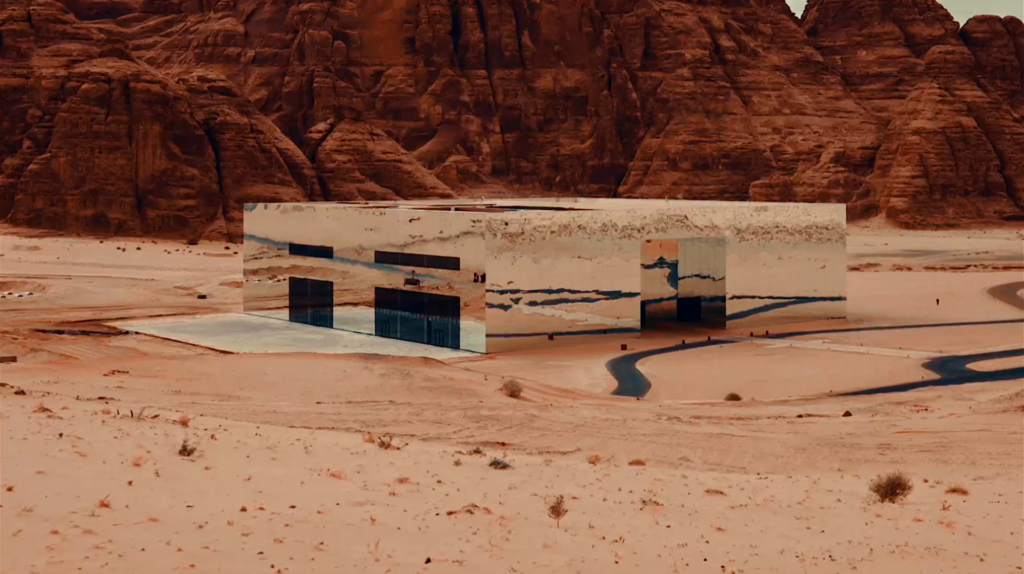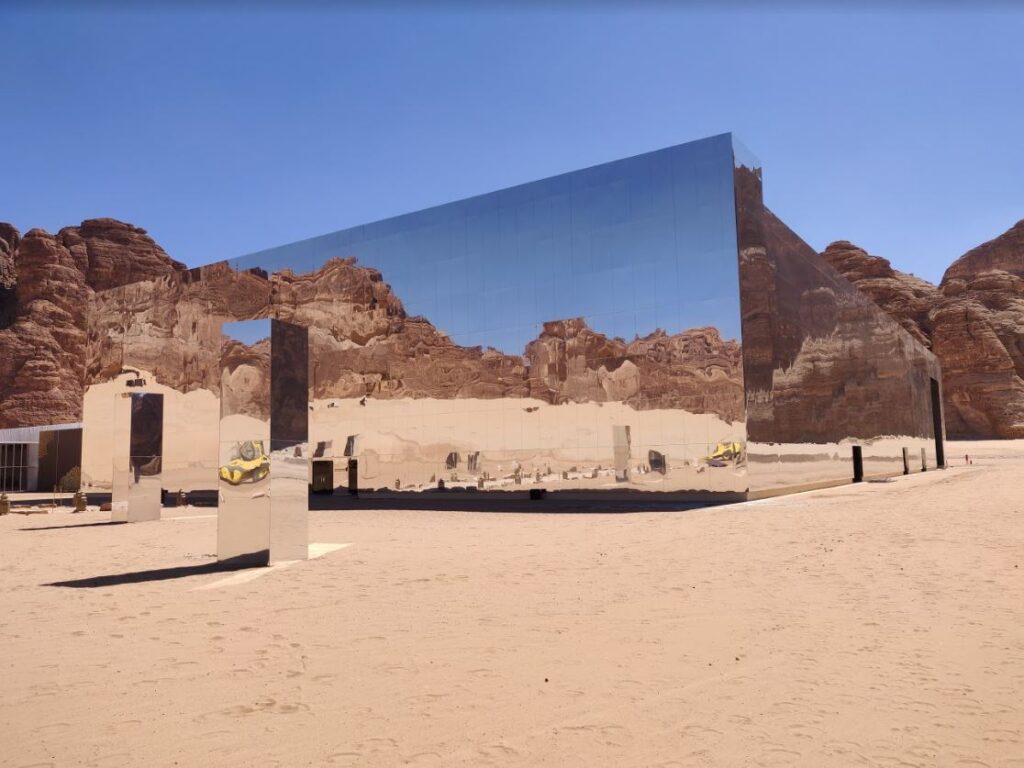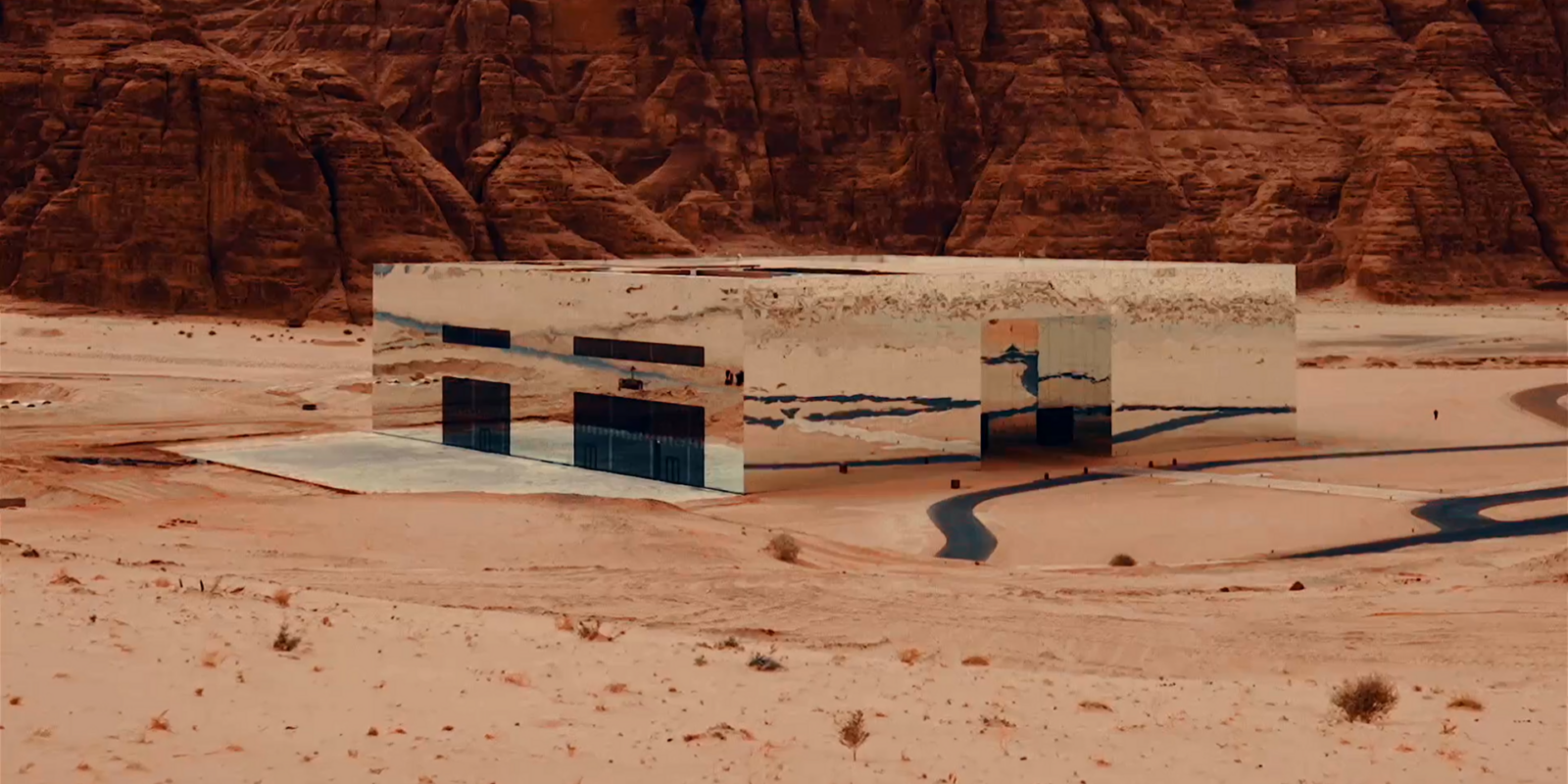
Maraya AlUla is the world’s largest mirrored building, a 9,740-square-metre concert hall clad entirely in mirror glass that all but vanishes into the sandstone cliffs of Ashar Valley. I first saw Maraya AlUla at golden hour, and the reflection genuinely stops you in your tracks. This guide covers exactly what it is, whether you can go inside, how to photograph it, and how to book a concert or a table. Quick answer: the exterior is free to view and photograph from outside, but getting inside Maraya AlUla means buying an event ticket, booking a venue tour, or reserving at the rooftop restaurant.
In this guide
- What is Maraya AlUla?
- Can you go inside Maraya AlUla?
- How to get to Maraya AlUla
- Best time to photograph Maraya AlUla
- Maraya AlUla concerts and events
- Dining at Maraya Social
- Tickets, tours and prices
- Is Maraya AlUla worth it? An honest take
- Frequently asked questions
What is Maraya AlUla?
Maraya means “mirrors” or “reflections” in Arabic, and Maraya AlUla earns the name honestly. The building is wrapped in 9,740 square metres of mirrored glass — enough to hold the Guinness World Record for the largest mirrored building on earth. From certain angles it simply disappears, reflecting the ochre cliffs and open sky until the structure reads as a shimmering gap in the landscape.
It opened in 2019 and was designed by the Italian studio Giò Forma. Despite that futuristic skin, Maraya AlUla is a working venue: a 500-seat concert hall, a conference space and an event centre rolled into one reflective box. Five private boxes add room for around 60 more guests at concerts, so the room stays intimate no matter who is on stage.
The engineering behind it is quietly clever. Hundreds of mirror panels are mounted on a steel frame and angled so the reflections line up almost seamlessly, and the glass is treated to cope with desert heat and blowing sand. The result looks effortless, but keeping a building this reflective clean out in an open valley is a constant job — so expect the odd smudge if you press your nose to the glass.
You’ll find it in Ashar Valley, roughly a 20-minute drive from AlUla’s old town. If you’re staying at the Banyan Tree resort inside the same valley, it’s only about a three-minute drive away — one of the shortest hops to a world record you’ll ever make.
Why the mirrors matter
The mirror cladding isn’t just a gimmick. It was a deliberate move to let a large modern building sit inside a heritage landscape without dominating it. On a clear day the facade doubles the desert; at dusk it glows with the sunset. That single design decision is why Maraya AlUla became one of the most photographed spots in Saudi Arabia — the building is, in effect, a giant piece of land art you can also sit inside.
Can you go inside Maraya AlUla?
Here’s the honest answer most guides skip: you cannot just walk into Maraya AlUla. There is no general-admission ticket for the interior. To get inside you need one of three things — a ticket to a concert or event, a booked venue tour, or a reservation at the rooftop restaurant.
The exterior, though, is completely free. You can drive up (or take an official AlUla shuttle), stand in the open plaza, and photograph the mirrored walls at no cost. For a lot of visitors that is the whole point — the reflection is the shot everyone comes for, and you don’t need a ticket to get it.
If you want the interior, the most reliable route is the official Maraya Tour, a behind-the-scenes experience that takes you onto the stage and through the entertaining spaces. It’s bookable through the official Experience AlUla website when it’s running. Availability is seasonal, so check the dates before you build a whole day around getting inside the venue.
The three ways inside
- Event ticket — a concert, film screening or conference in the 500-seat hall.
- Venue tour — the behind-the-scenes Maraya Tour that puts you on the stage.
- Dining — a reservation at Maraya Social, the rooftop restaurant.
How to get to Maraya AlUla
Almost everyone reaches Maraya AlUla via AlUla town itself, and AlUla is easiest by air. AlUla International Airport (ULH) sits about 35 km from the centre and receives domestic flights from Riyadh, Jeddah and Dammam, plus some seasonal international routes from Dubai and Doha.
As of mid-2026 there are roughly 14 flights a week between AlUla and Riyadh (about 1 hour 45 minutes) and around four a week to Jeddah (about 1 hour 20 minutes), with carriers including Saudia and flynas. Book early for the busy October-to-March season, when seats and hotels both tighten up.
Some visitors drive instead. Medina is about 300 km south, roughly three to four hours by car on a good desert road, if you’d rather not fly. Once you’re in AlUla, the venue is a short drive into Ashar Valley — taxis, hotel transfers and the AlUla shuttle network all serve the area. Plan your final leg for late afternoon so you arrive at golden hour.
Getting around AlUla
Once you land you don’t strictly need your own car. AlUla runs a hop-on shuttle network linking the airport, the old town, the main hotels and the major sights, and most resorts arrange private transfers. Ride-hailing works in the town itself but can be patchy out in the valleys, so book transport through your hotel if you’re heading out for an evening show or a late dinner.
| From | Mode | Time / distance | Notes |
|---|---|---|---|
| Riyadh → AlUla (ULH) | Flight | ~1h 45m · ~14/week | Saudia & flynas |
| Jeddah → AlUla (ULH) | Flight | ~1h 20m · ~4/week | Saudia |
| Medina → AlUla | Car | ~300 km · 3–4 hrs | Scenic desert road |
| AlUla airport → town | Car | ~35 km · ~30 min | Taxi / transfer |
| AlUla old town → Maraya | Car | ~20 min | Into Ashar Valley |
| Banyan Tree resort → Maraya | Car | ~3 min | Same valley |
Best time to photograph Maraya AlUla
The mirrors behave completely differently depending on the light, so timing matters more here than at almost any other AlUla sight. Aim for soft morning light just after sunrise, or the late-afternoon golden hour before sunset. That’s when the surrounding cliffs glow warm and the facade reflects them cleanly.
Midday is the weakest window. The overhead sun flattens the reflection, the glass throws harsh glare, and the heat pushes well past 40°C in summer. If noon is your only option, shoot from an angle so the sky and cliffs — not the blazing sun — fill the mirror. A short visit to Maraya AlUla can go from breathtaking to disappointing purely on the hour you pick.
A few practical tips from my own morning at the building:
- Shoot wide — ultra-wide phone mode captures the full reflection of the cliffs.
- Include a person for scale; the building is far bigger than photos suggest.
- Watch your own reflection and step to the side to keep yourself out of the mirror.
- Line the horizon up across the facade for a clean symmetry shot.
- Drones are restricted around AlUla, so don’t count on aerial footage without a permit.
Maraya AlUla concerts and events
The reason Maraya AlUla exists is performance. The 500-seat hall hosts the Maraya Concert Series and a rotating calendar of shows, usually concentrated in the cooler months from roughly December through spring, tied to the wider AlUla Moments festival season.
Over the years the stage has hosted big international names — Andrea Bocelli and Alicia Keys among them — alongside a strong roster of Arab stars. For the 2025–2026 season, announced acts have included Elissa (9 January 2026), Wael Kfoury (19 December) and New Year’s Eve performances from artists such as Assala and Adam. Line-ups change every season, so always confirm the current schedule before you book flights.
Tickets are premium and the room is small, so popular shows sell out. This is an intimate, bucket-list concert rather than a stadium gig — part of the appeal is hearing a world-class artist in a 500-seat mirrored box in the desert. Check the official concerts page on Experience AlUla for the current lineup and on-sale dates.
What makes a concert night special is the setting rather than the scale. You arrive as the sun drops, the mirrors catch the last light, and then you’re inside a jewel-box auditorium with excellent acoustics and no bad seat in the house. Doors, dress code and start times are listed on each event page — turn up early, both for the photo outside and for the security screening on the way in.
How to book concert tickets
Buy through the official Experience AlUla channels rather than resellers. Prices vary widely by artist and seat — expect premium pricing, and note that the five private boxes cost more than standard seats. Book flights and a hotel before you commit, because AlUla accommodation also sells out around the marquee shows here. If a concert is your main reason for the trip, treat the ticket as the fixed point and build everything else around it.
Dining at Maraya Social
If a concert or tour doesn’t line up with your dates, dinner is the easiest way inside Maraya AlUla. Maraya Social sits on the rooftop and is run under British chef Jason Atherton, who holds Michelin stars elsewhere. The menu is Mediterranean and European, served sharing-style so a table can graze across many plates.
You get indoor seating plus an outdoor terrace looking over Ashar Valley. Arrive before sunset and you’ll catch the cliffs turning gold from the roof of the most reflective building in the country — genuinely one of the better dinner views in Saudi Arabia.
Time your reservation for roughly an hour before sunset. You’ll be seated for the golden-hour light, watch the valley colours shift over the meal, and still have the lit terrace after dark. Book the earliest slot you can get — the sunset tables go first, and they’re the ones worth the trip.
Reservations are essentially mandatory, especially on weekends (Thursday and Friday in Saudi Arabia) and right through peak season. Book ahead via the restaurant’s reservation app; walk-ins are unreliable. It isn’t cheap — this is a special-occasion meal — but it doubles as your ticket to experience Maraya AlUla from the inside as well as the outside.
Tickets, tours and prices
Pricing shifts by season and by act, so treat the figures below as planning ballparks rather than fixed quotes — always confirm on the official site. The one constant: the exterior costs nothing. Everything that puts you inside Maraya AlUla carries a fee.
| Experience | Roughly | Booking | Note |
|---|---|---|---|
| View exterior | Free | Turn up / AlUla shuttle | Best at golden hour |
| Maraya Tour | Paid experience | Experience AlUla site | Seasonal availability |
| Concert ticket | Premium (varies by act) | Experience AlUla / AlUla Moments | Sells out fast |
| Maraya Social dinner | Fine-dining prices | Reservation app | Terrace at sunset |
| Private box (concert) | Above standard seat | Experience AlUla | ~60 across 5 boxes |
At the time of writing, AlUla had not published a single fixed “entry” price for Maraya AlUla, because there is no standalone interior ticket — access is bundled into a tour, an event or a meal. If a website quotes you a flat entry fee, be sceptical and cross-check the official channels.
Is Maraya AlUla worth it? An honest take
Yes — but manage your expectations. If you picture wandering freely through a mirrored palace, you’ll be let down; interior access is limited and gated behind a ticket. What Maraya AlUla actually delivers is one of the most striking exteriors on earth and, if you time a concert or dinner, a genuinely memorable evening.
The trade-offs are real. It’s remote, prices for the interior are steep, and midday light kills the photo. The mirrored facade can also show dust and streaks up close, so it looks best from a slight distance rather than nose-to-glass.
My advice: build Maraya AlUla into a wider AlUla trip rather than flying in just for it. Pair the free golden-hour photo stop with the region’s headline sights and, if the calendar cooperates, book a show. Seen that way, it’s one of the easiest highlights to recommend in the whole of AlUla.
How Maraya AlUla fits a wider trip
Most people spend two to three days in the region. Hegra, the country’s first UNESCO World Heritage Site, is the headline act and deserves a half-day of its own; Elephant Rock is a free 10-minute stop that photographs best near sunset; and the mud-brick Old Town is an easy evening wander with cafés and craft stalls. Slot the exterior mirror visit into a late afternoon between them.
If you’re mapping it out, our guide to the best things to do in AlUla and the AlUla in two days itinerary both slot it in naturally. For where to base yourself, see our guide to the best area to stay in AlUla, and read up on Ashar Valley, since that’s exactly where Maraya AlUla sits.
To recap: Maraya AlUla is the world’s largest mirrored building, free to admire from outside and accessible inside only via a tour, a concert or a meal at Maraya Social. Time your visit for golden hour, book any event well ahead, and treat Maraya AlUla as the jewel within a broader AlUla itinerary.
Frequently asked questions
Can you go inside Maraya AlUla for free?
No. The exterior of Maraya AlUla is free to view and photograph, but the interior is only accessible with a concert or event ticket, a booked venue tour, or a reservation at Maraya Social.
How much does Maraya AlUla cost to visit?
Viewing the outside costs nothing. Inside access is priced by experience — the Maraya Tour and Maraya Social dining carry set fees, while concert tickets at Maraya AlUla are premium and vary by artist. Check Experience AlUla for current prices.
Where is Maraya AlUla located?
Maraya AlUla sits in Ashar Valley, about a 20-minute drive from AlUla’s old town and roughly three minutes from the Banyan Tree resort. The nearest airport is AlUla International (ULH).
What is Maraya AlUla famous for?
It holds the Guinness World Record as the largest mirrored building on earth, clad in 9,740 square metres of mirror glass, and it hosts the Maraya Concert Series with both international and Arab stars.
When is the best time to visit Maraya AlUla?
Come at sunrise or golden hour for the cleanest reflection, and visit between October and March, when the weather is mild and the concert season is in full swing.
Related guides