The hegra vs petra question is the one I get asked most whenever I mention I spent time at both Nabataean cities, so let me answer it plainly before we go deeper: Petra is bigger, older as a tourist destination and free to roam; Hegra is quieter, better preserved and visited by guided tour. Neither is a copy of the other. They were carved by the same civilisation roughly 500 kilometres apart, and in the hegra vs petra debate the honest verdict is that they complement each other far more than they compete. This guide walks through the real differences, with 2026 prices, drive times and the trade-offs no brochure mentions.
Quick answer: The Hegra vs Petra question comes down to crowds versus scale. Petra is bigger and busier; Hegra is quieter and better preserved. On atmosphere, Hegra vs Petra favours Hegra for solitude, while Petra wins for monumental drama. Most travellers who weigh Hegra vs Petra end up wanting to see both.
In this guide
- Hegra vs Petra: the quick answer
- One civilisation, two cities
- The monuments compared: 111 tombs vs 600+
- How you actually visit each site
- Prices, distances and hours compared
- Crowds and preservation: where Hegra wins
- Hegra vs Petra: which should you choose?
- Doing both in one trip
- Frequently asked questions
Hegra vs Petra: the quick answer
If you only have time for one and you want scale, drama and that world-famous Treasury reveal at the end of a narrow canyon, choose Petra. If you want empty desert, near-perfect tomb facades and a site you can photograph without a hundred strangers in frame, choose Hegra. That is the hegra vs petra decision in a single sentence.
The longer answer is that most people who care enough to research hegra vs petra end up wanting both, and the two sites are now easy to combine on one Middle East trip. I did them a week apart and never once felt I was seeing the same thing twice.
One thing worth clearing up early: this is a site-to-site comparison. If you are weighing up the wider regions rather than the ruins alone, my separate piece on AlUla vs Petra as destinations covers hotels, food and how many days each area needs.
One civilisation, two cities
To understand hegra vs petra you have to understand the Nabataeans, the Arabian trading people who grew rich taxing frankincense and myrrh caravans between roughly the 4th century BC and the 1st century AD. Petra, in what is now southern Jordan, was their capital and largest city. Hegra, in north-west Saudi Arabia near modern AlUla, was their major southern settlement.
Same masons, same rock-cut burial tradition, same taste for crow-step and pediment carvings above tomb doorways. Stand in front of a facade at either place and the family resemblance is obvious. But Hegra also carries older influences the Petra tombs do not: this stretch of Arabia had been home to the Dadanite and Lihyanite kingdoms centuries earlier, and their scripts and shrines survive in the surrounding valleys.
Hegra became Saudi Arabia’s first UNESCO World Heritage Site in 2008, recognised as the largest conserved Nabataean site south of Petra. If you want the full backstory before you go, I have written it up in detail in my history of Hegra guide.
The monuments compared: 111 tombs vs 600+
Raw numbers frame the hegra vs petra contrast well. Petra holds more than 600 carved monuments across a sprawling archaeological zone: tombs, temples, a Roman-era theatre, colonnaded streets and the famous Monastery (Ad Deir) high on the hill. Hegra has 111 monumental tombs, 94 of them with decorated facades, scattered across the open plain.
What steals the show at Petra
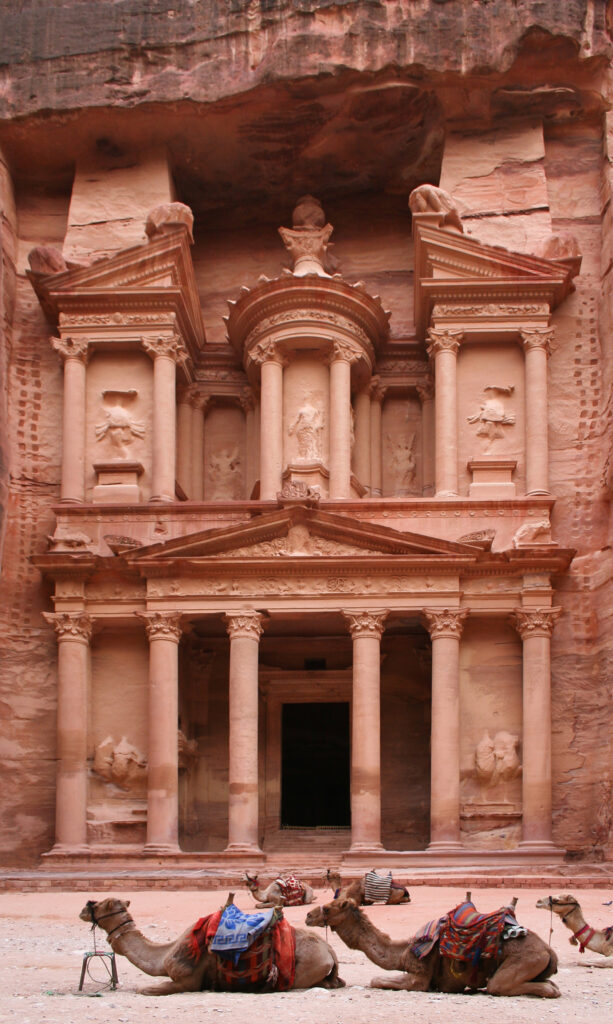
Al-Khazneh, the Treasury, is the reason Petra is on bucket lists worldwide. You walk about 1.2 kilometres through the Siq, a slot canyon that narrows to a few metres, and the ornate facade appears through the gap at the end. It is genuinely one of travel’s great reveals. Beyond it the site keeps unfolding for hours; reaching the Monastery is an 800-step climb that thins the crowds considerably.
What steals the show at Hegra
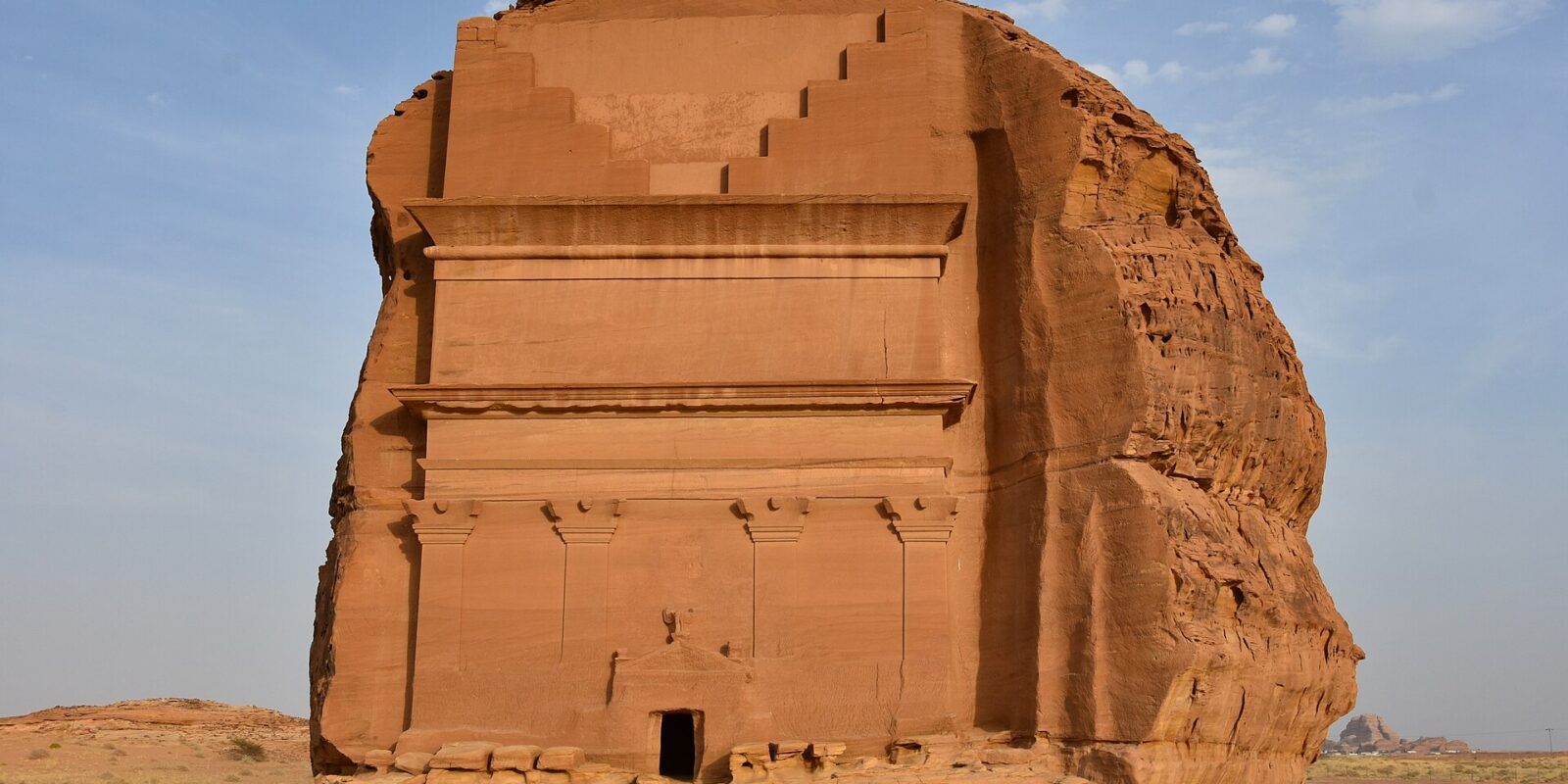
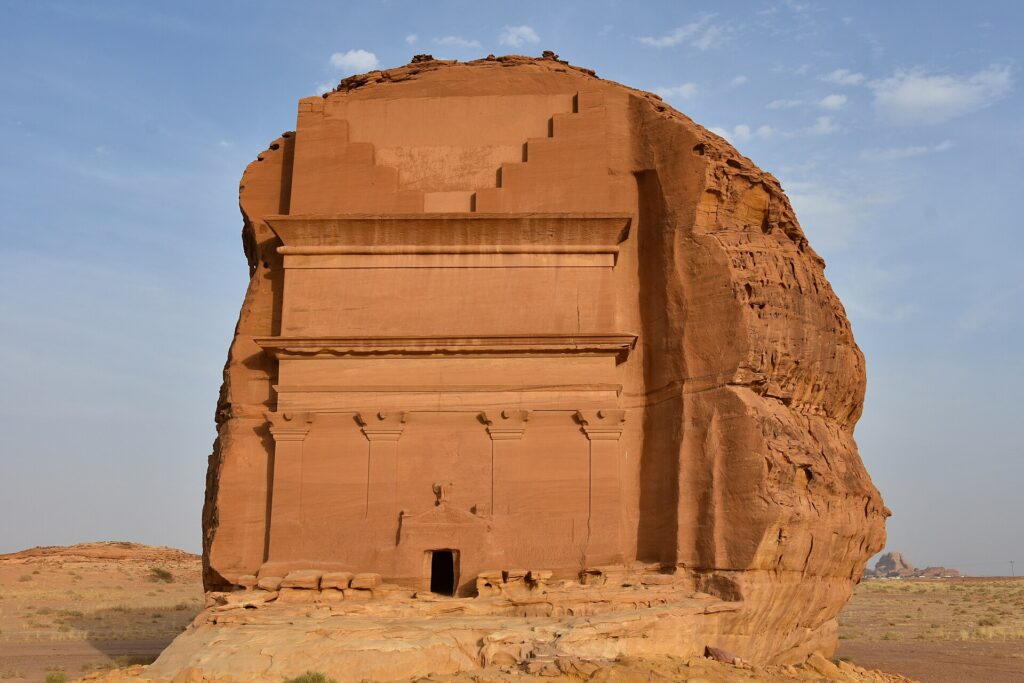
Hegra’s signature is Qasr al-Farid, the “Lonely Castle” — a single four-columned tomb carved into a free-standing sandstone boulder and left unfinished, so you can see the tool marks where the masons stopped. Because it stands alone in open desert rather than in a canyon, you can walk right around it. The tombs of Jabal al-Banat and Jabal Ithlib’s narrow siq-like passage round out the highlights. My guide to the Hegra tombs breaks down each cluster if you want to plan a route.
So in the hegra vs petra count, Petra wins on sheer quantity and variety of structures. Hegra wins on how intact each individual facade is, which brings us to preservation.
How you actually visit each site
This is where hegra vs petra stops being academic and starts affecting your day. The two sites are run completely differently.
Petra is self-guided. You buy a ticket, walk in through the Siq and explore on foot for as long as your legs last. Optional horse, donkey, camel and golf-buggy rides exist (often with persistent touts), but nobody makes you take a tour. You set your own pace, and serious walkers can cover 15–20 kilometres in a full day.
Hegra is the opposite. You cannot self-drive or wander freely inside the archaeological zone. Every visit is a booked, guided experience with transport provided — typically an open-sided coach or vintage-style Land Rover between tomb clusters, led by a local “rawi” (storyteller) guide. You book through Experience AlUla, the official destination gateway. It is more structured and less free-roaming, but it also means the site never feels overrun. For a full walk-through of the booking mechanics, see my guide on how to visit Hegra.
The trade-off in the hegra vs petra experience is real: Petra rewards independence and stamina, Hegra rewards travellers who prefer curated context and don’t mind following a schedule.
Prices, distances and hours compared
Here are the numbers that matter for a 2026 trip. I have kept Petra prices in Jordanian dinar (JOD) and Hegra prices in Saudi riyal (SAR) since that is what you will actually pay. Prices were accurate at the time of writing — always reconfirm on the official sites before booking.
| Factor | Hegra (Saudi Arabia) | Petra (Jordan) |
|---|---|---|
| Nabataean monuments | 111 tombs (94 decorated) | 600+ carved structures |
| Entry / tour cost | Guided tour from ~SAR 95; hop-on-hop-off from ~SAR 150 | 1-day 50 JOD (if staying in Jordan); day-tripper 90 JOD; 2-day 55 JOD |
| Children under 12 | Reduced / varies by tour | Free |
| How you visit | Booked guided tour, transport provided | Self-guided on foot |
| Typical visit length | 2–3 hours per tour | Half to a full day |
| Landscape | Open desert, free-standing outcrops | Canyons entered via the Siq |
| Opened to tourists | 2020 | Long-established |
| Region-to-region distance | ~430 km road, across the Saudi–Jordan border | |
A subtle point in the hegra vs petra cost comparison: Petra charges a steep 90 JOD to day-trippers who are not staying overnight in Jordan, specifically to discourage rushed cruise-ship visits. Stay one night and the same ticket drops to 50 JOD. Hegra’s pricing is flatter and, tour-for-tour, generally cheaper — though you are paying for a shorter, guided window rather than an all-day pass.
Crowds and preservation: where Hegra wins
If there is one area where the hegra vs petra verdict is lopsided, it is here. Petra receives close to a million visitors a year, and the Treasury forecourt can be shoulder-to-shoulder by mid-morning. It is still magnificent, but “having Petra to yourself” is a dawn-only fantasy.
Hegra only opened to tourists in 2020 and caps numbers through its timed-tour system, so even in peak season the tomb clusters feel spacious. On my visit I regularly had a facade entirely to myself for photos. The desert dryness and low foot traffic also mean the carvings are strikingly crisp — details on the eagles, urns and inscriptions above the doorways that have weathered away at Petra survive at Hegra.
Petra’s fame is also its burden: centuries of visitors, flash floods through the Siq and souvenir stalls have taken a toll. Hegra feels closer to how these places would have looked when rediscovered. If low crowds and preservation top your list, that alone can settle the hegra vs petra question. I dig into this further in is Hegra worth visiting.
Hegra vs Petra: which should you choose?
No comparison is useful without a recommendation, so here is how I’d steer you in the hegra vs petra decision based on what kind of traveller you are.
Choose Petra if…
- You want the single most iconic ancient site in the Middle East and the Siq-to-Treasury reveal.
- You like exploring freely, on your own schedule, for a whole day.
- You are combining it with Wadi Rum, the Dead Sea or Amman in Jordan.
- Scale and variety of monuments matter more to you than solitude.
Choose Hegra if…
- Crowds ruin sites for you and you want space to breathe and photograph.
- You value pristine, sharply preserved tomb facades over sheer numbers.
- You are already visiting Saudi Arabia, or want AlUla’s wider attractions (Elephant Rock, Dadan, the Old Town).
- You are happy with a guided, curated experience rather than free roaming.
Honestly? Do both
The most satisfying answer to hegra vs petra is to stop treating it as either/or. Seeing the Nabataean capital and its southern city back to back gives you a fuller picture of the civilisation than either does alone, and the contrast — canyon vs open desert, crowded vs quiet, free-roam vs guided — is genuinely part of the fun.
Doing both in one trip
Combining the two has never been simpler, which is exactly why the hegra vs petra pairing is trending among travellers. The regions sit roughly 430 kilometres apart by road, but a national border and limited direct land crossings mean most people fly rather than drive between them.
A common routing is to fly into Amman, do Petra (plus Wadi Rum), then fly on to Saudi Arabia and connect to AlUla, which has its own airport with direct flights from Riyadh, Jeddah, Dubai and seasonal international routes. Saudi Arabia’s tourist e-visa and the stopover visa options have made adding the Hegra leg far easier than it was a few years ago.
My practical advice: give each site at least a full day, don’t back them up on consecutive days if you can help it, and see Petra first if possible — the guided intimacy of Hegra is a lovely, calmer note to end on after Petra’s grand, exhausting scale. That sequencing turned my own hegra vs petra trip from a checklist into a proper story.
Frequently asked questions
Is Hegra better than Petra?
Neither is objectively “better” — they excel at different things. Hegra beats Petra on preservation, low crowds and open-desert setting; Petra beats Hegra on scale, variety and that unmatched Siq-to-Treasury moment. If you dislike crowds, you’ll likely prefer Hegra; if you want the most famous ancient site going, Petra wins.
Is Hegra a copy of Petra?
No. Both were built by the same Nabataean civilisation, so the carving style is similar, but Hegra is an authentic ancient city in its own right — the Nabataeans’ major southern settlement — not a modern replica. Hegra also shows older Dadanite and Lihyanite influences that Petra does not.
How far is Hegra from Petra?
The two sites are roughly 430 kilometres apart by road, but they lie in different countries either side of the Saudi–Jordan border. Most travellers fly between AlUla and Amman rather than drive, connecting the two into a single Nabataean-themed trip.
Can you visit Hegra without a guide?
No. Unlike Petra, which you explore freely on foot, Hegra can only be visited on a booked guided tour with transport provided through Experience AlUla. Self-driving inside the archaeological zone is not permitted, which is part of how the site keeps crowds low.
Which is cheaper, Hegra or Petra?
Tour-for-tour, Hegra is usually cheaper: guided tours start from around SAR 95. Petra costs 50 JOD for a one-day ticket if you’re staying overnight in Jordan, rising to 90 JOD for day-trippers. Remember Hegra’s price buys a 2–3 hour guided window, while Petra’s buys all-day access.
Related guides
Hegra vs Petra: the verdict
There is no single winner in the Hegra vs Petra debate. If your priority is fewer crowds and pristine tombs, Hegra edges it; if you want the largest Nabataean city and its cinematic Siq, Petra takes the Hegra vs Petra crown. The honest answer to Hegra vs Petra is to see both if your itinerary allows.