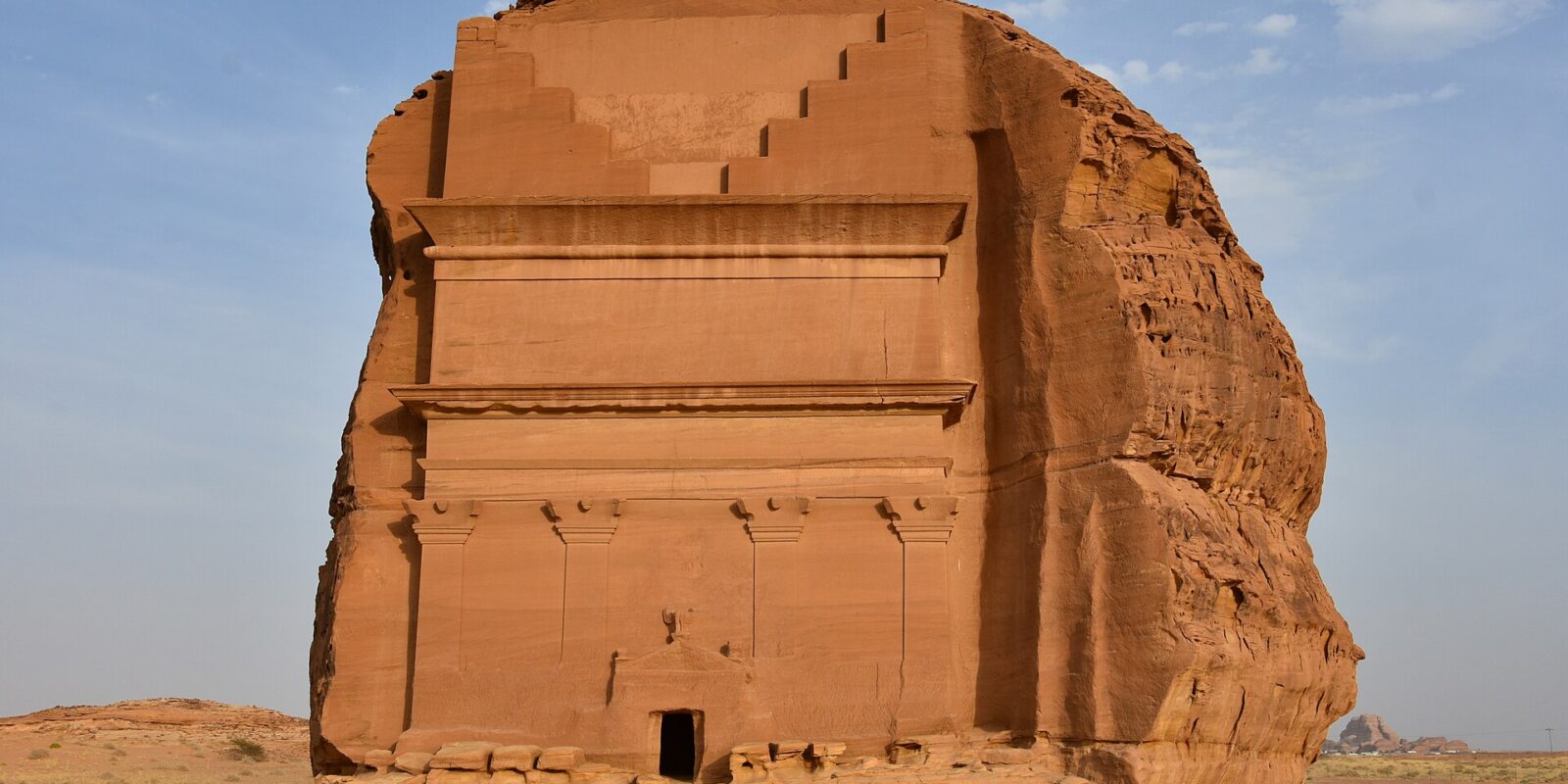
Madain Salih is Saudi Arabia’s most misunderstood ancient site: a valley of monumental rock-cut tombs that Muslims have long called cursed, yet one that is fully open to visitors of every faith today. If you have searched “why is Madain Salih forbidden” or wondered whether you are even allowed to go, the short answer is yes, you can visit, and it is now one of the country’s flagship attractions. This guide separates the Quranic story of the Thamud and Prophet Salih from what archaeologists actually found in the sandstone, then walks through tickets, tours, and how to get there. I visited on a coach tour from AlUla and left with far more questions answered than I arrived with.
In this guide
- What is Madain Salih? The quick answer
- Why Madain Salih is called the ‘forbidden’ city
- The Thamud, Prophet Salih and the she-camel
- Myth versus archaeology: who really built the tombs
- Is Madain Salih safe and open to visit today?
- What you will actually see at Madain Salih
- How to visit Madain Salih: tickets, tours and prices
- Getting to AlUla and the site
- Best time to visit and honest tips
- Frequently asked questions
What is Madain Salih? The quick answer
Madain Salih, also written Mada’in Salih, is an ancient city in the AlUla region of north-west Saudi Arabia. The name is Arabic for “Cities of Salih,” after the Quranic prophet Salih who is tied to the area in Islamic tradition. Archaeologists more often call the site Hegra, or Al-Hijr, and that is the name UNESCO uses.
In practice the two names point to the same place. Hegra was the southern capital of the Nabataeans, the same desert traders who carved Petra in Jordan. What survives is a plain scattered with more than 100 monumental tombs, their facades cut straight into standalone sandstone outcrops. In 2008 it became the first site in Saudi Arabia to be inscribed on the UNESCO World Heritage list.
So when people talk about Madain Salih, Hegra, and Al-Hijr, they are usually describing one valley with three names and two very different reputations: a sacred cautionary tale in the Quran, and a world-class archaeological park in real life.
Why Madain Salih is called the ‘forbidden’ city
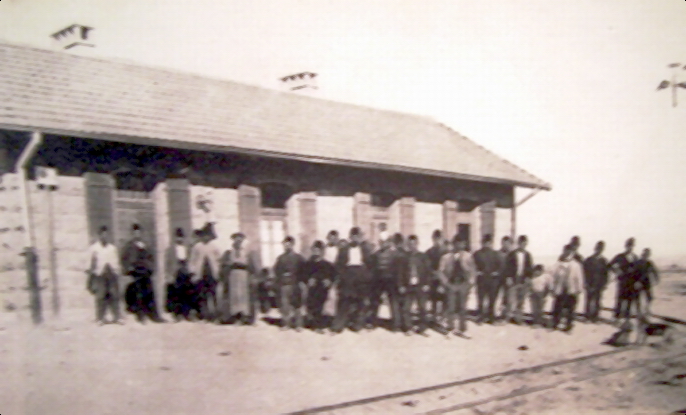
The idea that Madain Salih is forbidden comes from Islamic tradition, not from any modern law or fence. For centuries many Muslims avoided the valley entirely, and pilgrims on the old Hejaz Railway would pass through without stopping to eat, drink, or rest.
That caution traces back to a hadith recorded in Sahih al-Bukhari. As the Prophet Muhammad passed the region on the way to the Battle of Tabuk, he is reported to have called it the land of Thamud, told his companions not to drink from its wells, and to hurry through the area with a sense of grief rather than as sightseers. From that guidance grew a widespread belief that the whole place was cursed and best left alone.
Here is the key point for a traveller: this is a religious and historical sentiment, not a prohibition on entering. There is no ruling that bars people from setting foot in Madain Salih, and the Saudi authorities have spent years and enormous budgets opening it to the world. The “forbidden city” label is real folklore, but it is folklore, and I will come back to what that means for your own trip.
The Thamud, Prophet Salih and the she-camel
To understand the aura around Madain Salih you need the story that gives it its name. In the Quran, the Thamud were an ancient Arabian people who carved homes into the mountains and grew proud and corrupt. God sent them the prophet Salih to call them back to worship.
As a sign, a miraculous she-camel was sent to them, with the command that she be allowed to drink freely and be left unharmed. Instead the people hamstrung and killed her. In the Quranic account the Thamud were then destroyed by a mighty blast for their defiance, leaving their carved dwellings empty.
Because the name Madain Salih literally means “Cities of Salih,” visitors naturally assume the tombs they see are the ruins of that punished people. The valley’s name, the Quranic warning, and the empty stone facades combine into a powerful story of divine judgement. It is exactly this association that made generations of travellers hurry past rather than linger.
The Quran also uses the name Al-Hijr for the area, which is why one chapter is titled Surah Al-Hijr. That is the same Al-Hijr that archaeologists Latinised into Hegra, tying the scripture and the excavation reports to a single spot on the map.
Myth versus archaeology: who really built the tombs
Here is where careful history matters. The decorated tombs you actually photograph at Madain Salih were not carved by the Quranic Thamud. They were built far later, mainly by the Nabataeans around the first century BC to the first century AD, with earlier work by the Lihyanite (Dedanite) kingdom nearby.
Scholars point out that “Thamud” in ancient sources referred to a broad population and region across north-west Arabia over a long span of time, not to the specific stonemasons who cut these particular facades. Assyrian records mention Thamud centuries before the Nabataeans arrived. So the people condemned in the Quranic narrative and the engineers who built the surviving monuments are not simply the same group.
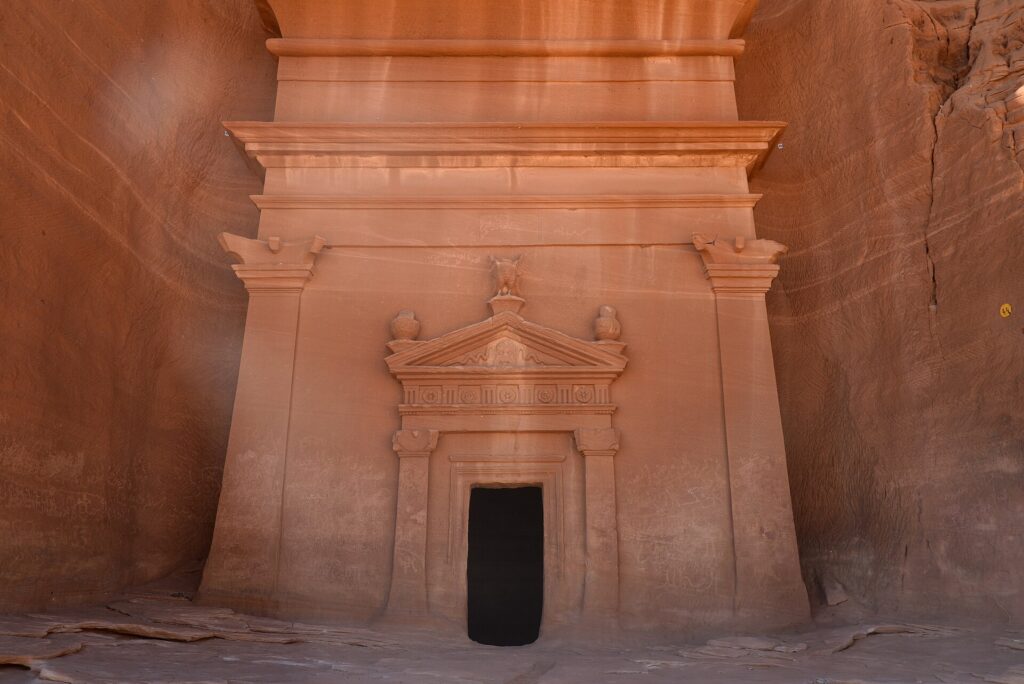
That distinction does not erase the religious story; it just clarifies what the stones are. When you stand in front of a tomb at Madain Salih, you are looking at sophisticated Nabataean funerary architecture, complete with inscriptions naming the families who commissioned each one and the fines for anyone who misused the grave. For a deeper timeline of the Nabataeans, the Lihyanites, and the layers underneath, our full history of Hegra traces how the valley changed hands over a thousand years.
Is Madain Salih safe and open to visit today?
Yes. Madain Salih is completely open, and visiting is encouraged. Saudi Arabia’s Royal Commission for AlUla has turned the wider area into a managed heritage destination, with a visitor centre, guided tours, and international-standard facilities. Tourists of all nationalities and religions are welcome.
The “cursed” reputation still gives some visitors pause, so let me be direct: there is nothing physically dangerous or spiritually off-limits about walking the site on a guided tour. Many Muslim visitors do choose to enter respectfully, mindful of the Quranic story and without treating it as casual entertainment, and that is a personal choice rather than a rule imposed on anyone.
Access is controlled for conservation, not secrecy. You cannot drive your own car among the tombs; you explore with an official guide or on the site’s vehicles. If you are still weighing it up, our honest take on whether Hegra is worth visiting compares it fairly against Petra and other regional sites.
People often ask how Madain Salih compares to Petra, since both were Nabataean. Petra is grander in scale and busier; Madain Salih is smaller, far quieter, and its standalone tombs sit in open desert rather than a canyon. For many travellers the emptiness is the whole point. You can stand in front of a two-thousand-year-old facade with almost no one else around, which is nearly impossible at Petra today.
What you will actually see at Madain Salih
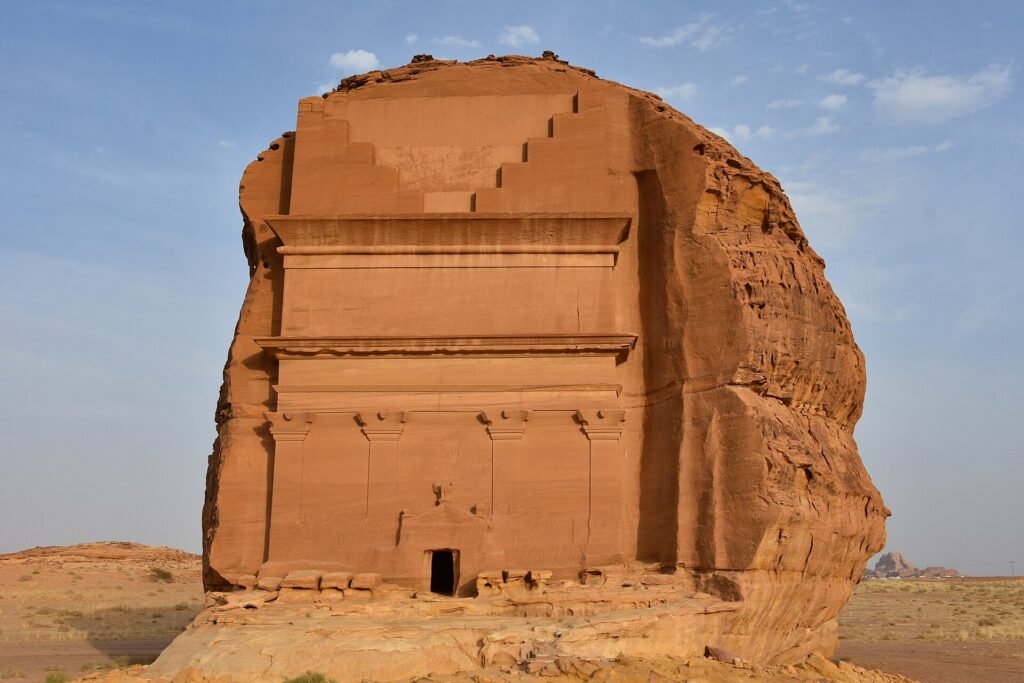
The tombs at Madain Salih are grouped into clusters spread across a wide plain, and a standard tour links several of the highlights. Facades range from plain and weathered to crisply carved, many crowned with the stepped “crow-step” motif and eagles that mark Nabataean work.
What surprised me most was the detail up close. Above and beside the doorways you can still read Nabataean inscriptions carved into the stone, some naming the owner of the tomb and warning off anyone who might reuse it. Guides at Madain Salih will point out the eroded lions, urns and rosettes that a rushed visitor walks straight past. Give yourself time at two or three tombs rather than trying to tick off every cluster.
Qasr al-Farid, the Lonely Castle
The single most famous monument is Qasr al-Farid, the “Lonely Castle.” It stands completely alone on the sand, carved into one isolated boulder, with a facade roughly 22 metres wide and four pilasters instead of the usual two. Look closely and you will see it was never finished: the lower third is left rough, frozen mid-carving from the top down. It is the image most people picture when they think of Madain Salih.
Jabal Ithlib and the Diwan
At the eastern end, a natural cleft called the Siq leads to Jabal Ithlib, where the Nabataeans cut a meeting hall known as the Diwan and small niches for their gods. It is a quieter, more intimate corner than the open tomb fields.
The Hejaz Railway station
Near the site sits a restored station from the early-1900s Hejaz Railway, complete with old rolling stock. It is a reminder that even in the pilgrim-train era, people passed right by this valley without stopping. For a tomb-by-tomb breakdown of the clusters and what makes each one special, see our detailed guide to the Hegra tombs.
How to visit Madain Salih: tickets, tours and prices
You visit Madain Salih through official tours booked with Experience AlUla, the destination’s official platform. Independent wandering among the tombs is not permitted, which protects the fragile sandstone and keeps visitor numbers manageable.
At the time of writing, the entry-level guided coach tour of Madain Salih starts from around SAR 95 per person and runs roughly two hours, with a guide narrating each stop. There are pricier small-group and premium vehicle options if you want more time and flexibility. Prices and schedules shift seasonally, so always confirm the current rate when you book.
| Option | From (SAR) | Duration | Notes |
|---|---|---|---|
| Guided coach tour | from 95 / person | ~2 hours | Shared bus, guide, main tomb stops |
| Hop-on hop-off tour | from 150 / person | Flexible | Seasonal, English & Arabic guides |
| Premium vehicle tour | from 1,000 / vehicle | ~2 hours | Up to ~7 guests, private guide |
| Riyadh to AlUla flight | from ~260 / person | ~1h 45m | Saudia & flynas, several times weekly |
Booking direct through the official platform is usually cheaper than third-party resellers, and it is the only way to guarantee a licensed guide inside Madain Salih. If you want a full walkthrough of the booking steps, timings, and what to wear, our practical guide on how to visit Hegra covers it end to end.
Getting to AlUla and the site
Madain Salih sits about 20 kilometres north of AlUla’s old town, and AlUla is the base for every visit. The easiest arrival is by air into Prince Abdul Majeed bin Abdulaziz Airport (airport code ULH), a short drive from the hotels.
Both Saudia and flynas run direct flights to AlUla from Riyadh, with additional seasonal service from Jeddah; frequencies are typically several times a week rather than daily, and they increase in the cooler tourist season. Fares often start from around SAR 260 one way from Riyadh, though that swings with demand. You can check current schedules on the official Saudia site before you commit to dates.
Driving is the other option. AlUla is roughly a three-hour drive from Medina, about 3.5 to 4 hours, on good, modern highways, which makes a road trip from the holy city very doable for both non-Muslim and Muslim travellers. From there you reach the visitor gateway and pick up your tour vehicle for the run out to the tombs.
Best time to visit and honest tips
The comfortable season for Madain Salih runs from roughly October to March, when daytime temperatures are pleasant and early tours are genuinely enjoyable. From May to September the plain gets brutally hot, and standing on exposed sand in front of the tombs at midday is no fun; if you must come in summer, take the earliest slot of the day.
- Book ahead in peak season. Tours around AlUla’s winter festivals sell out; reserve your Madain Salih slot before you fly.
- Dress modestly and bring sun cover. A hat, sunglasses, sunscreen, and closed shoes make the exposed stops far more bearable.
- Carry water. There is little shade among the tombs, and the guides move at a steady pace.
- Go early for photos. Morning light on the honey-coloured sandstone, especially at Qasr al-Farid, is the best of the day.
- Allow a full day for AlUla. Pair the site with Dadan, Jabal Ikmah’s inscriptions, and the old town rather than rushing.
One honest downside: because you cannot roam freely, the experience is more curated than adventurous. You follow the guide and the schedule. For most people that trade-off is worth it, and the sheer scale of Madain Salih still lands. If you only have one archaeological day in the AlUla region, this is the one to spend it on.
In short, Madain Salih rewards travellers who arrive with a little context. Know the Thamud story, understand that the tombs are Nabataean, respect the site’s religious weight, and you will get far more out of the visit than someone who only came for a photo of the Lonely Castle.
Frequently asked questions
Is Madain Salih actually forbidden to visit?
No. Madain Salih is fully open to visitors of all faiths and nationalities. The “forbidden” or “cursed” reputation comes from Islamic tradition about the Thamud, not from any modern rule. You visit on an official guided tour booked through Experience AlUla.
Is Madain Salih the same place as Hegra?
Yes. Madain Salih is the traditional Islamic name for the site, while Hegra (Al-Hijr) is the ancient and archaeological name that UNESCO uses. Both refer to the same Nabataean city in the AlUla region.
Who built the tombs at Madain Salih?
The surviving carved tombs were built mainly by the Nabataeans in the first century BC to first century AD, with earlier Lihyanite work nearby. They were not carved by the Quranic Thamud, who belonged to a much older and broader population.
How much does it cost to visit Madain Salih?
A guided coach tour starts from around SAR 95 per person for roughly two hours, with premium private vehicles from about SAR 1,000. Prices change seasonally, so confirm the current rate on the official Experience AlUla platform when booking.
When is the best time to visit Madain Salih?
October to March is the comfortable season, with mild temperatures ideal for walking the exposed site. Summer months from May to September are extremely hot, so book the earliest morning tour if you visit then.