This Riyadh itinerary is built from a real first visit, and it answers the question most travellers actually have: how do you see the best of the Saudi capital in a short stay, ideally before or after flying to AlUla? The short version is that two days covers the essentials and three days does it comfortably. Below you’ll find a day-by-day riyadh itinerary with real prices in Saudi riyals (SAR), drive times, opening hours, and the honest trade-offs I ran into. I’ve kept the plan tight so you spend time seeing the city, not sitting in traffic on the Northern Ring Road.
Quick answer: The best Riyadh itinerary runs two to three days: day one Diriyah, day two the museums and the Sky Bridge, day three the Edge of the World. This Riyadh itinerary balances indoor sights for the midday heat with outdoor evenings, and every stop in the Riyadh itinerary sits within a short drive of the centre.
How many days do you need in Riyadh?
Quick answer: a good Riyadh itinerary needs two days minimum and three days ideally. Two days lets you tick off Diriyah, Masmak Fortress, the National Museum, and the Kingdom Centre Sky Bridge. A third day frees you up for the Edge of the World, which is a half-to-full-day trip on its own.
If you only have 48 hours, don’t try to cram the Edge of the World in — the drive alone is around three hours round trip and you’ll feel rushed everywhere else. Save it for a three-day riyadh itinerary. Four days is genuinely relaxed and lets you add a wildlife reserve or a slow afternoon in a museum, but most first-timers won’t need that long.
Is a 2 to 3 day Riyadh itinerary enough?
For a first-timer, yes. Riyadh is spread out and car-dependent, so a two to three day riyadh itinerary is really about picking a handful of strong sites and accepting you can’t do everything. The city rewards depth over breadth: one unhurried evening in Diriyah beats three rushed stops.
The honest trade-off is heat and distance. In summer (May to September) daytime temperatures regularly top 43°C, which turns any outdoor riyadh itinerary into an evening-only affair. That’s why the plan below front-loads indoor sights for the middle of the day and pushes the open-air experiences to sunset. If you’re visiting between November and March, you can be outside comfortably from mid-morning.
Riyadh itinerary at a glance
Here’s the whole riyadh itinerary in one view before we go deep on each day. Prices and hours were checked at the time of writing and can change, so treat them as a planning guide rather than a guarantee — always confirm on the official site before you go.
| Day | Main stops | Best timing | Rough cost (per person) |
|---|---|---|---|
| Day 1 | At-Turaif (Diriyah) + Masmak Fortress | Fort by day, Diriyah for sunset | Free–SAR 50 access pass |
| Day 2 | National Museum + Kingdom Centre Sky Bridge + Boulevard Riyadh City | Museum AM, Sky Bridge dusk, Boulevard night | ~SAR 138 Sky Bridge; museum free/nominal |
| Day 3 | Edge of the World day trip | Depart early or aim for sunset | SAR 250–450 guided tour |
Day 1: Diriyah and old Riyadh
Day one of this riyadh itinerary is about where the country began. Start with Masmak Fortress in the old Deira district in the morning while it’s cooler, then save the mud-brick city of Diriyah for late afternoon so you catch it lit up at sunset.
Masmak Fortress
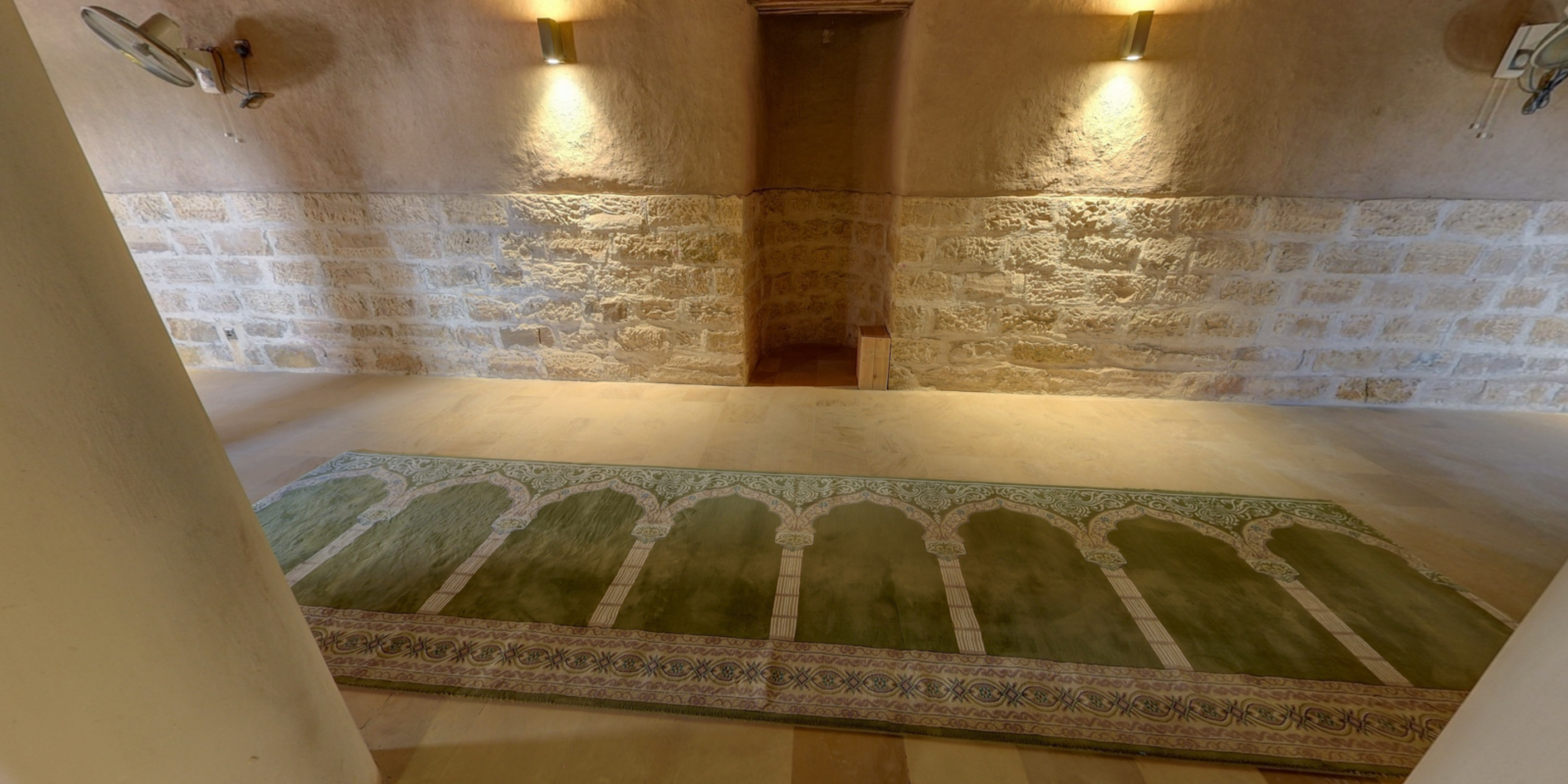
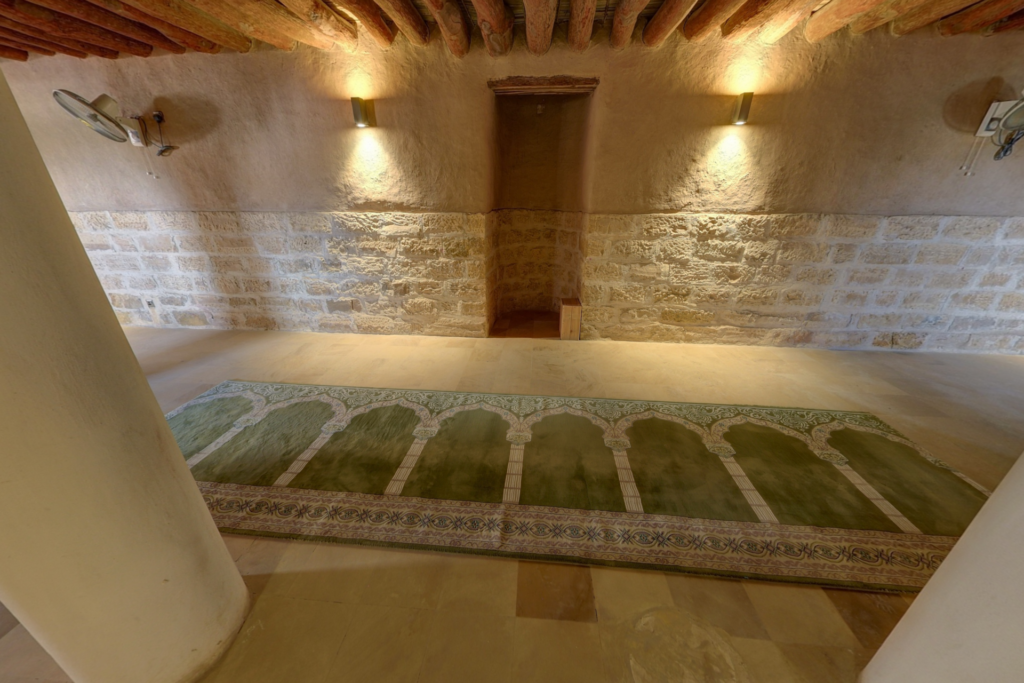
Masmak is the clay-and-mud fort at the heart of the 1902 raid that founded the modern Saudi state. It’s compact — 45 minutes to an hour is plenty — and entry has historically been free. It sits next to Dira Square and the old souq, so it pairs well with a wander for dates, oud, and cheap perfume before the heat builds.
At-Turaif, Diriyah
At-Turaif is the reason Diriyah is a UNESCO World Heritage Site, and it’s the highlight of the whole riyadh itinerary for me. The restored mud-brick palaces glow orange as the sun drops, and the surrounding Bujairi Terrace has genuinely good restaurants overlooking the district.
Practical notes: entry to the historical district needs a Diriyah Access Pass. When I checked, the walk-through was free before around 5pm and roughly SAR 50 later in the day, with the pass often redeemable as dining credit — confirm the current policy on the official Diriyah site because it changes seasonally. Aim to arrive 60–90 minutes before sunset. For a deeper breakdown, our Diriyah At-Turaif guide covers timings and the best photo spots.
The trade-off: Bujairi Terrace gets busy on Thursday and Friday evenings (the Saudi weekend), and parking backs up. Book a table if you want to eat there, or use a ride-hail app and skip the car park entirely.
Day 2: Museums, the Sky Bridge, and Boulevard
Day two of the riyadh itinerary balances an indoor morning with an outdoor night. You’ll do the National Museum when the sun is high, watch the city from 300 metres up at dusk, then finish among the lights of Boulevard Riyadh City.
National Museum of Saudi Arabia
The National Museum, inside the King Abdulaziz Historical Center, is the best single introduction to the country’s history — from prehistoric Arabia through the pre-Islamic caravan cities to the founding of the modern kingdom. Give it two hours. General admission has been free or nominal via the official booking system, though it’s worth reserving a slot online in advance. It’s air-conditioned and shaded, which is exactly what you want in the middle of a Riyadh day.
Kingdom Centre Sky Bridge
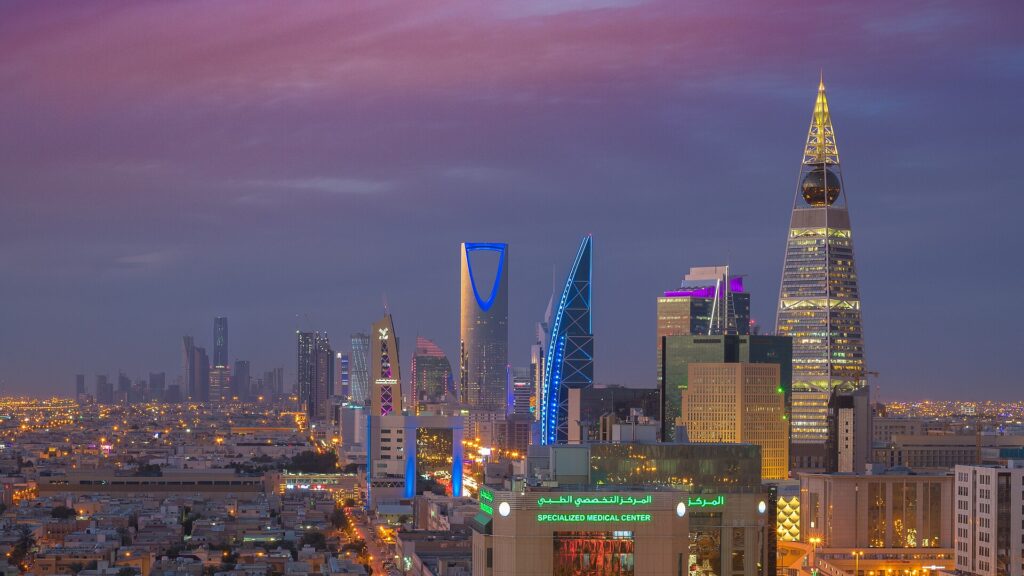
The Sky Bridge is the 65-metre glass corridor slung across the top of the Kingdom Centre’s parabolic arch, about 300 metres above Olaya Street. Time your visit for roughly 30 minutes before sunset so you get the city in daylight and then watch it switch to a sea of lights.
The catch is the price: the adult ticket jumped in early 2026 to around SAR 138, roughly double what it was, so it’s no longer the bargain it used to be. It’s usually closed on Fridays, and weekend queues can hit 20–30 minutes — buy online to skip the walk-up line. If SAR 138 feels steep, the free rooftop-adjacent views from some Boulevard-area spots are a cheaper, if less dramatic, alternative.
Boulevard Riyadh City
End the evening at Boulevard Riyadh City, the sprawling entertainment zone that anchors the annual Riyadh Season. Think illuminated streets, international restaurants, fountains, and pop-up attractions. Entry is often free outside of Riyadh Season, but during the season (usually late in the year) you’ll pay for a gate ticket. It’s touristy and commercial — that’s the trade-off — but it’s a fun, safe, walkable way to end a day when everything else has closed. For more options, see our roundup of things to do in Riyadh.
Day 3: Edge of the World day trip
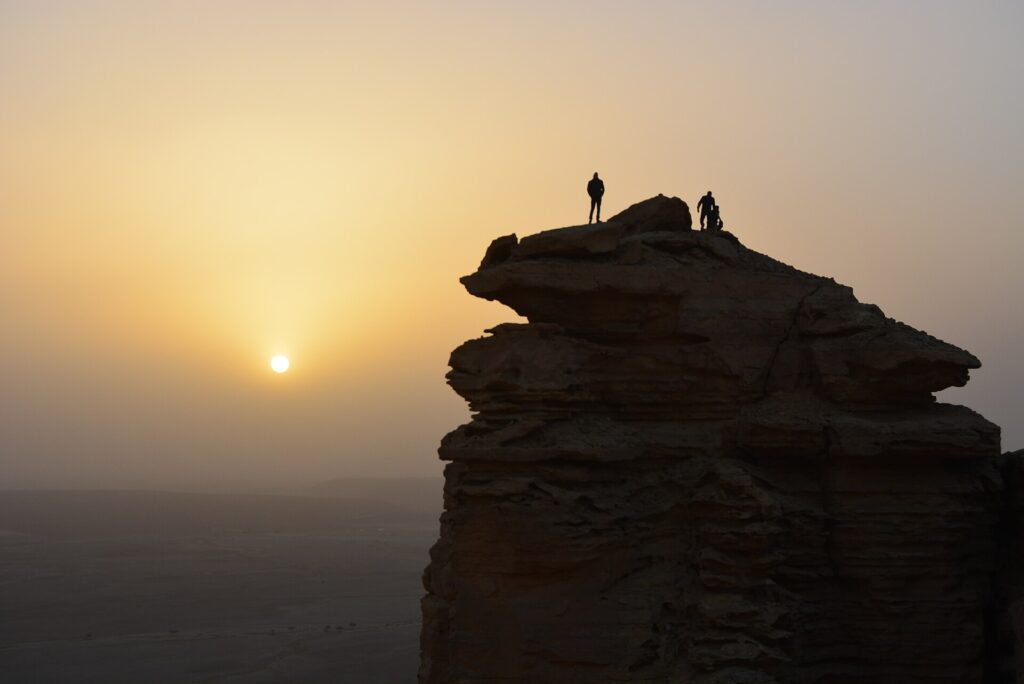
If you have a third day, spend it outside the city. The Edge of the World (Jebel Fihrayn) is a dramatic 300-metre escarpment where the Tuwaiq cliffs drop away to what looks like the end of the earth. It’s the standout natural addition to any riyadh itinerary.
It’s about 90 minutes’ drive northwest of the city, and the final stretch is unpaved desert track that needs a 4×4. Round trip you’re looking at roughly five to six hours including time at the cliffs, so it genuinely eats a full day. I’d strongly recommend a guided tour rather than self-driving — the turn-offs aren’t well signposted, there’s no phone signal at points, and a stuck 2WD car in soft sand is a bad way to spend an afternoon.
Guided day tours typically run SAR 250–450 per person depending on group size and whether hotel pickup and lunch are included. Go for sunrise or sunset; midday is hot, flat-lit, and busy. Bring more water than you think you need, closed shoes for the rocky edge, and don’t get complacent near the drop — there are no barriers. Our full Edge of the World day trip guide covers operators, what to pack, and timing.
Getting around on your Riyadh itinerary
Riyadh is not a walking city — distances between the sites on this riyadh itinerary are large and the summer heat is punishing. Here’s how the transport options stack up.
- Uber and Careem are the default. They’re cheap by Western standards (short hops around SAR 15–30, longer cross-city runs SAR 40–70), reliable, and cashless. This is what I used for almost everything.
- Riyadh Metro opened in December 2024 with six lines and 85 stations. A two-hour pass starts at around SAR 4, making it excellent value. It’s clean and fast, but it doesn’t reach Diriyah or the Edge of the World, so it complements ride-hailing rather than replacing it.
- Rental car makes sense only if you’re comfortable with assertive local driving and want the Edge of the World independently. For a two-day riyadh itinerary in the city, skip it — parking and traffic aren’t worth the hassle.
One tip: the metro’s Green and Blue lines are handy for the Olaya/Kingdom Centre area, so on day two you can realistically mix metro and ride-hail to dodge evening traffic.
Best time to visit and where to stay
The best months are November to March, when daytime highs sit in a pleasant 20–28°C range and evenings can be cool enough for a light jacket. This is peak season for a reason — if your riyadh itinerary falls in these months, book hotels early, especially around Riyadh Season.
For location, base yourself in the Olaya or Al Olaya district. It’s central to the Kingdom Centre, Boulevard, restaurants, and metro links, which keeps ride-hail costs down across the whole riyadh itinerary. Business hotels here are plentiful and often better value on weekends (Friday–Saturday) when corporate demand drops.
A cultural note worth planning around: many shops and some attractions pause or adjust hours around the five daily prayer times, and Friday mornings are quiet across the city. Build a little slack into your day-two and day-three schedules so a prayer-time closure doesn’t derail you.
Adding AlUla to your Riyadh itinerary
Most travellers I met were using Riyadh as the gateway to AlUla, and it’s the single best add-on to a riyadh itinerary. AlUla is home to Hegra (Mada’in Salih), Saudi Arabia’s first UNESCO World Heritage Site, plus Elephant Rock and the old town.
The easiest way is to fly. The direct hop from King Khalid International Airport (RUH) to AlUla International Airport (ULH) takes roughly 1 hour 45 minutes to 1 hour 55 minutes, covering about 875 km. At the time of writing there were around 11 flights a week on flynas and Saudia, though schedules shift seasonally, so check the airlines and the official Experience AlUla site for current times. Our guide on how to get to AlUla compares flying versus the long drive.
My honest recommendation: don’t day-trip AlUla from Riyadh. Give it at least two nights so you can do Hegra, a heritage walk, and one desert experience without racing the clock. Pair a three-day city plan with our AlUla in 2 days itinerary for a well-balanced week in Saudi Arabia.
| Riyadh → AlUla | Detail |
|---|---|
| Airports | RUH (Riyadh) → ULH (AlUla) |
| Flight time | ~1h 45m–1h 55m direct |
| Distance | ~875 km |
| Airlines | flynas, Saudia |
| Frequency | ~11 flights/week (varies seasonally) |
Costs and practical tips
A few things I wish I’d known before landing, to make your riyadh itinerary run smoother:
- Visa: most nationalities can get a Saudi eVisa or visa on arrival — sort it before you fly. It also allows Umrah and covers domestic travel to AlUla.
- Money: cards are accepted almost everywhere, but keep a little cash for the old souq and small vendors. The riyal is pegged to the US dollar (roughly SAR 3.75 to USD 1).
- Dress: modest dress is expected; women no longer need an abaya but shoulders and knees covered is the comfortable norm. Pack for heat plus a layer for over-air-conditioned malls.
- Alcohol: Saudi Arabia is dry — there’s none on this riyadh itinerary, so don’t plan an evening around it.
- Weekend: the Saudi weekend is Friday–Saturday. Some sites shift hours on Friday, so I’ve built the flexible days around that.
Budget-wise, excluding flights and hotel, a two-day riyadh itinerary runs comfortably on SAR 300–500 per person for tickets, transport, and food. Add a guided Edge of the World tour for day three and you’re looking at another SAR 250–450.
Riyadh itinerary recap
To recap the ideal riyadh itinerary: day one for Masmak and a Diriyah sunset, day two for the National Museum, the Sky Bridge, and Boulevard, and day three for the Edge of the World. Two days works for a fast first visit; three is the sweet spot. Get around with Uber, Careem, and the new metro, visit between November and March, and treat the whole thing as the perfect warm-up before flying on to AlUla.
Frequently asked questions
Is 2 days enough for Riyadh?
Two days is enough to see the essentials — Diriyah, Masmak Fortress, the National Museum, and the Kingdom Centre Sky Bridge. If you want to add the Edge of the World, you’ll need a third day, because that trip alone takes five to six hours round trip.
How much does this Riyadh itinerary cost?
Excluding flights and accommodation, a two-day city plan runs around SAR 300–500 per person for tickets, ride-hailing, and meals. A guided Edge of the World day trip adds roughly SAR 250–450. Big-ticket items are the Sky Bridge (about SAR 138) and the day tour.
What is the best time of year to visit Riyadh?
November to March, when daytime temperatures are a comfortable 20–28°C. Summer (May–September) regularly exceeds 43°C, which limits outdoor sightseeing to early mornings and evenings.
Should I do Riyadh before or after AlUla?
Either works, since the direct flight is under two hours. Many travellers do Riyadh first as a soft landing, then fly to AlUla for the headline archaeology. Give AlUla at least two nights rather than day-tripping it from Riyadh.
Do I need a car for a Riyadh itinerary?
No. Uber and Careem cover the city cheaply, and the Riyadh Metro (opened December 2024) is a great-value extra. A rental car only makes sense if you plan to self-drive to the Edge of the World, which most people do as a guided tour instead.
Related guides
Riyadh itinerary: final word
Whichever version you pick, a two-to-three-day Riyadh itinerary covers the capital comfortably. Keep your Riyadh itinerary loose enough for long lunches, and let the Riyadh itinerary flex around the desert heat.