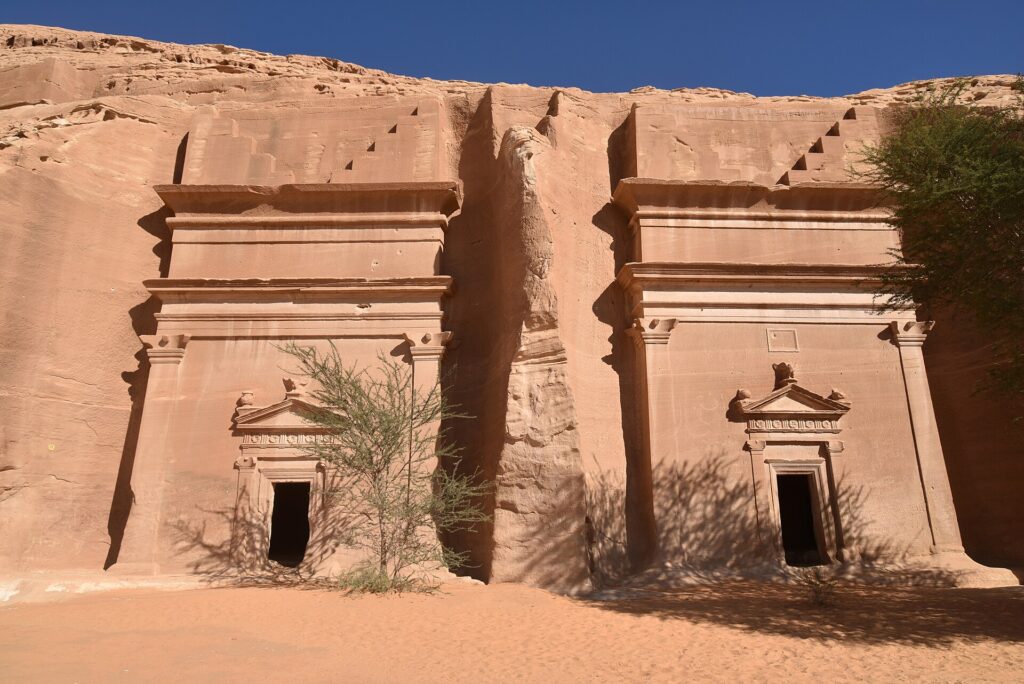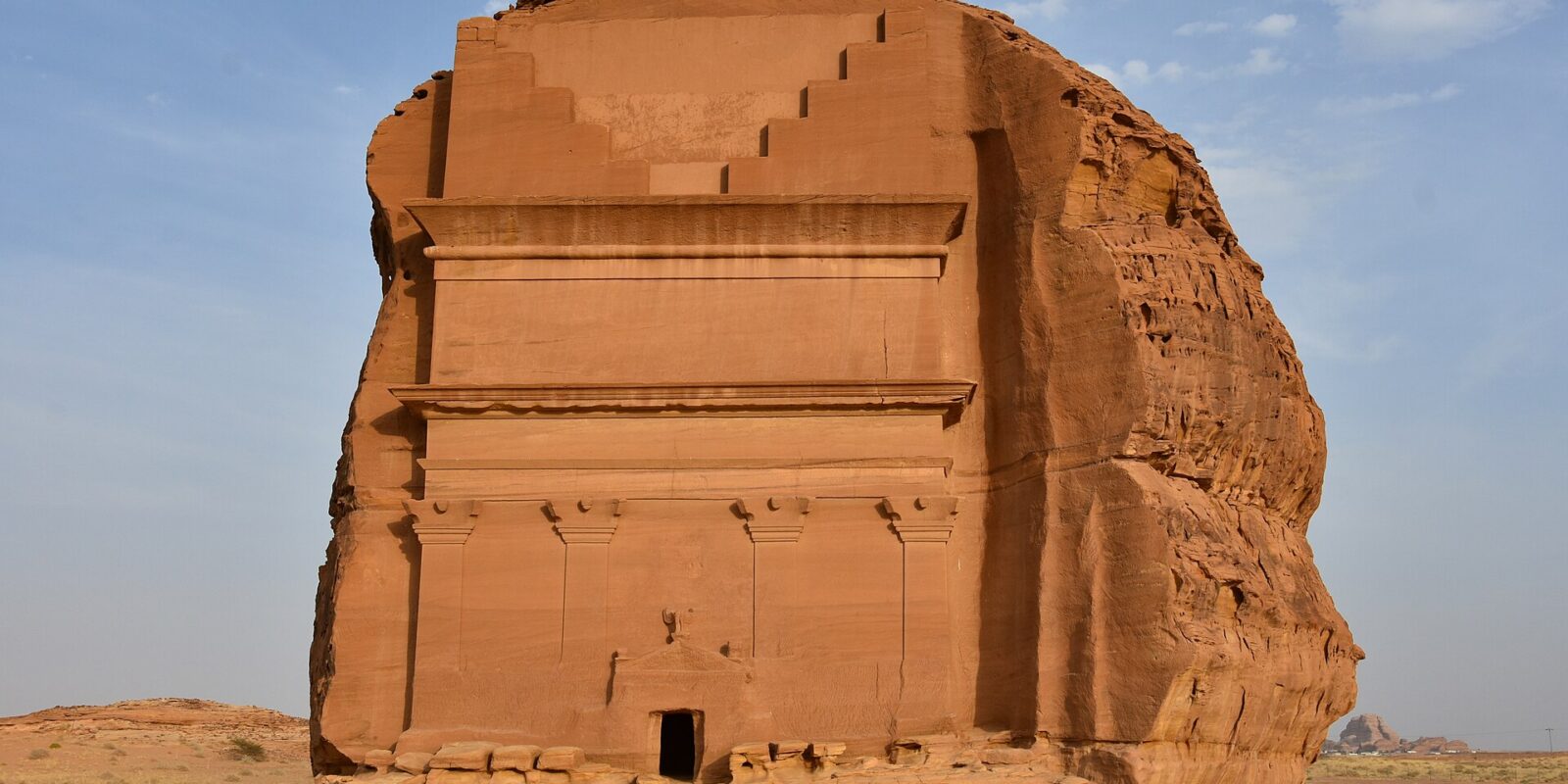
The AlUla vs Petra question is the one I get asked most by travellers planning a Nabataean-focused trip, so here is the honest answer up front: these are two sister cities carved by the same civilisation, but they feel completely different to visit. Petra in Jordan is the older, grander, busier capital with 800-plus monuments; Hegra in Saudi Arabia’s AlUla is the quieter, better-preserved second city with around 110 monumental tombs and almost no crowds.
In the AlUla vs Petra debate, Petra wins on sheer scale and drama, while AlUla wins on space, solitude and modern comfort. This guide breaks down the AlUla vs Petra choice on tombs, tickets, crowds, logistics and season so you can decide.
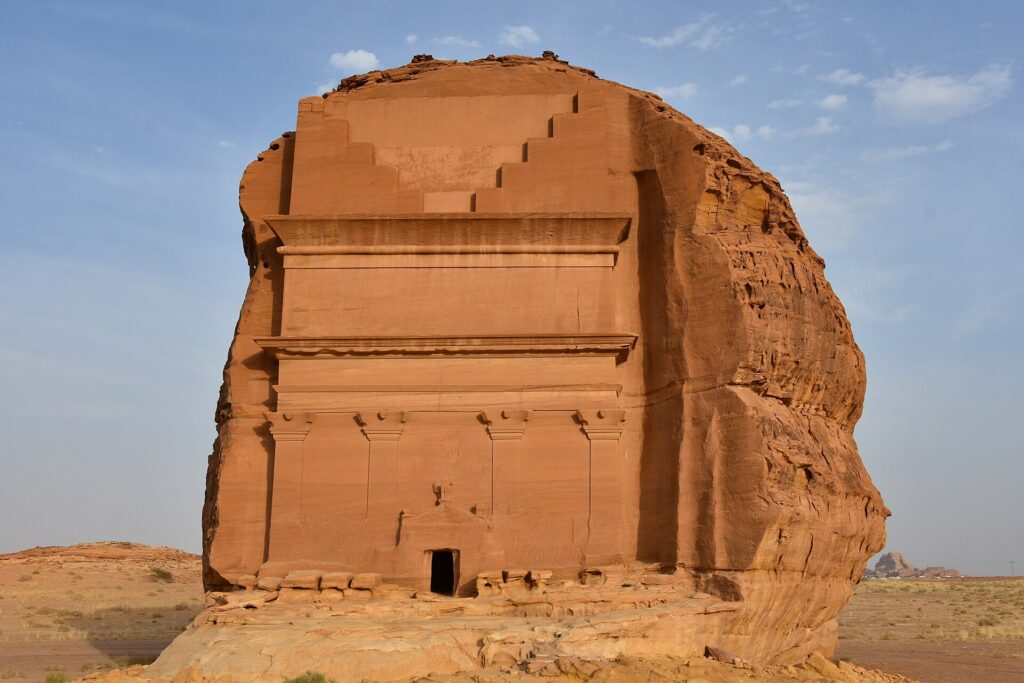
Quick answer: If you want one iconic, jaw-dropping monument and a big-name bucket-list tick, choose Petra. If you want to explore ancient tombs almost alone in a cinematic desert with excellent hotels, choose AlUla. Most serious history travellers who can afford the time do both. That is the short version of the AlUla vs Petra comparison; the detail below is where the real decision gets made.
In this guide
- AlUla vs Petra at a glance
- The tombs: AlUla vs Petra monuments compared
- Crowds and atmosphere
- Tickets and prices: AlUla vs Petra costs
- Getting there and logistics
- When to go: AlUla vs Petra by season
- Which should you choose?
- Can you do both on one trip?
- AlUla vs Petra recap
- Frequently asked questions
AlUla vs Petra at a glance
Before the detail, here is the AlUla vs Petra comparison in one table. I have used current 2026 figures and rounded drive times from my own visits and official sources.
| Feature | AlUla (Hegra) | Petra |
|---|---|---|
| Country | Saudi Arabia | Jordan |
| Built by | Nabataeans (2nd city) | Nabataeans (capital) |
| Age | 1st century BCE–CE | ~200 years older |
| Monumental tombs | ~110 (131 rock-cut total) | 600+ tombs, 800+ monuments |
| Signature sight | Qasr al-Farid | The Treasury (Al-Khazneh) |
| Annual visitors | ~265,000 (2024) | ~1 million |
| How you visit | Timed guided shuttle | Walk freely, self-paced |
| UNESCO status | Yes (2008, Saudi’s first) | Yes (1985) |
| Entry from | From ~SAR 95 (day tour) | 50 JOD (overnight visitor) |
The headline of the AlUla vs Petra table is the visitor numbers: Petra draws roughly four times as many people into a site you explore on foot, while Hegra caps access with timed vehicles. That single difference shapes almost everything else in the AlUla vs Petra experience.
The tombs: AlUla vs Petra monuments compared
Both sites are the work of the Nabataeans, the caravan traders who controlled the incense routes, so the AlUla vs Petra tomb architecture shares a family resemblance: crow-step crenellations, classical columns and giant facades cut straight into sandstone. What differs is scale, condition and how close you can get.
Petra: quantity, drama and the Treasury
Petra is enormous. You enter through the Siq, a 1.2 km slot canyon that suddenly frames the Treasury (Al-Khazneh) in one of travel’s great reveals. Beyond it lie the Royal Tombs, a Roman-style theatre, a colonnaded street and the Monastery (Ad-Deir), an 800-step climb rewarded with a facade even bigger than the Treasury. In the AlUla vs Petra contest of “wow moments,” Petra’s Treasury is unbeatable.
The trade-off is that many Petra facades are weathered and eroded, and the sheer size means a full day of walking, often 10–15 km, to see the highlights. That scale is Petra’s glory and its exhaustion in equal measure.
Hegra: fewer tombs, but astonishingly preserved
Hegra has around 110 monumental decorated tombs (131 rock-cut tombs in total) spread across desert clusters. The crown jewel is Qasr al-Farid, the “Lonely Castle,” a single four-columned tomb carved from one isolated sandstone monolith and left unfinished. Because Hegra sat abandoned and protected for centuries, its carvings are sharper than Petra’s, and more than 30 facades still carry legible Nabataean inscriptions naming the tomb owners.
This is where AlUla vs Petra flips: for detail and preservation, Hegra arguably beats its famous sibling. If you want to read the actual weathered signature of a Nabataean stonemason, AlUla is the place. For a deeper look at the individual monuments, see our dedicated guide to the Hegra tombs and what makes each cluster distinct.
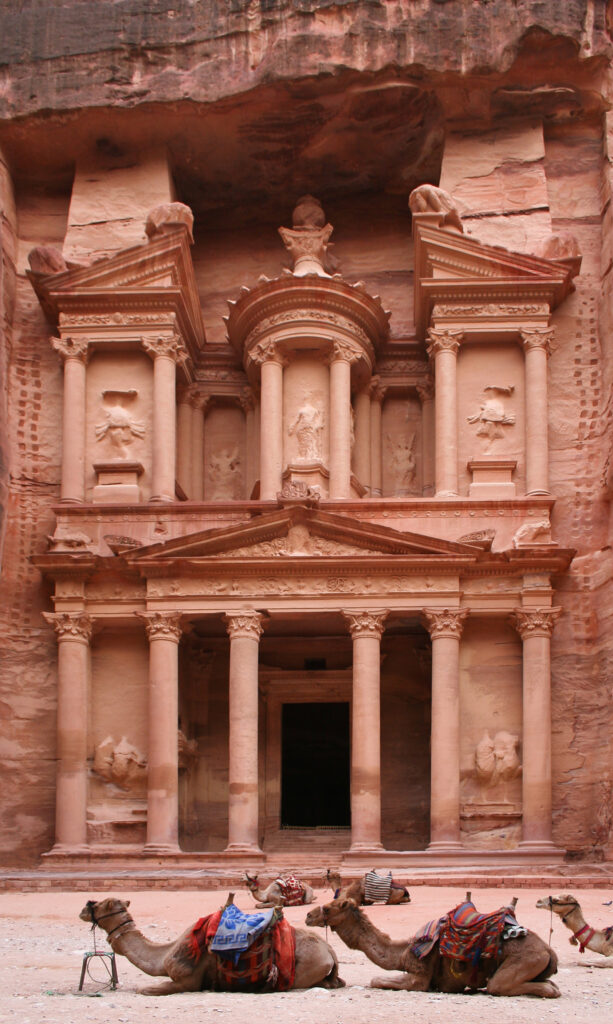
My honest take on the tombs in the AlUla vs Petra split: Petra overwhelms you with quantity and one perfect facade; Hegra impresses you with quality, breathing room and legibility. Neither is a copy of the other, which is exactly why the AlUla vs Petra rivalry is more interesting than “which is better.”
Crowds and atmosphere
This is the biggest practical difference in the AlUla vs Petra decision. Petra receives close to a million visitors a year, and the Siq and Treasury forecourt get genuinely crowded from mid-morning. You will share your Treasury photo with hundreds of people and a line of camels.
Hegra saw about 265,000 visitors in 2024, and because you tour it in a small guided group on a timed shuttle, you often stand before a 2,000-year-old tomb with barely anyone else in frame. For solitude, the AlUla vs Petra gap is huge and it favours AlUla decisively.
The flip side of that same coin: Petra lets you wander for as long as your legs allow, while Hegra’s guided format means you move on the operator’s schedule and cannot freely roam. If independence matters more to you than emptiness, that nudges the AlUla vs Petra choice back toward Petra. Our overview of whether Hegra is worth visiting digs into how the guided-only format actually feels on the day.
Tickets and prices: AlUla vs Petra costs
Pricing structures differ so much that a flat AlUla vs Petra cost comparison needs care. Petra sells a single site ticket; Hegra sells guided experiences. Here are current 2026 figures.
| Ticket | Price (2026) | Notes |
|---|---|---|
| Petra 1-day (overnight visitor) | 50 JOD (~SAR 265) | If you stay a night in Jordan |
| Petra 1-day (day-tripper) | 90 JOD (~SAR 475) | No overnight stay in Jordan |
| Jordan Pass | 70–80 JOD | Waives visa if 3+ nights; covers Petra + 40 sites |
| Petra by Night | 30 JOD | 2,000+ candles, ~20:30–22:30 |
| Hegra day tour | From ~SAR 95 | Guided, 2–3 hours incl. transfer |
| Hegra hop-on hop-off | From ~SAR 150 | Multimedia guide, seasonal |
| Hegra premium (private) | From ~SAR 1,000/vehicle | Up to 7 seats, ~2 hours |
On raw entry cost, the AlUla vs Petra maths favours Hegra: a standard Hegra day tour from around SAR 95 undercuts even the cheaper Petra ticket. But the honest caveat is that AlUla is a full destination, not one site, so you will likely add Dadan, Jabal Ikmah and Elephant Rock experiences (from roughly SAR 200–350 each) on top. Petra bundles more into its single fee. Buy Hegra slots ahead through the official Experience AlUla site, and check current Petra fees on the official Visit Petra portal before you travel, since both change.
One AlUla vs Petra money tip: if Jordan is a multi-stop trip, the Jordan Pass almost always pays for itself by waiving the visa fee. In Saudi Arabia, the eVisa is separate and cheap, so budget it independently.
Getting there and logistics
Logistics quietly decide many AlUla vs Petra trips. These are two different countries roughly 640 km apart by air distance, with no easy direct land crossing between them, so you rarely combine them casually.
Reaching AlUla
AlUla has its own airport (ULH), about 20–35 km from the town, with direct flynas and Saudia flights from Riyadh, Jeddah, Dubai and Dammam. From landing to your hotel is often under 40 minutes. In the AlUla vs Petra access race, AlUla is genuinely painless once you are in Saudi Arabia.
Reaching Petra
Petra sits in Wadi Musa, about a 3-hour drive from Amman or roughly 2 hours from Aqaba. There is no nearby major airport, so most visitors road-trip in. That makes Petra a slightly heavier logistical lift, though Jordan’s compact size means you can chain it with Wadi Rum and the Dead Sea easily.
For where to sleep on the Saudi side, our roundup of hotels near Hegra covers everything from desert eco-resorts to town options, which matters because AlUla’s best stays book out in peak season.
When to go: AlUla vs Petra by season
Both are desert sites, so the AlUla vs Petra season advice is similar: avoid high summer. June to August brings 40°C-plus heat at both, punishing on Petra’s long walks especially.
- Best window: November to March for cool, clear days at both sites.
- AlUla peak: the winter festival season (roughly Dec–Feb) brings events but higher prices and fuller hotels.
- Petra peak: spring and autumn shoulder months are pleasant but the Siq is busiest.
- Timing tip: Hegra’s late-afternoon slots catch golden light; Elephant Rock only opens from 4pm.
If you are cold-sensitive, note desert nights drop sharply at both. In the AlUla vs Petra weather stakes there is no real winner; pack layers either way.
Which should you choose?
Here is how I steer people through the AlUla vs Petra decision based on what they actually want.
- Choose Petra if you want the single most famous archaeological reveal on earth, the freedom to walk for hours, and a site you can pair with Wadi Rum and the Dead Sea.
- Choose AlUla if you want space, silence, pristine carvings, world-class hotels, and a broader destination that includes Dadan, Jabal Ikmah, Elephant Rock and stargazing.
- Choose AlUla if crowds ruin sites for you; the AlUla vs Petra crowd gap is the deciding factor for many.
- Choose Petra if your bucket list specifically says “the Treasury” and nothing else will do.
For a fuller sense of what beyond the tombs makes the Saudi side compelling, our take on whether AlUla is worth visiting covers the wider valley. And if you want a pure monument-to-monument breakdown, our Hegra vs Petra deep dive sits alongside this AlUla vs Petra guide.
Can you do both on one trip?
Yes, and honestly the best answer to the AlUla vs Petra question is often “both.” Because they are separate countries, you would fly: typically Amman or Aqaba for Petra, then onward to Jeddah or Riyadh and a connection to AlUla (ULH). Plan two to three nights at each to avoid rushing.
Seeing them back to back turns AlUla vs Petra from a rivalry into a single Nabataean story: the older imperial capital and its refined desert outpost. Visited together, each makes the other richer, and you stop asking which one “wins.”
AlUla vs Petra recap
To recap the AlUla vs Petra comparison: Petra is bigger, older, more famous and far busier, with the unmatched Treasury and total freedom to roam. AlUla’s Hegra is quieter, better preserved, cheaper to enter and easier to fly into, but you tour it on a guided schedule. In the AlUla vs Petra choice there is no wrong answer, only a question of whether you value scale and spectacle or solitude and detail. If you can, weave both into one Nabataean journey.
Frequently asked questions
Is AlUla or Petra better to visit?
Neither is objectively better in the AlUla vs Petra debate. Petra is more spectacular and famous, with 600-plus tombs and the iconic Treasury, but it is crowded and involves long walks. AlUla’s Hegra is quieter, better preserved and easier to reach by air, though you tour it in a timed guided group. Choose Petra for scale and drama, AlUla for solitude and detail.
Is Hegra just a smaller copy of Petra?
No. Both were built by the same Nabataean civilisation, but Hegra was their second city and is around 200 years younger than Petra. Hegra has fewer tombs (about 110 monumental facades) yet many are better preserved, with over 30 carrying legible inscriptions. It is a genuine sister site, not a replica.
How much does it cost to visit each?
As of 2026, a guided Hegra day tour starts from around SAR 95. Petra costs 50 JOD for a one-day ticket if you stay overnight in Jordan, or 90 JOD for day-trippers, with the Jordan Pass (70–80 JOD) often better value as it also waives the visa fee for stays of three nights or more.
Can you visit AlUla and Petra on the same trip?
Yes, but they are in different countries roughly 640 km apart with no easy land route, so you fly between them. Many travellers combine Petra with Wadi Rum in Jordan, then fly via Jeddah or Riyadh to AlUla. Allow two to three nights at each to see them properly.
Which has fewer crowds, AlUla or Petra?
AlUla, decisively. Hegra received about 265,000 visitors in 2024 versus close to a million at Petra, and its guided-shuttle system spreads people out. If avoiding crowds is your priority in the AlUla vs Petra decision, AlUla is the clear pick.