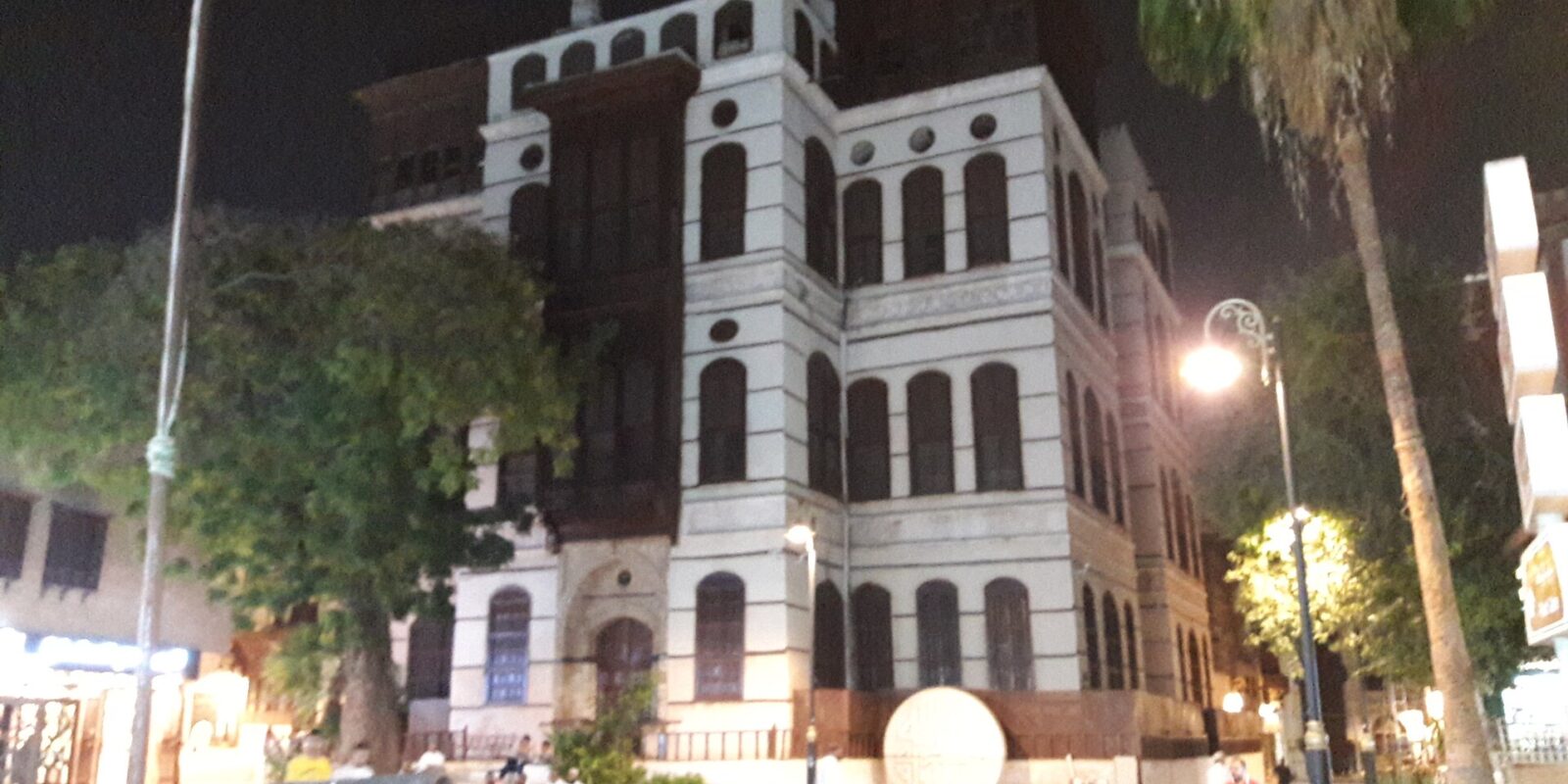
Al-Balad Jeddah is the walled old town at the heart of the Red Sea city, and it is the single most rewarding half-day you can spend in Jeddah. This UNESCO-listed quarter preserves more than 650 coral-stone Hijazi houses, their upper floors wrapped in carved wooden roshan balconies. The streets are free and open 24/7, so you can simply walk straight in.
Below I share the walking route I actually used, what to see, when to go, what it costs, and the etiquette that matters. If you do only one heritage thing in the city, make it Al-Balad Jeddah, ideally early morning or just after sunset, when the heat drops and the lanes come alive.
Quick answer
Walking the streets of Al-Balad Jeddah is free and takes 2 to 3 hours. Start at Bab Makkah gate and head west through Souq Al-Alawi. Go early morning or after Maghrib (evening prayer) to dodge the heat, and budget roughly SAR 150 to 300 if you want a guided heritage tour. October to March is the comfortable season.
In this guide
- What is Al-Balad Jeddah?
- Al-Balad Jeddah at a glance
- Best time to visit Al-Balad Jeddah
- How to get to Al-Balad Jeddah
- A walking route: Bab Makkah to Souq Al-Alawi
- What to see in Al-Balad Jeddah
- Costs, tickets and opening hours
- Etiquette and practical tips
- Where to eat and drink
- Is Al-Balad Jeddah worth it? An honest take
- Frequently asked questions
What is Al-Balad Jeddah?
Al-Balad simply means “the town” in Arabic, and for centuries it was Jeddah. This is the original walled port that received pilgrims sailing across the Red Sea on their way to Makkah, and the merchant wealth that flowed through it built the tall coral-stone houses you see today. When people say “historic Jeddah” or “old Jeddah,” Al-Balad Jeddah is the place they mean.
The district was inscribed on the UNESCO World Heritage List in 2014. The protected core covers about 17.9 hectares and holds more than 650 heritage buildings, five historic souqs, dozens of mosques and a scatter of ribats (old pilgrim hostels). You can read the official listing on the UNESCO World Heritage Centre website.
What makes the architecture special is the material and the woodwork. Builders quarried coral limestone from the Red Sea seabed and stacked it into towers five to seven storeys tall, then hung the upper floors with rawasheen (also spelled roshan) — carved wooden bay windows that catch the sea breeze and give the whole quarter its lattice-shaded, honey-brown character. Al-Balad Jeddah is the best surviving example of this Red Sea Hijazi style anywhere.
For most of its life this was a pilgrim town first and a trading port second. Ships from Egypt, India, East Africa and the Ottoman world unloaded here, and that mix is why the food, the faces and the building styles feel more cosmopolitan than you might expect of an old Arabian quarter. Walk slowly and you can read the history in the details — Indian teak in the doors, Ottoman flourishes in the plasterwork, a Yemeni hand in the coral masonry. Understanding that layered past is half of what makes Al-Balad Jeddah rewarding.
Al-Balad Jeddah at a glance
Here is the practical shape of a visit before we get into the detail. These are the numbers I planned around, and the figures I would double-check on the day, since opening hours in Al-Balad Jeddah change with the season and with restoration works.
| Detail | What to expect |
|---|---|
| Street access | Free, open 24/7 |
| Time needed | 2 to 3 hours on foot |
| Guided walking tour | From around SAR 150 to 300 per person |
| Best months | October to March |
| Best time of day | Early morning or after Maghrib |
| Natural start point | Bab Makkah gate |
| UNESCO inscribed | 2014 |
Best time to visit Al-Balad Jeddah
Two things drive timing here: heat and atmosphere. Jeddah is humid for much of the year, and midday in Al-Balad Jeddah between May and September is genuinely hard going — the coral walls trap the warmth and the narrow lanes have little shade at noon. Aim for the cool season, October to March, when daytime temperatures are pleasant enough to wander for hours.
Within the day, the two sweet spots are early morning and evening. Before about 9am the light is soft, the souks are quiet, and you can photograph the roshan balconies without crowds. After Maghrib the quarter transforms: shops reopen, families come out, cafes fill, and the restored facades are lit. If you can only pick one, I would take the evening for life and the morning for photos. For a wider seasonal breakdown, see our guide to the best time to visit Jeddah.
One honest caveat: during Ramadan the rhythm flips entirely. Daytime is sleepy, almost everything shuts, and Al-Balad Jeddah only wakes up late at night after iftar. It can be magical, but plan around it rather than expecting a normal daytime visit.
How to get to Al-Balad Jeddah
Al-Balad Jeddah sits close to the Red Sea coast in the centre of the city, so wherever you are staying you are probably 15 to 30 minutes away by car. There is no metro yet, so the realistic options are a ride-hailing app, a taxi, or driving yourself.
- Uber or Careem: the easiest choice. From the Corniche hotels it is a short hop; from the airport allow 30 to 45 minutes depending on traffic.
- Driving: doable, but the old town itself is pedestrian in its core. Park at the edges near Bab Makkah or Bab Sharif and walk in.
- On foot from a central hotel: if you are staying near the historic area, the whole point of Al-Balad Jeddah is that you walk it.
| From | Approx. drive | Notes |
|---|---|---|
| King Abdulaziz International Airport | 30 to 45 min | Traffic-dependent |
| Corniche / waterfront hotels | 10 to 20 min | Short ride-hail |
| Jeddah Central / business district | 15 to 25 min | Easy taxi |
Al-Balad is also the classic first stop on any city visit, so it slots neatly into a longer plan. Our 2-day Jeddah itinerary pairs a morning here with the Corniche and the Floating Mosque, and our roundup of things to do in Jeddah puts the old town in context with the rest of the city.
A walking route through Al-Balad Jeddah: Bab Makkah to Souq Al-Alawi
The most natural way to see Al-Balad Jeddah on foot is to enter at Bab Makkah, the old eastern gate that once faced the road to Makkah, and drift west. You do not need a map so much as a direction — the lanes are short and everything loops back — but here is the spine I followed.
1. Start at Bab Makkah gate
Bab Makkah is one of the surviving city gates and a fitting entrance. Stand here for a minute and picture the pilgrim caravans that passed through for centuries. From the gate, plunge into the covered market lanes heading roughly west.
2. Walk Souq Al-Alawi
Souq Al-Alawi is the main artery of Al-Balad Jeddah and one of the oldest markets in the country. It is a working souk, not a museum — spice sacks, fabric, oud, household goods, and the smell of incense drifting out of doorways. Take your time; the side alleys are where the best facades hide.
3. Pause at Naseef House
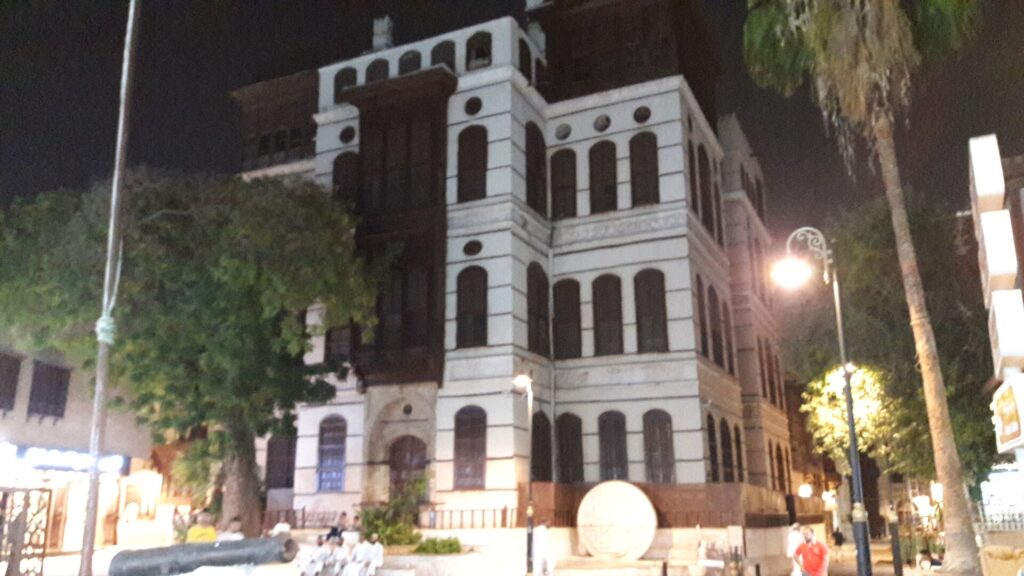
Roughly midway, you reach Naseef House, the green-shuttered merchant mansion that anchors the district. It is the obvious landmark and a good place to orient yourself. More on visiting it below.
4. Loop to the Gold Souk and Al-Shafi’i Mosque
From Naseef House, the Gold Souk and the Bedouin Market are a short wander north and west, and the Al-Shafi’i Mosque — among the oldest in Jeddah — is close by. This whole loop is easily 2 to 3 hours if you stop for photos and mint tea.
What to see in Al-Balad Jeddah
You could wander Al-Balad Jeddah with no plan at all and have a fine time. But these are the set pieces worth aiming for.
Naseef House (Bayt Nassif)
This restored 19th-century mansion was built for the Nassif family, then governors of Jeddah, and later hosted King Abdulaziz. Its most famous quirk is a wide internal ramp built so a camel could carry goods — and messengers — right up to the roof terrace. When it is open, you can climb to the rooftop for a view over the coral rooftops of the old town.
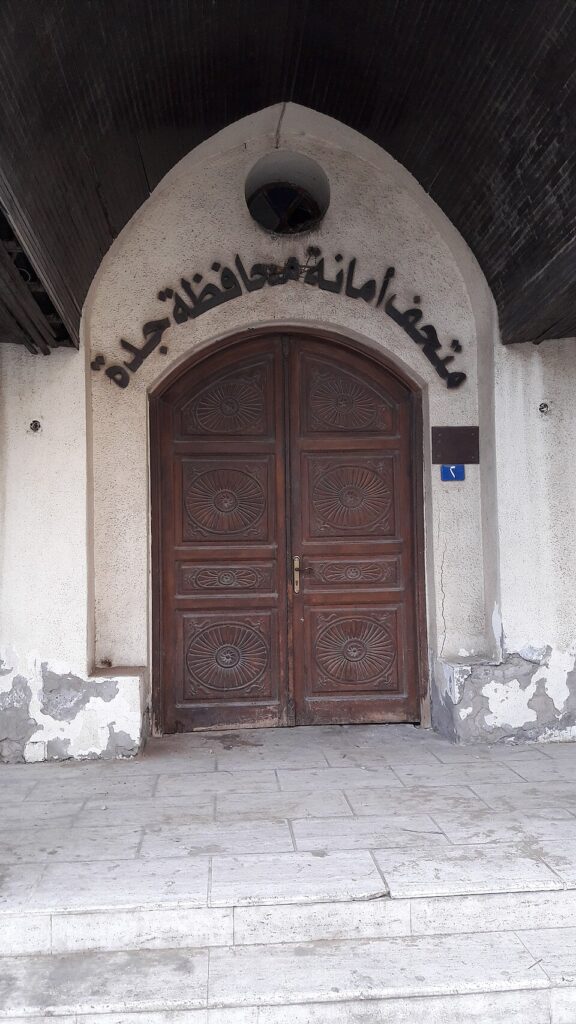
Be warned: access is inconsistent. Entry is often free, and many travellers report it opening in the late afternoon and evening rather than mornings, but hours shift. If a rooftop visit matters to you, ask a guide to arrange it or check on the day rather than turning up cold.
Souq Al-Alawi and the Gold Souk
Souq Al-Alawi is the heritage market; the Gold Souk is where locals actually buy jewellery. Gold is sold largely by weight against the daily rate, so prices are more transparent than you might fear, and card or mobile payment is widely accepted across Al-Balad Jeddah now. The nearby Bedouin Market is the spot for spices, perfumes, frankincense and antiques.
Al-Shafi’i Mosque and the old gates
The Al-Shafi’i Mosque is one of the oldest in Jeddah, with a distinctive minaret, and worth finding for its quiet age alone. Non-Muslim visitors should admire it from outside and be respectful of prayer times. The surviving city gates — Bab Makkah and Bab Sharif chief among them — bookend the historic core.
Cafes, art and the evening scene
Restoration has brought a wave of specialty cafes, small galleries and pop-up spaces into old coral houses. After dark, Al-Balad Jeddah is at its most social — this is when I would linger over a coffee and just watch the lanes fill up.
Costs, tickets and opening hours in Al-Balad Jeddah
The headline is reassuring: exploring Al-Balad Jeddah costs nothing. The streets, souks and gates are free and open around the clock. You only pay if you choose a guide, a paid museum, food or shopping. Here is a realistic budget.
| Item | Typical cost (2026) | Notes |
|---|---|---|
| Walking the streets | Free | Open 24/7 |
| Guided heritage walk (2 to 3 hrs) | From SAR 150 to 300 per person | Small-group and private options |
| Naseef House | Often free | Hours vary; call or ask a guide |
| Coffee / cafe stop | SAR 15 to 40 | Specialty cafes |
| Ride-hail across town | SAR 15 to 45 | Uber / Careem |
Is a guide worth it? If you want the history decoded — which family built which house, what the roshan symbols mean — then yes, a two-hour walk with a local is money well spent, and you can book one on platforms like GetYourGuide. If you just want to soak up the atmosphere, skip it and wander. I did both on different evenings and enjoyed the free wander just as much.
Etiquette and practical tips for Al-Balad Jeddah
- Dress modestly. This is a traditional, working neighbourhood. Cover shoulders and knees; women no longer need an abaya but should dress conservatively. Modest dress also makes locals far warmer toward you.
- Ask before photographing people. Shopfronts and architecture are fine; faces, especially women and families, are not — always ask first.
- Mind prayer times. Shops pause and close briefly at each of the five daily prayers. It is a good moment to grab a coffee rather than get frustrated.
- Carry a little cash. Card and mobile pay are common in Al-Balad Jeddah, but a few small notes help with tea, tips and tiny stalls.
- Wear real shoes. The lanes are uneven coral stone and dust; sandals get old fast.
- Bring water. Even in the cool season the humidity sneaks up on you.
For deeper context on kingdom-wide customs, the official Visit Saudi tourism site is a solid reference before you travel.
Where to eat and drink in Al-Balad Jeddah
Do not leave hungry. Old Jeddah is one of the best places in the city to eat traditional Hijazi food, and the evening is when the food scene really comes alive. These are the things I would seek out.
- Foul and tamees for breakfast: stewed fava beans with fresh tandoor-style bread from a hole-in-the-wall — the classic old-town morning.
- Hijazi classics: dishes like saleeg or mabshoor at a heritage restaurant, ideally after Maghrib.
- Specialty coffee: several restored coral houses now hold third-wave cafes; a flat white in a 200-year-old building is a very Al-Balad Jeddah thing to do.
- Souk snacks: fresh juice, dates and sweets straight from stalls as you wander.
Prices are gentle. A filling local breakfast runs well under SAR 30, and a specialty coffee sits around SAR 15 to 25 across Al-Balad Jeddah, so you can eat and drink your way through an evening here for very little.
Is Al-Balad Jeddah worth it? An honest take
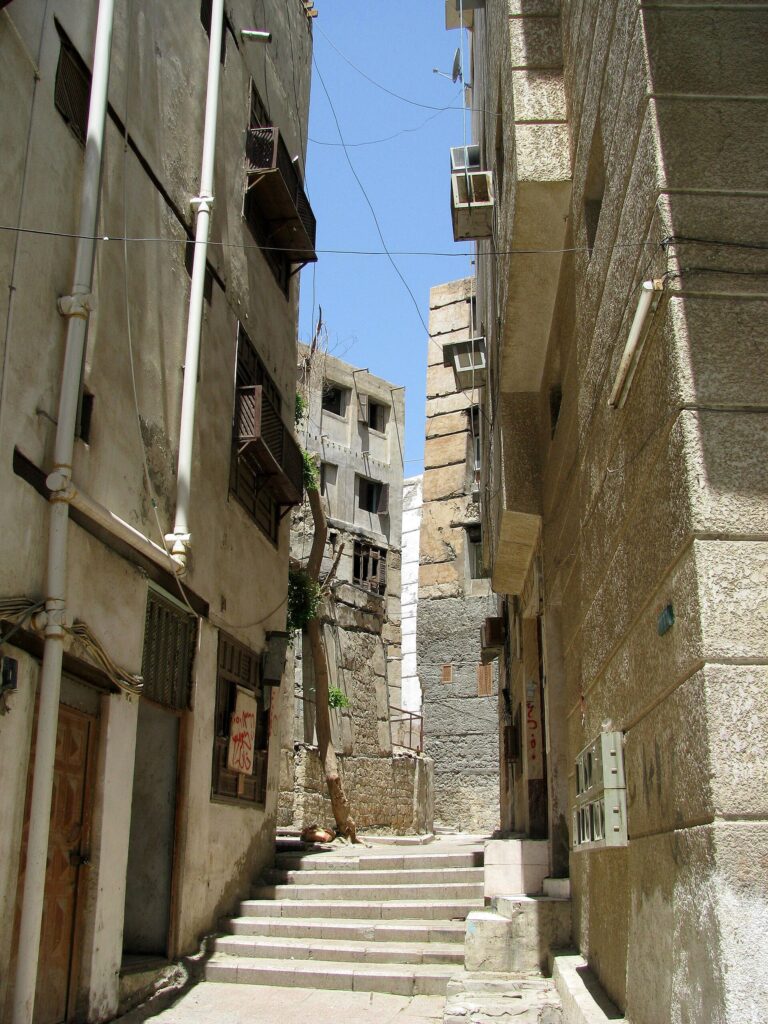
Yes — with honest expectations. Al-Balad Jeddah is not a polished, finished open-air museum. Restoration is ongoing, so you will pass scaffolding, closed houses and streets that are half beautiful and half building site. Some famous buildings are shut or under wraps on any given day, and Naseef House access can be hit or miss.
But that unfinished quality is also the charm. This is a living quarter, not a theme park — real souks, real residents, real prayer calls echoing off coral walls. Spend an evening here and you understand old Jeddah in a way no mall or Corniche photo can teach. It is comfortably the highlight of the city for most first-time visitors.
To recap: Al-Balad Jeddah is free, best in the cool season and after dark, walkable in 2 to 3 hours, and unmissable. Pair it with the coast and, if you have longer in the region, the desert wonders of AlUla — see our guide on getting from Jeddah to AlUla.
Frequently asked questions
Is Al-Balad in Jeddah free to visit?
Yes. Walking the streets, souks and gates of Al-Balad Jeddah is free and the area is open 24 hours a day. You only pay for optional extras like a guided tour, certain museums, food or shopping.
How long do you need in Al-Balad Jeddah?
Plan for 2 to 3 hours to walk the main route from Bab Makkah through Souq Al-Alawi past Naseef House. Add more time if you want a sit-down cafe stop, shopping in the Gold Souk, or a guided history walk.
What is the best time of day to visit?
Early morning is best for quiet lanes and photography; after Maghrib (evening prayer) is best for atmosphere, when shops reopen and families come out. Avoid the midday heat, especially from May to September.
Can I visit Naseef House inside?
Sometimes. Naseef House operates as a heritage house and entry is often free, but opening hours are inconsistent and it frequently opens in the afternoon and evening. If seeing the interior and rooftop matters, book a guide or check on the day.
Is Al-Balad Jeddah safe for tourists?
Very. Al-Balad Jeddah is busy and well policed, and Saudi Arabia has low street-crime rates. Normal city sense applies — watch your belongings in crowded souks — but visitors, including solo women, generally report feeling comfortable, especially in the evening.