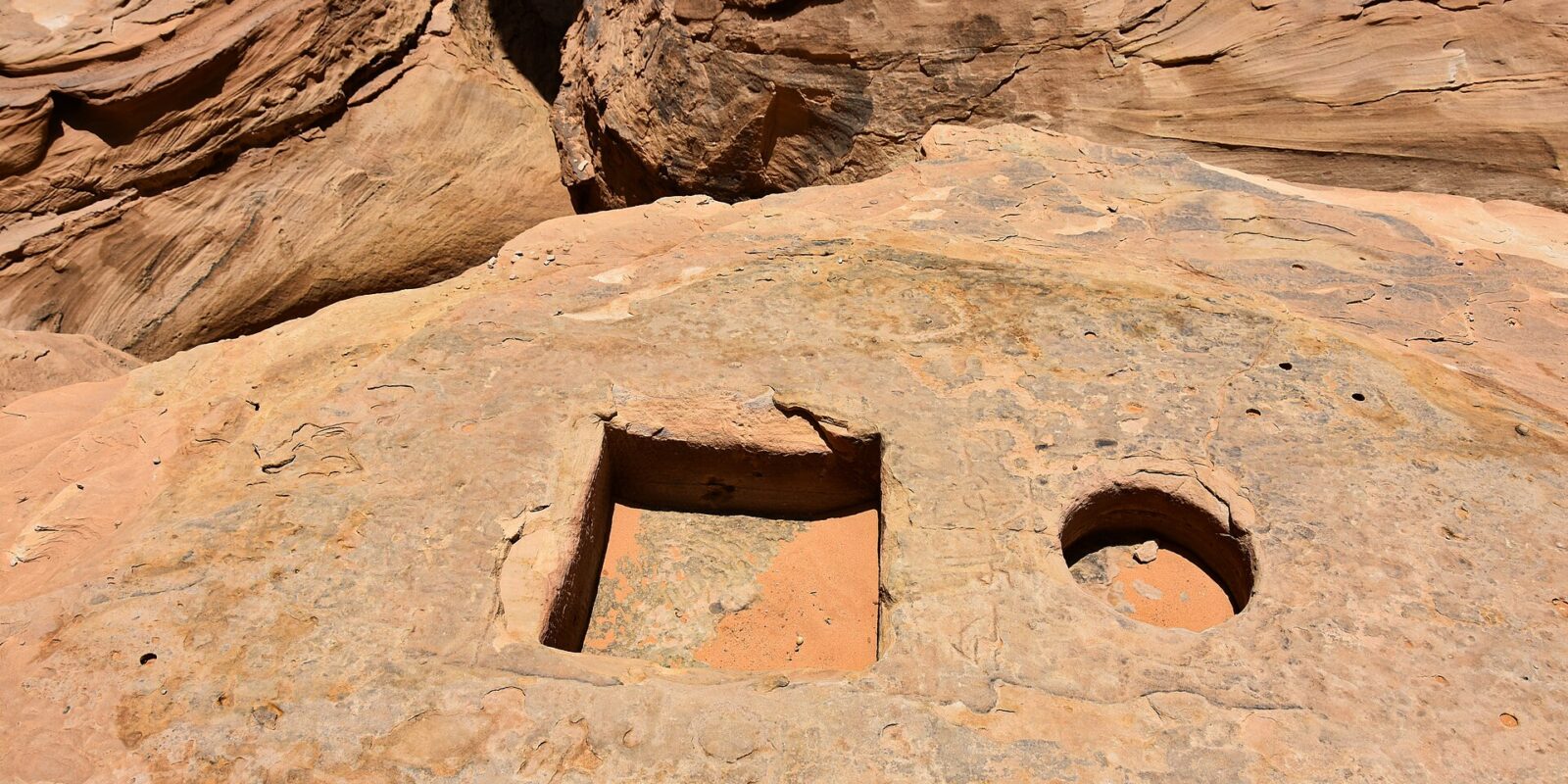
Jabal Ikmah is an open-air “library” of hundreds of ancient rock inscriptions carved into a quiet desert canyon just outside AlUla, and it is one of the most rewarding cultural stops in all of Saudi Arabia. Quick answer: you reach Jabal Ikmah on the combined Dadan & Jabal Ikmah tour, which starts from around SAR 60 per person, runs about two to three hours, and departs by coach from AlUla’s Winter Park — you cannot self-drive into the canyon. I turned up expecting a handful of scattered carvings and instead found rock walls covered in six different ancient scripts. Here is exactly what Jabal Ikmah is, why it matters, and how to actually get there.
In this guide
- What is Jabal Ikmah?
- Why the inscriptions matter (and the UNESCO listing)
- How to visit Jabal Ikmah: tours and tickets
- Prices, hours and what is included
- Pairing Jabal Ikmah with Dadan
- What to expect on the ground
- Best time to visit
- Is Jabal Ikmah worth it? An honest take
- Frequently asked questions
What is Jabal Ikmah?
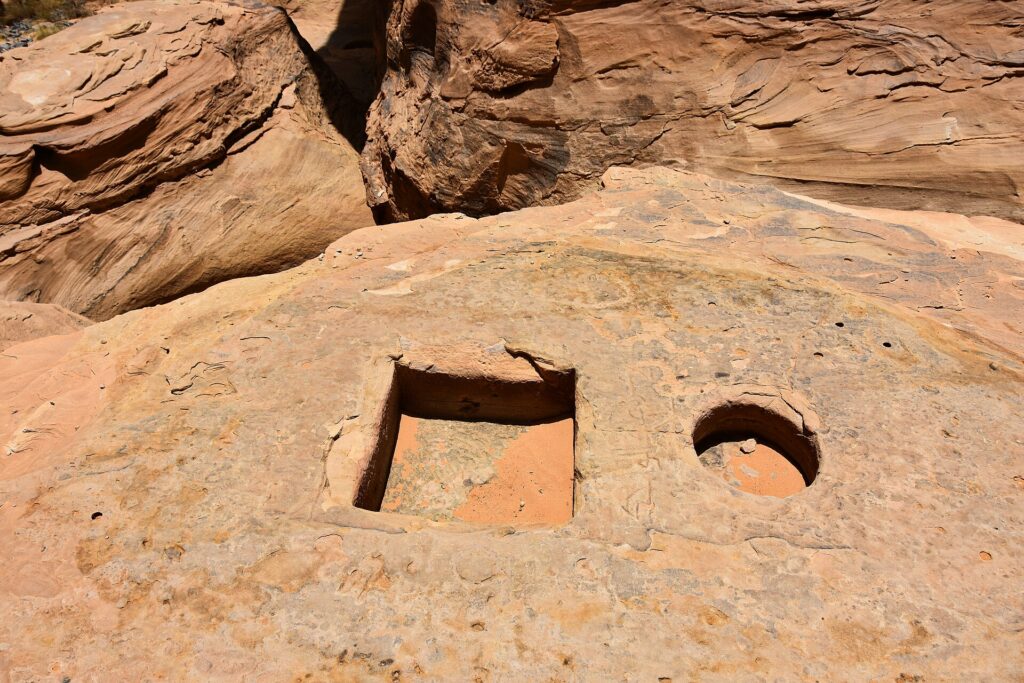
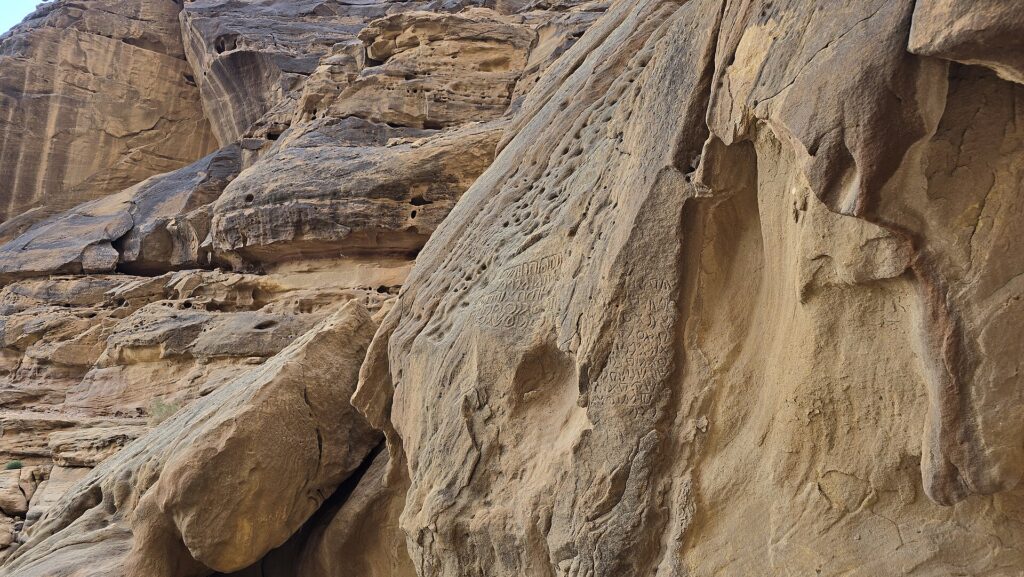
Jabal Ikmah is a narrow sandstone canyon about five kilometres north of AlUla’s old town, and its walls are densely packed with ancient graffiti — except this is graffiti with roughly 2,500 years of history behind it. Locals and archaeologists call it the “open-air library” because of the sheer volume of writing: hundreds of inscriptions, prayers, signatures and rock-art panels crowded onto the cliffs on both sides of the wadi.
Most of the carvings date to the Dadanite and Lihyanite kingdoms that ruled this oasis in the second half of the first millennium BCE. The people who lived here left messages to their gods, records of who owned which land, and notes about religious rituals. Walking the canyon floor, you are essentially reading a community’s noticeboard frozen in stone.
The setting does half the work. The canyon is quiet, shaded in parts, and the acoustics make it feel almost like a room. That combination of scale and stillness is why Jabal Ikmah lands differently from a single carved tomb — it is the density of human voices that gets you. If you are mapping out the best things to do in AlUla, this canyon belongs near the top for anyone with a curiosity about history.
Why the inscriptions matter (and the UNESCO listing)
What makes Jabal Ikmah academically important is the variety of scripts stacked in one place. You can find Dadanitic, Aramaic, Nabataean, Thamudic, Safaitic and Minaic writing across the canyon — several of them ancestors or cousins of the Arabic script that came later. Very few sites on earth let you see that many ancient writing systems within a short walk, which is a large part of why Jabal Ikmah is treated as a milestone in the story of the Arabic language.
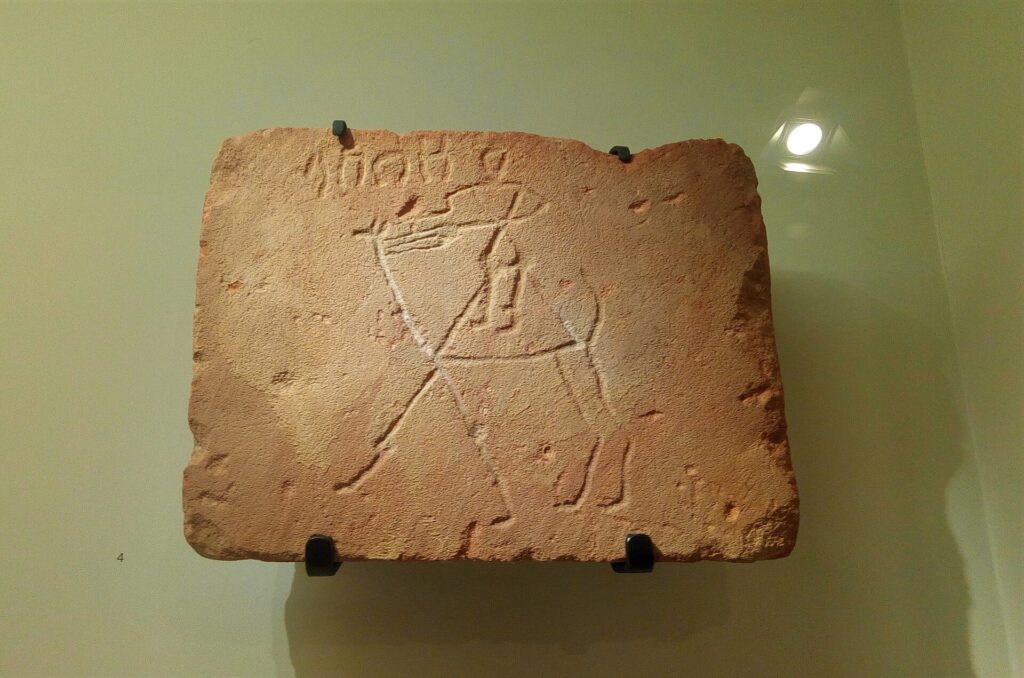
In May 2023, UNESCO inscribed the collection — under the title “Arabian Chronicles in Stone: Jabal Ikmah” — on its Memory of the World Register, recognising its documentary heritage rather than just its scenery. The listing highlights around 300 core Dadanitic and Lihyanite inscriptions, described as the most extensive concentration of well-preserved writing of its kind anywhere in the world.
One detail that stuck with me: the inscriptions record women as landowners, farmers and participants in rituals, which pushes back on the assumption that ancient Arabian society left no trace of women’s economic roles. That is the kind of specific, human story you rarely get from a monument. It is worth reading a panel or two closely rather than just photographing the whole wall.
You do not need to decode the letters to feel it. The guides point out the god names, the tribal signatures and the little carved feet that pilgrims left behind. Even a casual visitor leaves understanding that this was a living place of worship and record-keeping, not a museum piece.
How to visit Jabal Ikmah: tours and tickets
Here is the single most important logistics fact: you cannot drive your own car to Jabal Ikmah. Access to the canyon is controlled, and the only way in is on an organised transfer that leaves from AlUla’s visitor infrastructure. That surprises a lot of independent travellers who assume they can just punch it into a map app and turn up.
The standard route is the combined Dadan & Jabal Ikmah Tour sold through the official Experience AlUla platform. You park for free at Winter Park, board an air-conditioned coach, and are driven first to the Dadan visitor area and then the short hop to the canyon. A Heritage Ranger guide (or an audio guide, depending on the option you pick) walks you through both sites.
If you are still working out how to reach the region itself, most visitors fly into AlUla International Airport, which has direct connections from Riyadh, Jeddah and Dammam plus seasonal international routes. From the airport it is roughly a 35-minute drive to the main hotel and old-town cluster, and Winter Park sits within that core area. Ride-hailing is patchy, so a rental car or a hotel transfer is the easiest way to reach the tour meeting point on time.
Guided vs self-guided (audio) options
There are two main ways to do the Jabal Ikmah tour. The guided version, from around SAR 60, puts you with a live ranger in English or Arabic. The audio-guided version, from around SAR 90, hands you a self-paced narration available in more languages — English, Arabic, Italian, French and Mandarin — so you set your own tempo through the canyon.
My honest take: the live guide is better value and better for questions, but the audio option genuinely helps if you want to linger at specific panels without a group moving you along. Either way you are seeing the same Jabal Ikmah — the difference is pace and languages, not access.
The premium 4×4 option
There is also a premium tour that swaps the shared coach for a private 4×4 and lets you park directly at the Dadan visitor centre instead of Winter Park. It costs more, but if you are short on time or travelling as a small group who wants a private guide, it removes the coach-timetable friction. For most visitors the standard coach tour is perfectly comfortable.
Whichever you choose, pre-book. Daily departures are capped, and the slots do sell out in the cooler high season. You can sometimes buy on the day at the visitor centre subject to availability, but I would not gamble a limited AlUla itinerary on it.
Prices, hours and what is included for Jabal Ikmah
Prices below are the published starting rates at the time of writing; they can shift with season and demand, so treat them as a planning baseline and confirm on the official site when you book. The tour bundles Dadan and Jabal Ikmah together — you are not charged separately for the canyon.
| Detail | Dadan & Jabal Ikmah tour |
|---|---|
| Guided tour price | From ~SAR 60 per person |
| Audio-guided price | From ~SAR 90 per person |
| Duration | About 2–3 hours (incl. transfers) |
| Departure point | Winter Park bus stop, AlUla |
| Distance from AlUla old town | ~5 km north |
| Dadan to Jabal Ikmah transfer | ~10-minute coach ride |
| Languages (guided) | English, Arabic |
| Languages (audio) | English, Arabic, Italian, French, Mandarin |
| Departures | Morning and afternoon, daily |
| Included | Coach transfer, site entry, water, Dadan exhibition |
| Accessibility | Not suitable for wheelchairs/strollers |
The ticket covers return transport from Winter Park, entry to both heritage sites, bottled water on the coach, and access to the “Illuminating Discoveries” exhibition at Dadan. Physical intensity is rated low — it is a gentle walk on uneven ground, not a hike — but the canyon path is not stroller- or wheelchair-friendly, so factor that in if you are travelling with small children or limited mobility.
Pairing Jabal Ikmah with Dadan
Because the two sites are sold as one tour, Jabal Ikmah is almost always paired with Dadan, and that pairing is genuinely the right way to see them. Dadan was the capital of the Dadanite and Lihyanite kingdoms, and its famous lion tombs are carved high into a red cliff face. Seeing the city first and then its “library” ten minutes up the road gives you the full arc of the civilisation in a single half-day.
Think of it this way: at Dadan you see where these people lived and buried their dead; at Jabal Ikmah you read what they wrote. One without the other feels incomplete. If you want the deeper background on the tombs before you go, our guide to Dadan and the AlUla lion tombs covers that half of the trip in detail.
For planning, block a half-day for the combined outing and keep the rest of the day for something at a different pace. A classic AlUla morning is Dadan and Jabal Ikmah, then an afternoon around the old town or Elephant Rock. If you are slotting this into a tight schedule, our AlUla in two days itinerary shows exactly where Jabal Ikmah fits alongside Hegra and the old town.
What to expect on the ground
Once the coach drops you at the canyon mouth, the visit itself is a slow, flat walk of maybe 20–40 minutes depending on how long you stop. The path runs along the wadi floor with inscription panels rising on either side. Rangers point out the highlights, but the pleasure is in slowing down and spotting carvings yourself — once your eye adjusts, they are everywhere.
Do not expect roped-off exhibits or long interpretive signboards. This is a raw archaeological site, so the interpretation comes from your guide or the audio narration rather than the setting. There is a small shaded rest area near the entrance and basic facilities at the Dadan visitor centre, but bring anything you need for the canyon itself. Photography is allowed and encouraged; just do not touch or make rubbings of the panels, which are fragile and protected.
What to bring
- Closed shoes — the ground is sandy and uneven in places.
- Sun protection: a hat and sunscreen, as parts of the canyon are exposed.
- Water beyond what the coach provides if you visit midday.
- A zoom lens or phone with good digital zoom for the higher inscriptions.
- Modest, breathable clothing suited to a conservative cultural site.
The honest downsides
Jabal Ikmah is not a flashy site. There is no grand facade like Hegra’s Qasr al-Farid, and if you arrive expecting cinematic monuments you may feel underwhelmed at first glance. The reward is intellectual and atmospheric rather than visual spectacle. Bring some curiosity, or a guide who can decode a panel for you, and the canyon rewards you; skim it in five minutes and you will wonder what the fuss is about.
The other constraint is the coach schedule. You are on the tour’s clock, so you cannot linger for golden-hour photography the way you might if you could self-drive. If photography is your priority, aim for the first morning departure when the light is soft and the group is smaller.
Best time to visit
AlUla is a desert, so timing matters more than at most sights. The comfortable season runs roughly October to March, when daytime temperatures are pleasant and the canyon walk is genuinely enjoyable. From late spring through summer, midday heat can be punishing, and an exposed canyon amplifies it — book the earliest morning slot if you are visiting in the warmer months.
Time of day changes the experience as much as the season. Early morning gives you softer light on the inscriptions and cooler air; late afternoon can be beautiful too, with warm colour on the sandstone. Whatever you pick, the canyon holds shade in stretches, which helps, but do not count on it for the whole walk.
If you are combining this with the region’s headline site, note that Hegra runs on its own separate ticketing and tours. Our walkthrough on how to visit Hegra explains that booking, so you can line up Hegra, Dadan and Jabal Ikmah across your AlUla days without double-booking a time slot.
Is Jabal Ikmah worth it? An honest take
For culture-minded travellers, yes — Jabal Ikmah is one of the most quietly moving places in AlUla. It is inexpensive, it is short, and it delivers something no monument can: the actual words of the people who lived here. Reading a 2,500-year-old prayer on a rock wall is the kind of moment you remember long after the big-name photo stops blur together.
Would I send everyone? Not quite. If your interests are purely scenic and you have half a day to spare, Elephant Rock or Hegra’s tombs may hit harder for you. But if you like history, language or the feeling of standing somewhere genuinely old and human, Jabal Ikmah is close to unmissable — and at SAR 60 combined with Dadan, it is the best-value cultural ticket in AlUla.
To recap the essentials: Jabal Ikmah is a UNESCO-listed open-air library of ancient inscriptions five kilometres from AlUla old town, reached only via the pre-booked Dadan & Jabal Ikmah tour from around SAR 60, best visited on a cool-season morning and paired with Dadan for the full half-day story.
Frequently asked questions
Can you visit Jabal Ikmah without a tour?
No. You cannot self-drive to the canyon; access is only via the organised Dadan & Jabal Ikmah coach or premium 4×4 transfer that departs from AlUla’s Winter Park. You can walk the canyon self-paced with the audio-guide option, but you still have to arrive on the official transfer.
How much does the Jabal Ikmah tour cost?
The guided Dadan & Jabal Ikmah tour starts from around SAR 60 per person and the audio-guided version from around SAR 90, both including transfer, entry and water. Prices vary by season, so confirm the current rate on the official Experience AlUla site when you book.
How long do you need at Jabal Ikmah?
The canyon walk takes about 20–40 minutes, but the full combined tour with Dadan and transfers runs roughly two to three hours. Budget a half-day if you want to see both sites without rushing.
Why is Jabal Ikmah on the UNESCO register?
UNESCO added Jabal Ikmah to its Memory of the World Register in 2023 for its documentary heritage — around 300 well-preserved Dadanitic and Lihyanite inscriptions that chart the development of ancient Arabian languages and record daily life, religion and the economic roles of women.
Is Jabal Ikmah suitable for kids or wheelchair users?
All ages are welcome and the walk is easy and flat, but the sandy, uneven canyon path is not suitable for wheelchairs or strollers. Families with young children manage fine on foot; just bring sun protection and water.